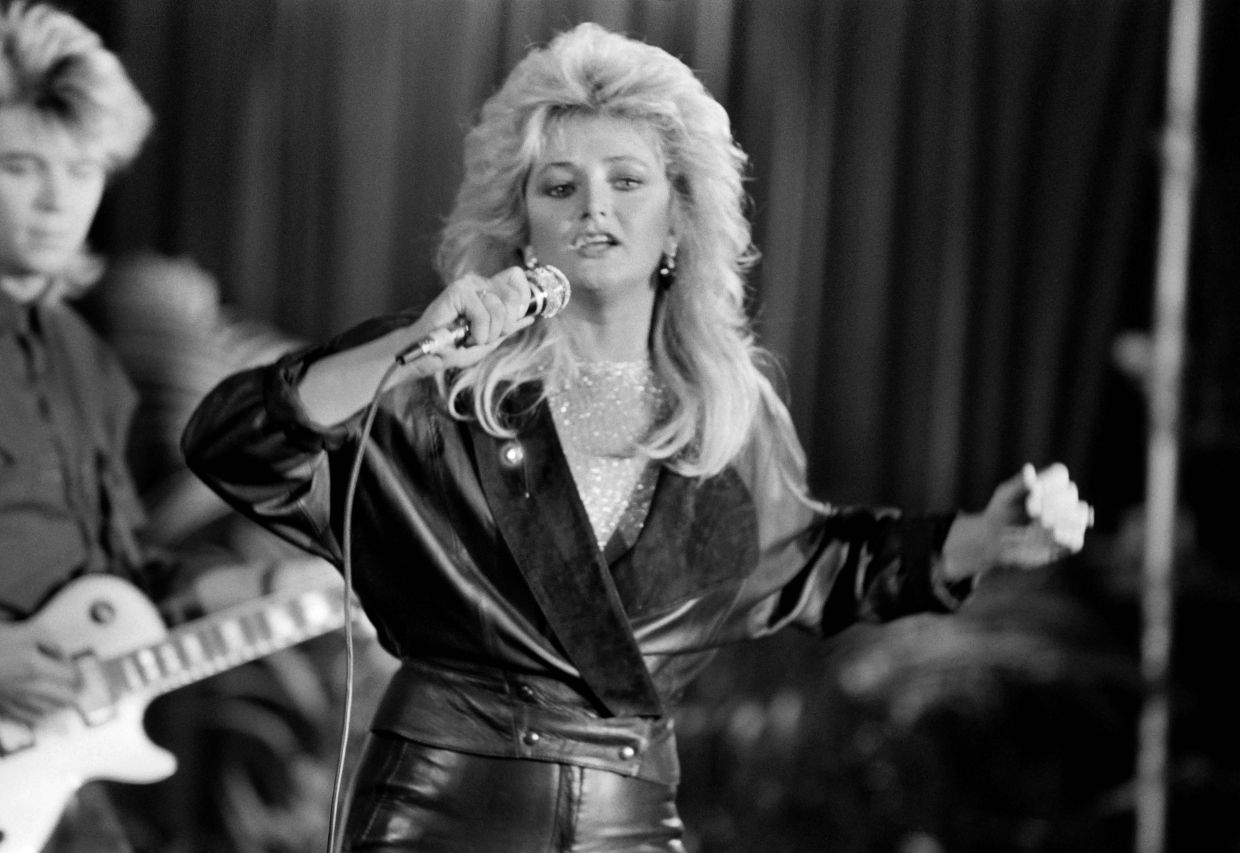
Bonnie Tyler, the distinctively husky-voiced Welsh pop artist who became globally recognised through her 1983 power ballad "Total Eclipse of the Heart", has passed away at age 75. The singer died unexpectedly while hospitalised in Faro, Portugal, where she was undergoing treatment for an undisclosed illness. Her family announced her death on Thursday through a statement posted on her official website, noting that she had been admitted for emergency intestinal surgery in May before being placed in an induced coma.
Tyler's career achievements, though spanning several decades, were inextricably linked to the towering success of "Total Eclipse of the Heart". The song dominated charts globally, holding the number one position for four consecutive weeks whilst amassing over one billion streams. Its accompanying music video, shot in a derelict Surrey asylum, accumulated more than a billion views on its own and became iconic during the MTV era of the 1980s. The track experienced remarkable cultural resurgence during actual solar and lunar eclipses in 2017 and 2024, introducing new audiences to its bombastic orchestration and theatrical delivery.
Beyond commercial metrics, the song achieved a critical reassessment that elevated it beyond typical pop categorisation. When Stereogum revisited the track in 2020, the publication hailed it as an "extinction-level event rendered in musical form", describing it as "pop music as heart-pounding, chest-thumping, blood-gargling, heavens-falling passion explosion" characterised by sheer spectacle and grandeur. The composition has been reinterpreted frequently across popular culture, covered by Nicki French in 1995 and Westlife in 2006, whilst appearing in films including "Bandits" with Cate Blanchett and "Old School", and on television through One Direction's 2010 performance on "The X Factor".
Tyler's professional recognition reflected her significance in popular music. She earned three Grammy nominations, represented the United Kingdom at the 2013 Eurovision Song Contest in Sweden—where she finished nineteenth with the song "Believe in Me"—and received an MBE from Queen Elizabeth II in 2023 for her services to music. These honours acknowledged a career spanning multiple decades, though none matched the cultural penetration of her signature composition.
The artist's journey to international stardom began humbly in Skewen, Wales, where she was born Gaynor Hopkins as the daughter of a coal miner. Growing up in public housing, she developed her passion for music through the Beatles and American soul legends including Janis Joplin, Nina Simone, Tina Turner and Otis Redding. She would memorise lyrics meticulously and perform into a hairbrush for hours, developing the distinctive vocal qualities that later became her trademark. A 1976 throat surgery to remove nodules paradoxically solidified her recognisable gravelly tone, transforming what might have been a vocal liability into her defining characteristic.
After being discovered by talent scout Roger Bell whilst fronting a soul band, she relocated to London and eventually secured a recording contract with RCA Records under the stage name Bonnie Tyler. Her 1977 debut album "The World Starts Tonight" yielded her first chart success with "Lost in France", whilst "It's a Heartache" reached number three the following year. However, her trajectory stalled until she transferred to Sony and, inspired by witnessing Meat Loaf's "Bat Out of Hell" performance, pursued collaboration with the song's writer-producer Jim Steinman.
Steinman's decision to offer Tyler "Total Eclipse of the Heart" proved transformative. The composition originated from lyrics he had written for his 1969 student musical "The Dream Engine" at Amherst College, Massachusetts, and he claimed the piece was adapted from a prospective "Nosferatu" musical adaptation. Recorded with minimal intervention—Steinman famously selected the second take of nine recordings and layered additional instrumentation afterwards—the track featured contributions from E Street Band members Roy Bittan on piano and Max Weinberg on drums. The result was a meditation on romantic devastation: "Once upon a time there was light in my life / But now there's only love in the dark."
The production methodology reflected Steinman's maximalist philosophy, employing orchestral arrangements reminiscent of Phil Spector's wall-of-sound technique. The accompanying video, filmed in a Gothic former psychiatric institution, featured elaborate choreography involving dancers dressed as ninjas and greasers, ninjas, fencers, and gymnasts, alongside imagery of slow-motion doves, candles and Tyler herself resplendent in exaggerated shoulder pads. The video's gothic aesthetic perfectly complemented the song's theatrical drama and contributed significantly to its memorability during the early MTV period.
Whilst "Total Eclipse of the Heart" garnered Grammy nominations—Tyler received recognition for best pop vocal performance, losing to Irene Cara's "Flashdance - What a Feeling"—subsequent releases failed to replicate its phenomenal success. Movie soundtrack contributions including "Holding Out For a Hero" from "Footloose" and "Here She Comes" from "Metropolis", both released in 1984, maintained her visibility but represented a tier below her signature achievement. She never reclaimed the commercial heights of the early 1980s, though she remained professionally active throughout subsequent decades.
Tyler's later career demonstrated artistic flexibility and longevity. A 2013 Nashville-recorded country-influenced album titled "Rocks and Honey" featured collaborations with Vince Gill and included the Eurovision entry "Believe in Me", composed by American and British songwriters. The 2019 project "Between the Earth and the Stars" brought together duets with established artists including Rod Stewart, Cliff Richard and Francis Rossi, showcasing her ability to command respect from peer musicians. Her professional pursuits extended beyond recording—she performed at a Vatican Christmas concert before Pope Francis in 2019, testament to her enduring cultural stature.
For Southeast Asian audiences, Tyler's significance extends beyond nostalgia. Her career trajectory illustrates how a singular commercial success, amplified through technological change and cultural cycles, can transcend temporal and geographical boundaries. "Total Eclipse of the Heart" has become embedded in global popular consciousness across generations, resurfacing during astronomical events and remaining a staple of karaoke venues throughout the region. Her MBE recognition and Eurovision participation also reflect the continued vitality of the European entertainment industry's international dimensions, demonstrating how artists from smaller nations can achieve worldwide recognition through compelling artistic collaboration.
The Welsh singer's unexpected passing concludes a narrative arc that defied conventional trajectory—a artist whose legacy rests almost entirely on a single composition yet whose influence extends far beyond typical pop music metrics. "Total Eclipse of the Heart" remains a genuine phenomenon, its annual resurgence during eclipse events ensuring that new generations discover Tyler's distinctive voice and Steinman's operatic vision. Her death represents the loss of a figure whose contribution to 1980s popular music, though concentrated, achieved a permanence that many with broader catalogues never accomplish.

