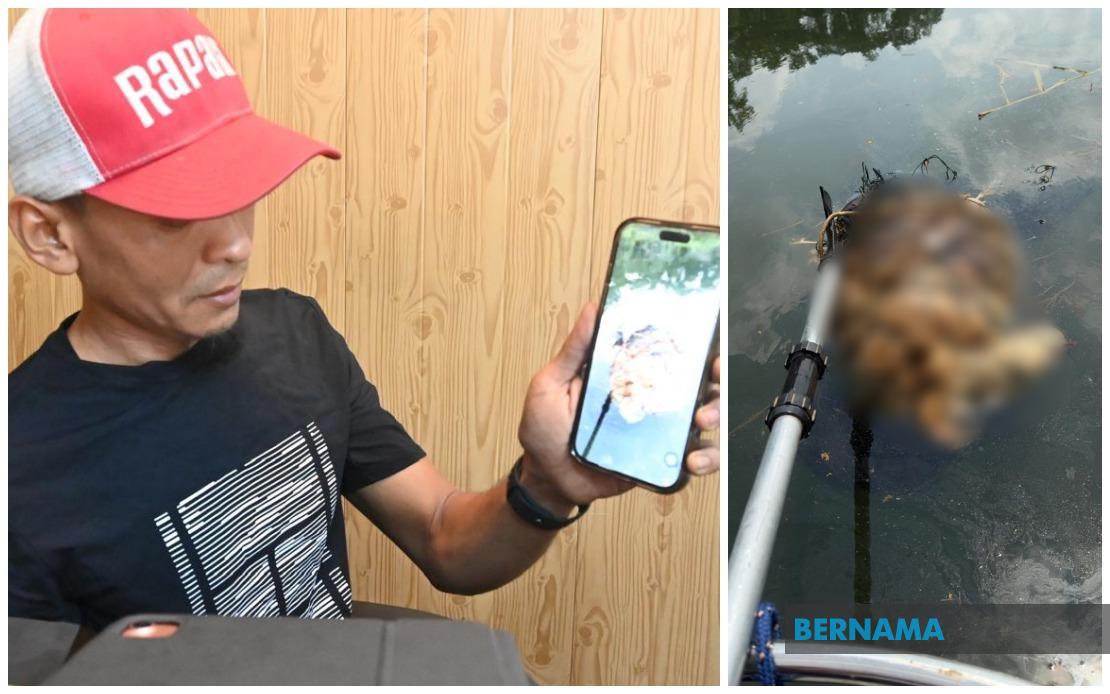
A body discovered wrapped and bound with netting in Sungai Tanjung Sembrong at Parit Raja, Batu Pahat, has prompted a police investigation that led to the arrest of three suspects within hours of the finding. The discovery came about when Muhamad Zul Fikri Borhanodin, 33, spotted what he initially believed to be an animal carcass whilst recording content for social media purposes related to his fishing activities.
Muhamad Zul Fikri, who has spent more than two decades fishing in these waters, explained that floating debris is not uncommon in this stretch of the river and he would normally disregard such sightings. However, the intensity of the smell emanating from the object and its wrapping in what appeared to be netting sheets raised alarm bells. The combination of these unusual indicators compelled him to investigate further rather than dismiss it as routine refuse or another animal remains.
Upon closer inspection, the fisherman noticed a pair of jeans emerging from the wrapped bundle, which immediately suggested to him that a human body lay submerged before him. Acting swiftly, he reached out to a fellow fisherman who was operating a separate vessel in the vicinity and together they alerted authorities to the grim discovery. The time was approximately eleven in the morning on August 3.
This was not Muhamad Zul Fikri's first exposure to such tragedy in the location. He recounted that years earlier, another individual had fallen into Sungai Tanjung Sembrong and met a similar fate, though the specific circumstances differed from the current incident. His familiarity with the river and its dangers made him better equipped to recognise the warning signs when he encountered the wrapped object.
According to Johor's deputy police chief DCP Hoo Chuan Huat, law enforcement received word of the discovery at approximately twelve thirty in the afternoon, approximately ninety minutes after Muhamad Zul Fikri first spotted the body. The rapid police response included the arrest of three male suspects, aged between 26 and 40 years old, apprehended in the general Batu Pahat area on the same day the body surfaced.
The investigation subsequently revealed crucial missing person details that connected the discovered body to an earlier report. The victim's wife had filed a missing person complaint on July 29, just days before the body's discovery, indicating that her husband had vanished from Mutiara Rini in Iskandar Puteri. This timeline suggests the individual may have been deceased for several days before being spotted in the river, raising questions about how the body came to be submerged in Parit Raja, which is situated some distance from Iskandar Puteri.
The arrest of three individuals raises several investigative angles for police to pursue. Whether the suspects have direct involvement in the death or are merely persons of interest in the circumstances surrounding the disappearance and subsequent body recovery remains unclear. The wrapping and binding of the body in netting suggests a deliberate effort to conceal or dispose of the corpse, rather than an accidental drowning scenario.
For Malaysian readers, this incident underscores the ongoing challenges of criminal investigation in Johor, one of the nation's most populous states. The discovery mechanism—through a civilian engaging in routine recreational activity rather than through police initiative—highlights how public vigilance remains essential to law enforcement capabilities. Additionally, the apparent connection between a missing person report in Iskandar Puteri and a body found in Parit Raja suggests either criminal movement across district boundaries or possible negligence in the investigation's preliminary stages.
The incident also raises environmental and public health concerns regarding Sungai Tanjung Sembrong. That the river has been the site of at least two bodies in recent decades indicates either a problematic pattern of illicit disposals in this waterway or an unfortunate coincidence of tragic accidents. River management authorities may need to consider increased monitoring or public awareness campaigns about water safety.
As the investigation progresses, authorities will likely focus on establishing cause of death, the timeline between the missing person report and the body's discovery, and the roles of the three arrested individuals. The case also demonstrates the importance of cooperation between civilians and police in rural or less-monitored areas where discovery by chance remains a reality of crime investigation in Malaysia.

