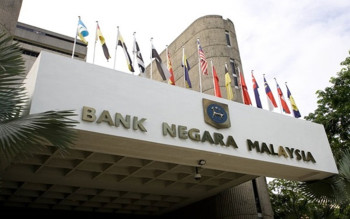
Bank Negara Malaysia has reaffirmed that its engagement with Tabung Haji represents a core function of financial oversight mandated under the Central Bank of Malaysia Act 2009, according to statements made during proceedings related to an ongoing Royal Commission of Inquiry into the pilgrimage fund. The central bank's intervention reflects its broader responsibility to identify and assess threats to financial system integrity, extending beyond traditional banking supervision to encompass major non-bank entities whose operational distress could ripple through the wider economy.
The statutory basis for BNM's oversight capacity derives from the establishment of the Financial Stability Executive Committee under the Central Bank of Malaysia Act 2009. This institutional framework empowers the central bank to conduct comprehensive surveillance across the financial landscape, detecting vulnerabilities that might otherwise escape conventional regulatory scrutiny. By operating through this committee structure, BNM gains the legal authority to furnish strategic counsel to institutions like Tabung Haji that fall outside its direct supervisory remit but possess meaningful interconnections with the broader financial system.
Although Tabung Haji operates as an independent statutory body not subject to BNM's regular banking supervision protocols, the central bank has consistently maintained that offering unsolicited guidance represents a legitimate precautionary mechanism. This approach prioritises preventive intervention over reactive crisis management, allowing BNM to address emerging risks before they crystallise into systemic threats. The underlying logic suggests that Tabung Haji's financial health carries implications extending beyond its immediate stakeholder base of pilgrims and contributors, potentially affecting investor confidence and market stability if mismanagement were to escalate.
The historical record demonstrates the persistence of BNM's concerns regarding Tabung Haji's financial trajectory. Between the mid-2010s and early 2020s, the central bank transmitted five formal warning letters to successive Tabung Haji leadership and the responsible Minister, each emphasizing the troubling divergence between institutional assets and accumulated liabilities. These communications preceded even more pointed criticism from the Auditor-General, whose 2017 Financial Statements Report contained a formal reprimand reflecting independent validation of BNM's assessment regarding governance and financial management deficiencies.
For Malaysian readers, this clarification carries significance in understanding the layered architecture of financial oversight. Unlike banking institutions, which operate under BNM's direct regulatory jurisdiction and are subject to regular examinations and compliance orders, non-bank financial institutions including pilgrim funds operate in a more loosely regulated environment. Tabung Haji's status as a trust entity designed to facilitate religious obligation creates a unique governance challenge, blending social purpose with commercial stewardship obligations. This hybrid character partly explains why BNM's advisory posture—rather than direct intervention powers—characterises the relationship.
The establishment of the Royal Commission of Inquiry in 2021, with formal membership appointment occurring in January 2022, reflected accumulating public concern about Tabung Haji's operations and financial sustainability. The subsequent presentation of the RCI report to the Yang di-Pertuan Agong in August 2022 marked a significant moment in the institutional examination of how Tabung Haji failed to meet stakeholder expectations despite warnings from both the central bank and auditing authorities. BNM's current statement appears designed to clarify its institutional role during this period, distinguishing between its legitimate advisory capacity and any suggestion of regulatory abdication.
The philosophical underpinning of BNM's position reflects modern central banking doctrine, which increasingly emphasises macroprudential oversight—surveillance of systemic risks across the entire financial ecosystem rather than focusing exclusively on individual institution safety. Under this framework, a large non-bank financial institution with millions of retail participants and substantial asset holdings merits attention from the central bank even absent direct supervisory authority. Tabung Haji's position as custodian of savings intended specifically for Islamic pilgrimage heightens this attention, given the reputational and social dimensions should mismanagement occur.
The case also illustrates the limitations of advisory relationships when institutional recipients prove reluctant to implement recommended measures. BNM's five warning letters apparently prompted insufficient remedial action from Tabung Haji management or its supervising ministry, suggesting that guidance without enforcement authority encounters practical constraints. This dynamic has prompted broader conversations within Malaysia's financial regulatory community regarding whether non-bank institutions managing public savings should face enhanced supervisory frameworks, particularly where the scale and nature of their operations create meaningful systemic implications.
For Southeast Asian observers, the Tabung Haji experience raises questions about financial system resilience in the region, where Islamic financial institutions and trust-based savings vehicles serve important social functions across multiple countries. The challenge of balancing institutional autonomy with prudential oversight remains unsettled in many jurisdictions, and Tabung Haji's difficulties suggest that informal advisory mechanisms may prove inadequate for institutions whose failures carry both financial and social consequences. BNM's current clarification thus represents not merely a point of administrative law but a reflection of evolving understanding regarding how financial authorities should engage with institutions beyond traditional banking perimeters.

