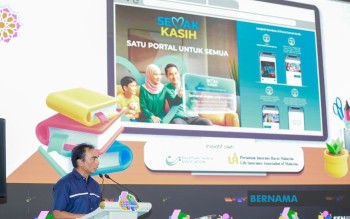
Bank Negara Malaysia has rolled out the 'Semak Kasih' portal, a newly developed online platform designed to streamline the process for families seeking to identify unclaimed insurance policies or takaful certificates belonging to deceased relatives. The initiative, unveiled in Kuala Terengganu during the Terengganu Financial Literacy Carnival, represents a significant step in closing the gap between insurance protection and beneficiary awareness, addressing a persistent challenge within Malaysia's financial services landscape.
Deputy Governor Adnan Zaylani Mohamad Zahid highlighted the urgency of the initiative by noting that many Malaysian families remain unaware their loved ones secured protection policies before passing away. Insurance and takaful products are frequently purchased with the intention of safeguarding dependents during emergencies—whether covering hospitalisation expenses, rebuilding homes after fires, or replacing lost household income following accidents. Yet when policyholders die, beneficiaries often lack knowledge of these arrangements, resulting in substantial financial resources going unreceived.
The scale of unclaimed benefits underscores the problem's magnitude. Joint estimates from the Life Insurance Association of Malaysia (LIAM) and the Malaysian Takaful Association (MTA) indicate that approximately 50,000 policies and certificates involving death benefits currently sit unclaimed. This figure represents not merely statistical inconvenience but genuine hardship for struggling families who could benefit from the financial security these products were designed to provide. The portal's introduction aims to reverse this trend by creating a centralised, accessible mechanism for verification.
Previously, both insurance and takaful providers have pursued conventional outreach methods to reconnect with beneficiaries, dispatching letters and deploying agents to trace recipients manually. While well-intentioned, these approaches suffer inherent limitations—incorrect contact information, geographic mobility, and administrative delays can render such efforts unsuccessful. The digital platform circumvents these obstacles by allowing beneficiaries to independently search for coverage linked to deceased family members, eliminating intermediaries and accelerating the claim initiation process.
The portal's functionality represents a pragmatic solution to a bureaucratic inefficiency that has long plagued Malaysia's financial services sector. Users can verify whether coverage exists, identify the relevant provider, and establish direct contact to commence formal claims procedures. By democratising access to this information, the system acknowledges that beneficiaries should not require specialised knowledge or connections to recover rightfully theirs—a principle aligned with BNM's broader financial inclusion agenda.
Beyond addressing unclaimed benefits, Adnan Zaylani used the platform launch to emphasise the interconnected nature of financial resilience and public awareness. Rising living costs and economic volatility have intensified household vulnerability, making protective insurance and takaful coverage increasingly indispensable. Yet protection remains ineffective if beneficiaries neither understand their entitlements nor possess straightforward mechanisms to exercise them. The Semak Kasih portal thus occupies a crucial intersection between product provision and consumer empowerment.
The central bank has simultaneously intensified support for small and medium enterprises, recognising their role as economic stabilisers. Microfinancing schemes offering up to RM100,000 without collateral requirements have expanded accessibility for entrepreneurs lacking traditional securities. Additionally, the SME Stabilisation Relief Facility, allocated RM5 billion, addresses working capital shortages for businesses impacted by the West Asia conflict, providing financing of up to RM750,000. These measures reflect BNM's understanding that economic resilience operates across multiple scales, from household finances to entrepreneurial ventures.
Financial literacy initiatives have emerged as complementary pillars in BNM's comprehensive strategy. The iTekad programme has engaged more than 14,000 participants nationwide, including approximately 600 in Terengganu, facilitating income enhancement and improved living standards through skills development. Meanwhile, the Financial Education Forum (FEN) is expanding its reach through an inclusive website functioning as a centralised educational repository, with deliberate emphasis on accessibility for persons with disabilities—recognising that financial knowledge remains unevenly distributed across Malaysian society.
Digitalisation, while opening economic opportunities, simultaneously introduces behavioural risks requiring mitigation through education. Research cited by Adnan Zaylani reveals that 37 per cent of Malaysians engage in impulsive online purchasing, while 26 per cent shoulder excessive debt burdens. These statistics underscore how technological advancement has inadvertently lowered barriers to spending, necessitating corresponding investments in financial discipline and decision-making frameworks. Early intervention through school-based programmes like MyDuitStory and collaborative university initiatives such as FEN Proaktif 2.0 seeks to cultivate prudent financial habits before problematic patterns become entrenched.
The emphasis on long-term savings discipline reflects a subtle philosophical reorientation within Malaysia's financial policy discourse. Rather than suggesting that macroeconomic conditions or technological disruption lie beyond individual control, Adnan Zaylani positioned personal financial decisions as the domain where ordinary Malaysians retain agency. While external factors—global economic fluctuations, technological advancement, inflation pressures—remain immutable, the consistency with which individuals save, spend, and protect their resources determines their ultimate financial security. This framing redistributes responsibility appropriately, acknowledging constraints while empowering citizens to optimise outcomes within their sphere of influence.
For Malaysian households, the convergence of these initiatives—the Semak Kasih portal, expanded MSME financing, and enhanced financial literacy programming—represents a holistic ecosystem designed to address vulnerabilities at multiple points. Families can now trace forgotten protection; entrepreneurs can access capital without prohibitive collateral; young people can develop financial competence from formative years. Together, these mechanisms acknowledge that financial well-being transcends individual transactions, requiring sustained institutional support, regulatory framework evolution, and citizen participation. The Semak Kasih portal's launch thus constitutes not merely a technical platform update but symbolic recognition that institutional barriers to financial protection must yield to accessibility and transparency.

