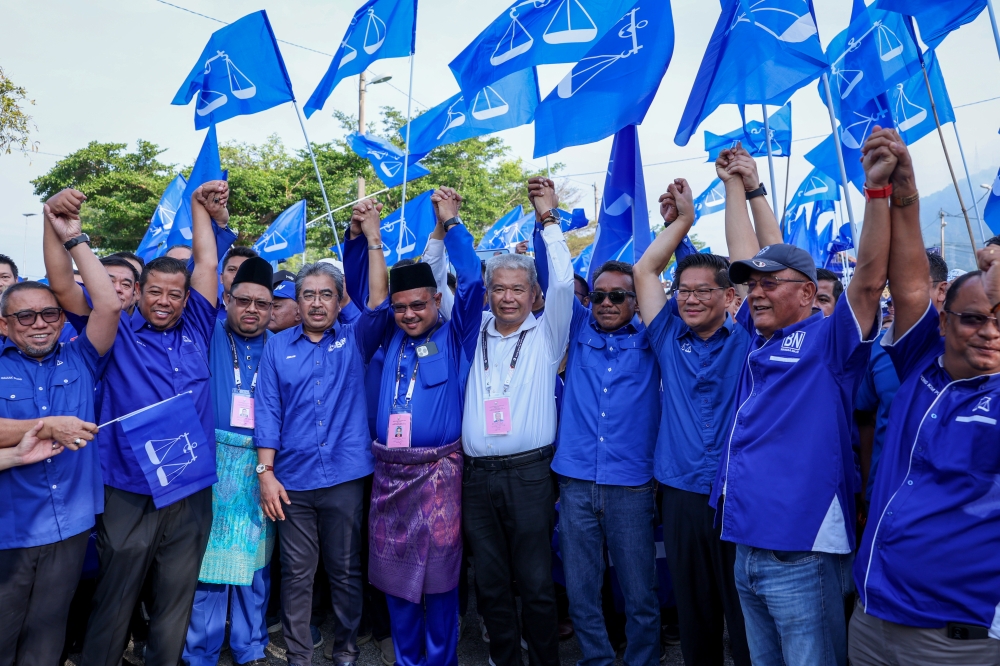
Barisan Nasional leadership has pledged to uphold civil standards during the forthcoming Negeri Sembilan state election, with senior party officials reaffirming the coalition's commitment to conducting itself with dignity throughout the campaign period. The assurance comes as political temperatures rise ahead of the state polls, with all parties preparing their machinery and messaging strategies to appeal to voters in the central state.
The declaration reflects broader concerns about maintaining decorum in Malaysian electoral contests, a perennial challenge as competing coalitions jostle for advantage. By staking out this position early, BN appears to be signalling its confidence in its ground organisation and message, suggesting the coalition believes it can prevail on the strength of its record and policy offerings rather than through aggressive or underhanded tactics. This rhetorical positioning also provides a counternarrative should any incidents arise during campaigning—the party can point to its stated principles and frame any controversies as departures from its intended approach.
Negeri Sembilan represents significant political territory for BN, a state where the coalition has maintained considerable influence despite the shifting electoral landscape across Malaysia over the past decade. The state's composition—with its mix of urban, semi-urban, and rural constituencies—makes it a microcosm of broader Malaysian voting patterns and a bellwether for coalition performance. Success or failure here carries implications extending beyond the state itself, signalling either momentum or vulnerability heading into any future general election cycle.
The timing of such assurances suggests internal awareness that previous campaigns, whether by BN or opposition parties, have occasionally descended into acrimony or personal attacks. By publicly committing to civil conduct, party leaders inoculate themselves against accusations of negativity while also setting expectations for their own members and supporters. Umno members in particular, given the party's high visibility and the heightened scrutiny its campaigns often receive, benefit from clear guidance on acceptable conduct and messaging.
Civil campaigning carries practical advantages beyond moral positioning. Voters increasingly express fatigue with aggressive political rhetoric, particularly in an era of social media amplification where inflammatory comments can spread rapidly and damage party brands. Parties that maintain professional standards in their advertising, public events, and statements tend to project competence and stability—qualities particularly valuable for an incumbent coalition seeking to retain voter confidence. This is especially true among middle-class and suburban voters who may swing between coalitions based on governance perceptions rather than tribal political affiliation.
The coalition will also need to address voter concerns specific to Negeri Sembilan, from local economic development priorities to infrastructure needs and the performance of state-level administration. A campaign focused on issues rather than personal attacks allows BN to concentrate messaging on these substantive matters, where the coalition's record as the long-standing governing force can be effectively deployed. The party can highlight completed projects, ongoing development initiatives, and policy commitments alongside comparative critiques of opposition alternatives.
Opposition parties will likely test BN's commitment to civil conduct, employing their own aggressive tactics to provoke responses and create incidents that generate unfavourable media coverage. Maintaining discipline under such provocation presents a genuine test of whether the party's stated commitment translates into consistent practice. The challenge intensifies given the decentralised nature of party organisation, where local-level candidates and supporters may not automatically align with national leadership messaging or behavioural standards.
Social media adds another layer of complexity to campaign conduct. While party leadership may maintain civil public statements and events, supporter networks on platforms like Facebook, WhatsApp, and TikTok often operate beyond direct institutional control. Managing these grassroots communications to ensure they align with stated campaign principles has proven difficult for all Malaysian political parties, creating vulnerabilities regardless of official pledges.
For Malaysia's broader political culture, repeated cycles of pledges to civil campaigning followed by variable implementation suggest a system still developing institutional norms around electoral conduct. Unlike established democracies with deeply rooted expectations and traditions around political campaigning, Malaysian politics continues evolving these conventions through practice and example. Each election offers opportunity to either reinforce or undermine standards, making leadership follow-through on stated commitments consequential for the trajectory of political discourse.
The Negeri Sembilan campaign will serve as a test case for BN's commitment and for the broader state of Malaysian electoral politics. Voters watching the campaign unfold will assess not merely party performance on policy grounds but also evaluate the quality and tone of political engagement being modelled by competing coalitions. Success in maintaining civil standards while effectively prosecuting electoral competition offers a template that could influence conduct in future contests, contributing incrementally to the development of more mature and constructive political culture across the nation.

