Barisan Nasional will need to devise an election approach specifically calibrated to Melaka's unique political environment rather than applying a one-size-fits-all template from recent state poll victories, according to the coalition's chairman and Deputy Prime Minister Datuk Seri Dr Ahmad Zahid Hamidi. The veteran politician's comments signal that despite BN's commanding wins in neighbouring Johor and Negeri Sembilan, the coalition recognises that Melaka presents distinct challenges and opportunities requiring a customised political formula.
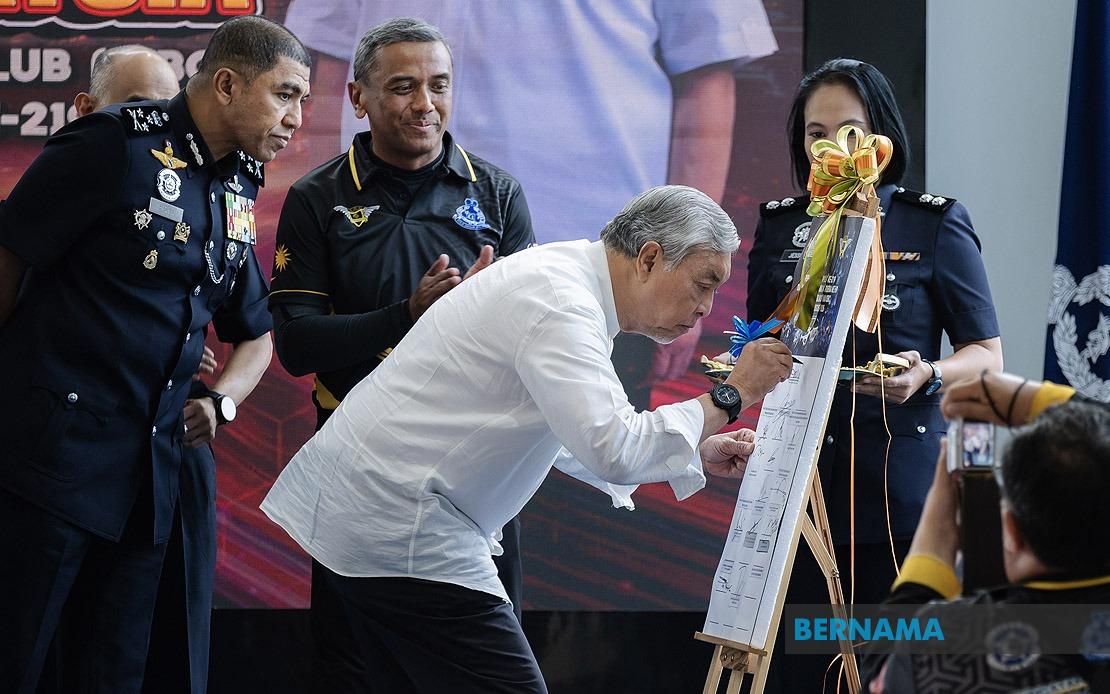
Ahmad Zahid's remarks came during remarks at a police day celebration in Kuala Lumpur, where he underscored that any political negotiations or alliance discussions must weigh both advantages and disadvantages comprehensively. The Deputy Prime Minister stressed that BN must ensure potential gains substantially outweigh possible liabilities before committing to any arrangement with prospective partners or coalitions. This measured approach suggests the leadership is conscious of past missteps where hasty agreements subsequently created friction within the broader coalition structure.
Integrity in political dealings emerged as a central theme in Ahmad Zahid's comments. He emphasised the importance of honesty, sincerity, and honouring commitments made during negotiations, cautioning implicitly against the practice of altering agreed positions once formal arrangements have been finalised. Such candour from BN's top leadership reflects growing recognition within Malaysia's political establishment that trust and consistency in coalition management directly impact both state and national governance stability. The cautionary tone suggests internal discussions about how previous agreements have sometimes unravelled after implementation.
The actual negotiation responsibility has been delegated to Melaka Chief Minister Datuk Seri Ab Rauf Yusoh, who simultaneously holds the position of Melaka BN chairman. This arrangement concentrates decision-making authority at the state level while maintaining hierarchical oversight, with findings subsequently escalated to national party leadership for detailed examination and final approval. The delegation strategy reflects confidence in Ab Rauf's political acumen while ensuring the federal party structure retains ultimate control over coalition configurations affecting the broader Unity Government framework.
The Melaka state government's current five-year mandate concludes on December 31, creating an imminent deadline for political negotiations and election preparations. BN currently controls 21 of the 28 state assembly seats following the 15th state election, with Pakatan Harapan holding five seats and Perikatan Nasional commanding two. This comfortable numerical advantage provides negotiating flexibility, yet Ahmad Zahid's emphasis on tailored approaches suggests BN leadership recognises that seat count alone does not guarantee successful coalition management or electoral success.
Remarkably, Melaka's state executive council already includes members from Pakatan Harapan, mirroring the Unity Government composition at the federal level. This pre-existing collaborative arrangement established important precedents for inter-party cooperation and demonstrates how national-level political frameworks can influence and inform state-level governance structures. The existing partnership underscores that BN's considerations extend beyond pure electoral mathematics to encompass the practical challenges of multi-party governance when ideological and programmatic differences persist among coalition members.
Ahmad Zahid explicitly contextualised state-level political cooperation within broader national stability objectives. He argued that political alliances function on multiple levels simultaneously—state elections represent tactical contests with immediate implications for state administration, yet they simultaneously serve as building blocks for national political architecture. Maintaining consistency between state-level negotiations and federal-level unity arrangements becomes essential for preventing contradictory commitments that might destabilise the national coalition.
At the federal level, Ahmad Zahid noted that inter-party cooperation transcends formal cabinet meetings to encompass systematic coordination between ministries and comprehensive whole-of-government approaches. This integrated perspective reflects sophisticated understanding of how coalition politics requires constant attention to implementation mechanisms, not merely the ceremonial aspects of political partnership. The Deputy Prime Minister's emphasis on structured coordination mechanisms suggests BN leadership has learned from past experiences where coalition partners operated in silos, creating duplication, inconsistency, and eventual friction.
Melaka's geopolitical position presents distinct considerations absent in other peninsular states. The historic state functions as a crucial economic hub with significant maritime interests and diverse ethnic and religious composition requiring careful political balancing. Unlike Johor's primarily Malay-Muslim majority or Negeri Sembilan's more homogeneous character, Melaka's complexity demands nuanced coalition architecture that acknowledges multiple community interests and aspirations. This demographic and economic reality likely prompted Ahmad Zahid's insistence on customised approaches rather than replicating formulae from states with different characteristics.
The forthcoming election represents a critical test of BN's political maturity and coalition management capacity. Rather than attempting to maximise electoral dominance through aggressive alliance construction, the coalition's leadership appears focused on creating sustainable governance frameworks that balance multiple stakeholder interests. Ahmad Zahid's emphasis on honest, sincere negotiations honouring prior commitments suggests recognition that short-term electoral gains achieved through questionable means often produce long-term political costs through diminished trust and partner defection.
For Malaysian voters and political observers, these remarks signal that BN intends to contest the Melaka election as part of its broader national stability agenda rather than as an isolated state-level contest. The coalition's willingness to acknowledge that different states require different political approaches demonstrates growing sophistication in recognising that Malaysia's federal structure and diverse state contexts demand flexible, adaptive political strategies. This perspective contrasts with earlier approaches that sometimes attempted applying uniform models across disparate political environments.
The timing of Ahmad Zahid's comments, arriving well before the December state election, indicates BN leadership wants adequate preparation time to conduct thorough negotiations and build consensus across the coalition's various components. By delegating negotiation authority to state-level leadership while maintaining national oversight, BN has created a structure permitting detailed exploration of options without premature public commitment. This deliberate, methodical approach suggests lessons learned from previous elections where hastily announced coalitions subsequently experienced rapid unravelling or disappointing electoral outcomes.

