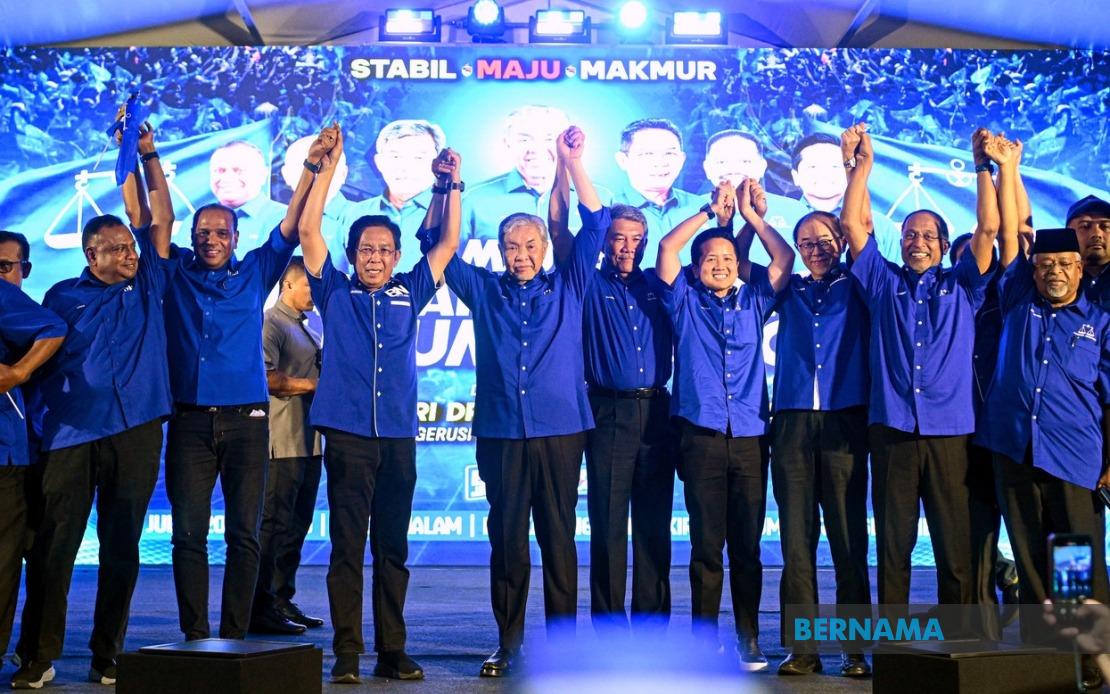
Barisan Nasional has moved swiftly to consolidate its electoral machinery in Negeri Sembilan, unveiling a 25-candidate roster that blends established political veterans with fresh talent as the coalition prepares for the 16th state election. The announcement, delivered at Tuanku Abdul Rahman Stadium in Paroi, signals BN's intent to maintain its hold on a state where it has held considerable sway despite nationwide political realignments in recent years.
At the centre of the slate stands Datuk Seri Mohamad Hasan, the Negeri Sembilan BN chairman who will seek to retain the Rantau constituency he has held continuously since 2004. His two decades of incumbency represents the kind of institutional continuity that BN often leverages in state contests. As deputy chairman of the broader coalition, Mohamad's retention at this crucial juncture underscores his continued importance to the party's hierarchy and his UMNO president, Datuk Seri Dr Ahmad Zahid Hamidi, who approved his candidacy.
Parallel to Mohamad's retention is the decision to field Datuk Seri Jalaluddin Alias in the Pertang seat, a position he has occupied since 2013. Jalaluddin, who holds the dual portfolio of Negeri Sembilan UMNO Liaison Committee chairman and Member of Parliament for Jelebu, represents another pillar of continuity in BN's strategic positioning. His presence on the slate reinforces the coalition's message of stability and proven track record in state governance.
The decision to retain incumbents reflects a broader campaign strategy that emphasises experience and electoral credibility. Beyond Mohamad and Jalaluddin, BN has confirmed that Datuk Mohd Faizal Ramli will defend the Linggi state seat whilst Datuk Mustapha Nagoor seeks re-election in Palong. These selections underscore BN's confidence in candidates who have already won the trust of their respective constituencies and who carry the advantages of name recognition and established networks.
However, the 25-candidate announcement masks a reality that remains fluid in the state's electoral landscape. BN has yet to finalise nominations for 11 state seats: Klawang, Serting, Lobak, Sikamat, Ampangan, Bukit Kepayang, Mambau, Paroi, Lukut, Bagan Pinang, and Gemas. This outstanding roster suggests that negotiations either within UMNO itself or between coalition partners may still be ongoing, or that BN is calibrating selections based on recent polling or organisational assessments.
The timing of this announcement carries significance for Malaysian electoral politics more broadly. Negeri Sembilan has historically been a BN stronghold, and the coalition's formal candidacy announcement signals confidence that it can maintain parliamentary and state legislative dominance despite challenges from Pakatan Harapan and other opposition forces. The state remains economically important as a commercial hub on the west coast corridor, and control of the state assembly ensures BN influence over development policies and resource allocation in the region.
For the coalition partners within BN, the candidate selections will be closely scrutinised to determine how seats have been distributed. UMNO's historical predominance in Negeri Sembilan suggests the party likely claims the lion's share of nominations, but the composition of the outstanding 11 seats could reveal much about internal coalition dynamics and whether MIC, MCA, or other component parties have secured additional opportunities to contest.
The retention of high-profile figures like Mohamad Hasan and Jalaluddin Alias also carries implications for national politics. Both men represent the traditional UMNO establishment at a moment when the party navigates internal factions and external opposition. Their electoral performance in Negeri Sembilan will be read as a barometer of BN's broader electoral prospects and whether established party structures retain grassroots appeal or face erosion from either opposition surges or intra-coalition tensions.
Looking ahead, the outstanding candidate announcements will determine whether BN faces any significant internal disputes or whether the coalition can present a united front across all 36 state seats. The completion of the candidate list will also clarify BN's strategic priorities regarding which constituencies it views as competitive battlegrounds requiring substantial organisational resources and whether any seats are being effectively conceded to opposition parties. Until those final 11 nominations are confirmed, the full picture of BN's electoral calculus in Negeri Sembilan remains incomplete, leaving observers to anticipate how the coalition will fine-tune its positioning in the contests to come.

