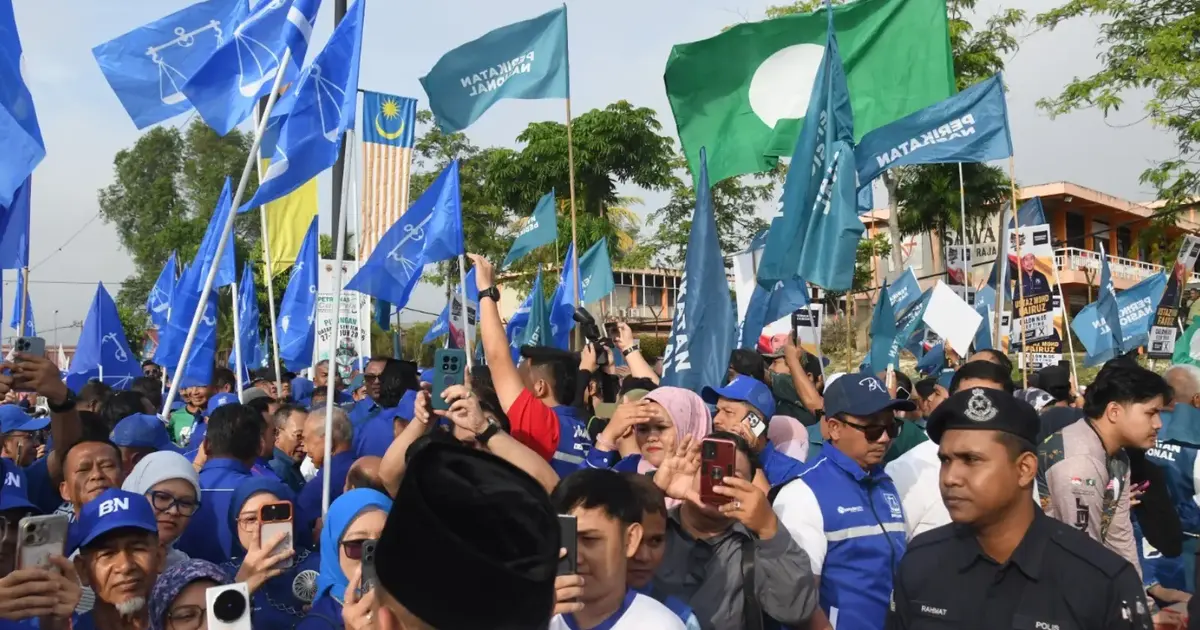
Perikatan Nasional's ambitions to seize control of Selangor face a significant hurdle as Barisan Nasional emerges unlikely to provide the electoral muscle that Bersatu demonstrated during the previous state election, according to political analyst Azmi Hassan. The assessment underscores a critical weakness in PN's machinery should the coalition attempt to reconstruct its Selangor campaign without Bersatu's participation and organizational reach.
Azmi Hassan's observation reflects a fundamental mismatch between what BN can realistically deliver and what PN requires to make meaningful electoral gains in Malaysia's most economically significant state. During the previous election cycle, Bersatu functioned as a crucial component of PN's coalition strategy, mobilizing specific voter segments and providing geographic penetration in constituencies where the traditional BN apparatus had atrophied. The departure or reduced involvement of Bersatu therefore creates a vacuum that BN's existing organizational structure and voter base cannot simply absorb or compensate for through existing mechanisms.
The dynamics between these two major political coalitions have fundamentally shifted over recent electoral cycles. Barisan Nasional, historically the dominant force in Malaysian politics, has experienced organizational decay in numerous constituencies, particularly in urban centers and among younger demographics. Bersatu, by contrast, represents a relatively newer political force with different organizational cultures, grassroots networks, and appeal among specific voter populations. These distinctions matter considerably when constructing electoral coalitions designed to challenge incumbent administrations in competitive states like Selangor.
Selangor's political landscape presents particular challenges for any coalition seeking to dislodge the incumbent Pakatan Harapan government. The state encompasses diverse communities, multiple competing political interests, and constituencies with varying political leanings. Successfully navigating this complexity requires coalition partners with complementary strengths rather than duplicative capabilities. Bersatu brought specific organizational advantages and voter appeal that BN alone cannot replicate, regardless of resource allocation or campaign intensity.
The implications for PN's broader political strategy extend beyond Selangor. Any coalition structure that depends heavily on BN's participation faces inherent limitations given the latter's weakened organizational capacity in critical regions. This reality suggests that PN's electoral calculations must account for structural constraints rather than assuming that coalition flexibility automatically translates into expanded competitive capacity. The lesson applies equally to other competitive states where PN harbors electoral ambitions.
Bersatu's role in PN's previous Selangor campaign encompassed more than merely adding vote counts. The party functioned as a bridge between PN's political messaging and specific demographic segments that traditional BN messaging failed to reach effectively. Younger voters, urban professionals, and communities skeptical of BN's historical governance found Bersatu's narrative and positioning more persuasive. Removing this crucial intermediary without identifying alternative mechanisms for reaching these voters represents a significant strategic vulnerability.
The timing of this analysis matters considerably given Malaysia's fluid political environment. Coalition formations and dissolutions occur with increasing frequency, and voter preferences have become increasingly volatile. Understanding these organizational realities helps explain why political victories in competitive states require careful coalition construction rather than simple aggregation of electoral machinery. The Selangor case illustrates how political outcomes depend not merely on resources or campaign spending but on matching coalition partners with complementary capabilities and voter appeal.
From a Malaysian perspective, this situation reflects broader patterns reshaping the nation's political landscape. The traditional dominance of established parties faces challenges from newer political forces with different organizational models and voter relationships. Analysts and political strategists must move beyond simplistic assumptions about coalition mathematics and recognize that organizational effectiveness, voter perception, and strategic positioning create real constraints on electoral possibilities.
The competitive dynamics in Selangor will likely remain intense regardless of coalition configurations. However, Azmi Hassan's assessment suggests that PN's path to victory becomes considerably more difficult should the coalition lose Bersatu's organizational contributions. This reality underscores the fragility of contemporary Malaysian political coalitions and the importance of understanding which coalition partners contribute irreplaceable electoral value versus those offering merely supplementary support. For observers monitoring PN's electoral strategy, the Bersatu question represents a fundamental constraint on organizational capacity that no amount of campaign resources can fully overcome.

