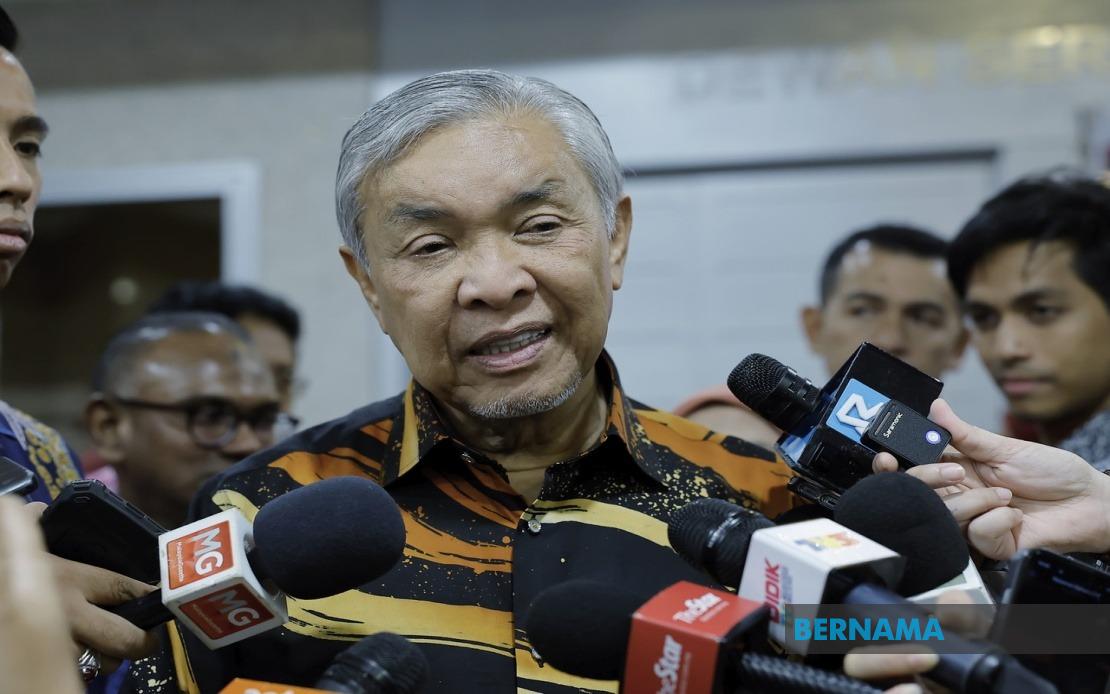
Deputy Prime Minister and Barisan Nasional chairman Datuk Seri Dr Ahmad Zahid Hamidi has drawn a firm line on accountability at Tabung Haji, declaring that neither the ruling coalition nor UMNO will countenance misconduct or administrative failures at the Islamic pilgrimage fund. Speaking after the Rural and Regional Development Ministry's monthly assembly in Putrajaya on Tuesday, Ahmad Zahid emphasised that those implicated in wrongdoing across government agencies and statutory bodies must face appropriate consequences without compromise.
The strong language from the BN leadership comes as Parliament prepares for a special debate session scheduled for August 11 to examine the findings of the Royal Commission of Inquiry report into Tabung Haji's operations. Released on July 29, the RCI's conclusions paint a troubling picture of the fund's stewardship, recommending a comprehensive forensic audit into past investment decisions that precipitated a substantial deterioration in the pilgrim fund's asset base.
Tabung Haji, which manages savings for Malaysian Muslims preparing for the hajj pilgrimage and represents one of Malaysia's largest financial institutions with millions of individual accounts, has long been considered a trusted repository for the country's faithful. The RCI's investigation spanning the 2014 to 2020 period uncovered evidence of questionable transactions and systematic concealment of information—findings that strike at the heart of public confidence in an institution entrusted with religious duty and personal finances simultaneously.
The forensic audit recommendation signals recognition that the RCI's initial inquiry, while comprehensive, cannot fully illuminate the extent of financial irregularities or trace the decision-making pathways that led to asset erosion. For Malaysian depositors and the broader Muslim community, the prospect of external forensic examination offers the possibility of clarity about where responsibility ultimately lies and what mechanisms failed to prevent problematic investments from proceeding.
Ahmad Zahid's assertion of zero tolerance reflects political awareness that the Tabung Haji scandal threatens public trust in institutional governance at a sensitive moment for UMNO and its coalition partners. The party has invested considerable effort in rebuilding credibility following previous governance controversies, and any perceived reluctance to pursue accountability at a major Islamic institution would invite accusations of selective application of justice.
The August 11 parliamentary session will represent a critical juncture where lawmakers from both government and opposition benches can scrutinise the RCI's methodology, conclusions, and recommendations. The debate will likely expose differing political perspectives on whether the inquiry went far enough in assigning culpability and whether current leadership should face consequences alongside lower-level officials.
For Southeast Asian observers monitoring Malaysia's institutional health, the Tabung Haji episode underscores challenges that pluralist nations face when religious institutions intersect with substantial financial assets and bureaucratic machinery. The case demonstrates that even organisations rooted in strong cultural and religious legitimacy require robust oversight mechanisms, independent auditing, and transparent governance frameworks to prevent erosion of public confidence.
The RCI's discovery of suspicious transactions and information concealment raises questions about internal audit controls and the effectiveness of existing regulatory architecture overseeing Tabung Haji's investment and operational decisions. Whether the forensic audit will result in criminal prosecutions, administrative sanctions, or structural reforms at the institution remains to be determined, but Ahmad Zahid's public commitment suggests the government recognises political and institutional imperatives demand substantive action rather than symbolic gestures.
Malaysian depositors who have contributed to Tabung Haji expecting their funds to appreciate steadily for their pilgrimage will view the unfolding accountability process with particular interest. The erosion of asset value directly affects their savings and the security of their religious obligation, making this not merely a governance question but one with profound personal significance for millions of Malaysians.
The broader implications extend to investor confidence in Malaysia's statutory bodies and government-linked institutions more generally. If Tabung Haji's problems stemmed from governance lapses rather than market forces beyond management's control, other institutions may face renewed scrutiny regarding their own oversight mechanisms and investment practices. The parliamentary debate and subsequent forensic audit will likely set precedents for how accountability is pursued across the institutional landscape.
As the special sitting approaches, political positioning within and across coalition lines will become increasingly apparent. How comprehensively lawmakers engage with the RCI findings, whether opposition voices raise substantive alternative explanations or merely score political points, and whether government backbenchers probe meaningfully or defer to leadership will all signal the depth of institutional commitment to genuine accountability versus damage control.

