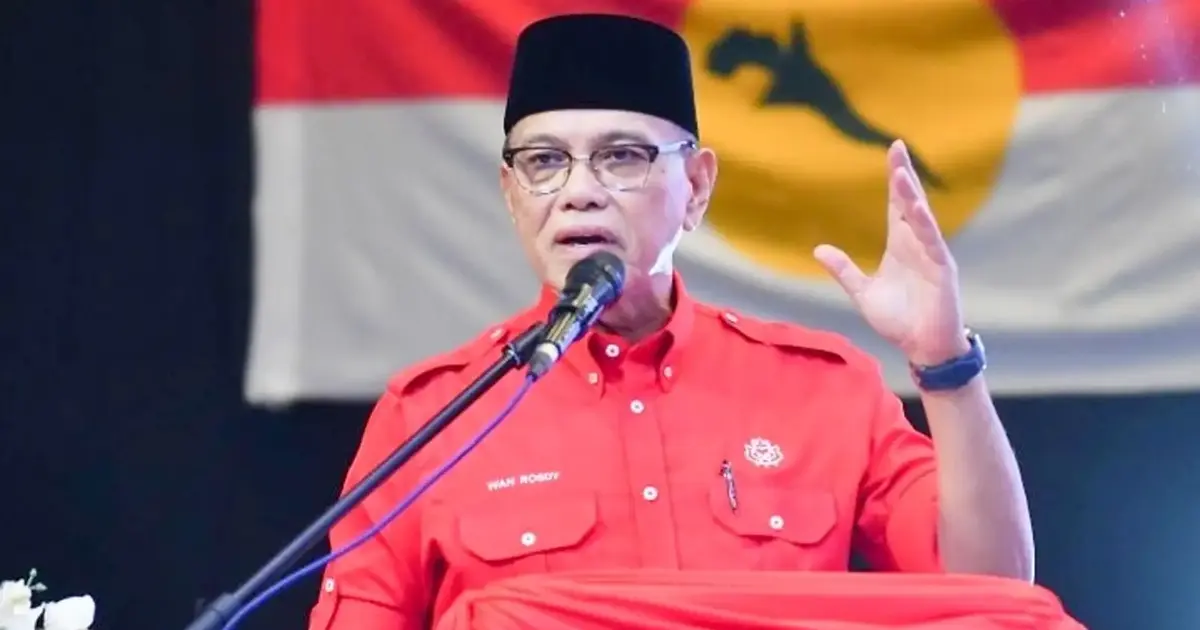
The possibility of formal cooperation between Barisan Nasional and Perikatan Nasional ahead of the 16th general election remains premature, according to Umno vice-president Wan Rosdy Wan Ismail, who emphasised that the two major coalitions have not yet entered into substantive discussions on the matter. Speaking to political observers and party members, Wan Rosdy made clear that speculation about pre-election alliances between the two blocs is getting ahead of the political timeline, with both coalitions currently managing their immediate priorities in states where they hold or recently secured administrative control.
The clarification comes amid ongoing conversation within Malaysian political circles about potential realignments ahead of the next general election. While both BN and PN have at various points cooperated on specific legislative matters in Parliament, a formal electoral compact would represent a significant structural shift in Malaysian politics. The absence of formal talks at this stage, according to Wan Rosdy's statement, suggests that senior leaders in both coalitions believe the timing for such discussions is not yet ripe. This measured approach reflects the complexities involved in merging two large political entities with distinct membership bases, ideological emphases, and organisational structures.
Wan Rosdy's comments are particularly significant given Umno's position as the dominant party within the BN framework. Any decision by Umno to pursue closer ties with PN would require consensus among multiple parties within the BN structure, including MCA, MIC, and various regional partners, as well as discussion with PAS, Bersatu, and other PN constituents. The absence of dialogue at the vice-presidential level suggests that such comprehensive discussions have not begun in earnest, and that party presidents and formal leadership channels have not been activated for this purpose.
Instead of looking forward to potential electoral cooperation, Wan Rosdy stated that the immediate focus for both coalitions should centre on strengthening their governance in Negeri Sembilan, where BN recently re-established administrative control following a period of political uncertainty. The state government represents a valuable opportunity for BN to demonstrate effective administration and reconnect with voters who may have drifted away from the coalition in recent years. For PN, which controls several other states, the emphasis similarly remains on delivering visible results and building public confidence through performance rather than engaging in broader coalition mathematics at the national level.
The timing of Wan Rosdy's statement carries implications for the internal dynamics of both coalitions. BN has been focused on recovery following the 2022 general election results, which delivered a fragmented Parliament but did allow BN to position itself as a stabilising force. PN, meanwhile, has been consolidating power in Terengganu, Kelantan, Kedah, and Perlis whilst strengthening its organisational machinery. Under these circumstances, either coalition's leadership may view engagement with the other as a potential distraction from pressing state-level governance demands.
For observers tracking Malaysian political trends, Wan Rosdy's clarification suggests that the next general election, whenever it is called, will likely see BN and PN positioning themselves as competing alternatives rather than as partners in a grand realignment. This competitive stance aligns with how both coalitions have publicly positioned themselves during the current parliamentary term, with PN broadly presenting itself as an alternative governance model to the BN establishment. Such positioning allows both coalitions to maintain distinct identities in the eyes of voters whilst preserving the option to negotiate post-election arrangements if Parliament again produces a hung result.
The state-level focus that Wan Rosdy emphasised is strategically sound for both coalitions. Negeri Sembilan, with its 36 state assembly seats, offers BN a platform to rebuild credibility in a significant polity. Elsewhere, the states controlled by PN represent laboratories where the coalition can showcase its approaches to education, healthcare, and economic development. Success at the state level translates into organisational momentum, fundraising capacity, and volunteer enthusiasm that ultimately benefit any nationwide campaign effort.
Regional observers across Southeast Asia have watched Malaysia's political evolution with interest, particularly given the region's broader trend towards coalition politics and the complications that arise when multiple parties must negotiate shared governance. Malaysia's experience with BN and PN offers lessons in how distinct coalitions can coexist within a parliamentary system, sometimes cooperating on specific issues whilst remaining generally competitive. The absence of BN-PN talks on electoral cooperation, therefore, may represent a mature acceptance of this reality rather than a sign of instability.
The practical question of when such talks might eventually begin remains open. Political scientists and commentators have suggested that serious coalition negotiations typically occur closer to the actual date of the election, which remains unannounced. Constitutional provisions allow the election to be called at any point after September 2023, but no indication has been given that this will occur imminently. This calendar reality likely explains why Wan Rosdy's dismissal of premature cooperation discussions resonates with party strategy at this juncture.
Ultimately, Wan Rosdy's statement reinforces the principle that Malaysian coalitions operate on multiple levels simultaneously. At the parliamentary level, BN and PN may find common cause on specific measures; at the state level, they pursue distinct agendas and compete for resources; and at the electoral level, they retain the flexibility to cooperate or compete depending on circumstances. This pragmatic pluralism has characterised Malaysian politics throughout the post-independence period and shows every sign of continuing.

