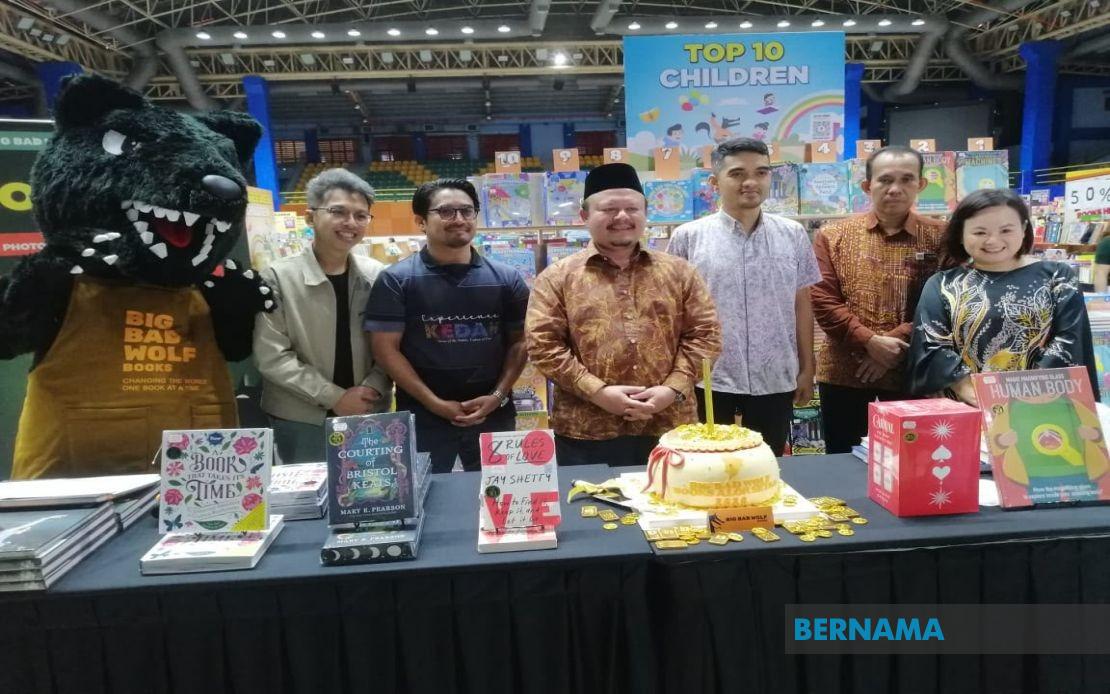
Malaysia's largest book fair, Big Bad Wolf, opened in Alor Setar on July 30, positioning itself as a crucial venue for strengthening reading culture and English language capabilities throughout Kedah and the wider region. Running until August 9 at Stadium Sultan Abdul Halim, the 11-day event represents a significant cultural initiative in a digital age where literacy engagement among younger Malaysians remains a persistent policy concern for state and federal authorities.
Datuk Mohd Azam Abd Samat, who chairs the Kedah State Education, Religion, Communications and Information Committee, underscored the strategic importance of cultivating reading habits from childhood, arguing that foundational literacy and knowledge acquisition directly shape the calibre of future generations available to contribute to national development. His remarks during the opening ceremony reflected broader government priorities around educational enrichment and social cohesion through cultural engagement rather than top-down mandates.
The fair's appeal lies partly in its accessibility and scale. With admission free and operating 10 am to 10 pm daily, the venue removes financial barriers that might otherwise deter families from lower-income backgrounds. The organisers have curated approximately 40 per cent new titles, ensuring that repeat visitors and families attending together encounter fresh inventory rather than recycled stock from previous years' events.
English-language materials appear to be a particular focus, with organisers stocking interactive and illustrated children's books designed to build language familiarity in an engaging, non-academic manner. This pedagogical approach acknowledges that many Malaysian children absorb English most effectively through contextual, visual reinforcement rather than traditional grammar instruction. For regional observers, this signals how Southeast Asian markets are adapting international best practices in literacy promotion to local circumstances.
The Big Bad Wolf team projects attracting 50,000 visitors during the festival period, contingent on sustained promotion and cross-sector collaboration with state institutions. This target is neither trivial nor unprecedented for major Malaysian book fairs, but achieving it requires orchestrated outreach that extends beyond the stadium gates. To that end, the fair has deployed its mascot to concurrent events, specifically Temasya Orang Kedah at Stadium Darul Aman, transforming what might otherwise remain separate attractions into complementary draws.
The cross-promotional strategy reveals sophisticated event management thinking. By positioning the book fair as one element within a broader cultural calendar rather than an isolated commercial exercise, organisers increase the likelihood of impulse visits and word-of-mouth engagement. Social media incentives—offering cash vouchers and prizes including gold bars for patrons who photograph the mascot and tag the event online—demonstrate how traditional book fairs are adapting to contemporary consumer behaviour patterns.
For Malaysian policymakers, the Big Bad Wolf event carries particular resonance in addressing longstanding anxieties about English proficiency among school-leavers entering tertiary and employment markets. While standardised curricula mandate English instruction, informal exposure through culturally valued venues like book fairs may achieve what classroom settings sometimes cannot: genuine enthusiasm and voluntary engagement with the language. This distinction between mandated and self-motivated learning underpins contemporary educational psychology.
Kedah's participation in hosting the event also reflects broader state-level investment in positioning itself as culturally vibrant within Malaysia's federal structure. In an era when younger professionals increasingly migrate toward Kuala Lumpur and Penang for career opportunities, peripheral states must create compelling cultural and educational infrastructure to retain talent and attract external investment. A functioning reading culture signals intellectual vitality and quality-of-life amenities that appeal to knowledge workers and their families.
The timing and concurrent programming with Temasya Orang Kedah suggests state government coordination aimed at maximising foot traffic and cultural celebration during peak tourism months. By bundling educational and entertainment offerings, authorities create multi-day visitation reasons that benefit hospitality, retail, and food service sectors beyond book sales alone. This multiplier effect extends economic benefits throughout Alor Setar's urban corridor.
From a regional Southeast Asian perspective, Malaysia's sustained investment in book fairs and print culture stands in contrast to rapid digital media adoption elsewhere in the subregion. While e-books and audiobooks proliferate globally, Malaysia continues supporting physical book infrastructure alongside digital initiatives, suggesting policy recognition that print culture serves social functions beyond mere information transfer—fostering community gathering, intergenerational knowledge-sharing, and local literary industry sustainability.
The emphasis on English-language materials particularly matters given Malaysia's positioning as a regional English-language hub for business, higher education, and international relations. Households that cultivate English reading habits early create pathways for children to access global knowledge networks and competitive advantages in increasingly transnational labour markets. State officials understand that literacy investments made now determine economic trajectories decades hence.
Successful execution of the Big Bad Wolf event may catalyse sustained policy attention toward reading infrastructure in Kedah. If attendance targets are met and media coverage highlights positive outcomes, state authorities may justify allocating resources toward permanent or semi-permanent literacy programming, library enhancements, or school reading promotion initiatives. Cultural events thus serve dual functions as both immediate engagement opportunities and political justification for deeper systemic investment.

