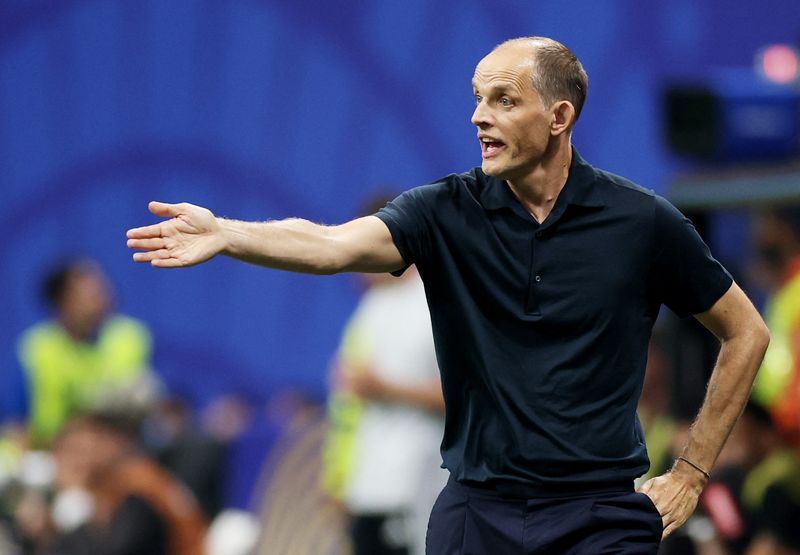
Thomas Tuchel has become the focal point of England's World Cup disappointment following a dramatic semi-final collapse against Argentina, with critics queuing to dissect his in-game decisions and strategic approach. Yet beneath the surface recriminations lies a more sobering reality: England's failure stemmed from problems far more fundamental than any single manager's tactical adjustments during ninety minutes of football.
When the Football Association appointed Tuchel as Gareth Southgate's successor last October, the decision was framed as England's best opportunity to finally translate talent into tournament success. FA Chief Executive Mark Bullingham spoke confidently of Tuchel's track record as a serial winner at club level, declaring that the former Chelsea and Bayern Munich boss represented the optimal chance to capture the World Cup title. The German's own rhetoric upon arrival reinforced this optimism, with Tuchel pledging to secure "a second star on our shirt" and guide England to their first world championship since 1966. That ambition evaporated in the dying minutes of the semi-final, when Argentina's late goals sent England home and triggered an avalanche of analysis dissecting Tuchel's defensive restructuring after Anthony Gordon's opening goal.
Former West Ham and Crystal Palace manager Alan Pardew offered one of the more measured critiques on talkSPORT, arguing that Tuchel's adjustments had fostered a negative mindset that undermined the team's earlier momentum. Pardew claimed that "fear, mistakes and rational organisation" gave way to a defensive posture that ultimately invited the pressure England could not withstand. The accusation resonates with a particular strand of English football philosophy that views tactical caution as a betrayal of attacking potential, yet Tuchel himself rejected this framing entirely. The manager contended that no defensive schema could have resolved what he identified as a more structural deficiency: England's apparent inability to dominate possession and control games through ball retention in the manner that comes naturally to Spain, Argentina, and Brazil.
This observation hints at a cultural dimension to England's tournament struggles that transcends any individual coach's preferences or mistakes. Tuchel's assessment acknowledges that English football, shaped by its own historical traditions and playing philosophy, may lack the embedded cultural foundation for the patient, possession-based football increasingly required at the highest competitive levels. Such a diagnosis proves far more troubling than a single tactical misjudgement because it suggests the problem cannot be resolved through one manager's innovations or the next appointment of a supposedly superior tactician. Instead, it points toward systemic patterns ingrained across the English game's development and playing culture.
Perspective matters when contextualizing Tuchel's first major tournament experience. Despite his considerable pedigree in club competition, including a Champions League title with Chelsea, tournament football operates according to different rhythms and pressures than domestic club seasons. Didier Deschamps required six years managing France before steering them to the 2018 World Cup title, then following that with a runners-up finish in 2022. Aimé Jacquet, Deschamps' predecessor, needed five years to develop the 1998 title-winning team into a cohesive unit capable of handling tournament intensity. By comparison, Tuchel reaching the semi-finals in his inaugural World Cup campaign matched Southgate's achievement from 2018, suggesting the appointment has not yet proven misguided despite the painful exit.
Argentina's victory also reflected the extraordinary calibre of opposition England faced, a dimension frequently obscured by domestic criticism focused purely on English failings. The defending champions arrived in the tournament still propelled by Lionel Messi, the world's preeminent player whose ability to elevate his teammates in critical moments remains unmatched. Messi's former Barcelona teammate Thierry Henry offered vivid testimony to this phenomenon, describing how the Argentine magician transforms when his team requires him most, shifting into a mode where he becomes essentially unstoppable. Henry's anecdote about Messi's competitive awakening when referee decisions aggravate him illustrates how players of Messi's calibre operate on a different plane, capable of single-handedly shifting tournament momentum through sheer force of will and technical supremacy.
Argentina's knockout-round journey to the semi-final further demonstrated their resilience and hunger to retain the title, something unachieved since Brazil's back-to-back successes in 1962. Cape Verde pushed them to the limit, while Egypt and Switzerland required extraordinary efforts to overcome, including three late goals against Egypt and extra time against ten-man Switzerland. Each narrow escape hardened Lionel Scaloni's team, creating a squad battle-tested and desperate to achieve consecutive World Cup victories. Against England, this desperation found expression through Messi's drift to the right flank, where he evaded England's packed defensive structure and delivered assists for Enzo Fernandez and Lautaro Martinez's decisive late goals.
England's defensive retreat, visible in statistics showing only two passes in Argentina's half between the 72nd and 92nd minutes compared to Argentina's 111, reflected a calculation that controlling Messi through numerical superiority represented the only viable approach. Yet this strategy miscalculated both Messi's capacity to penetrate dense defensive shapes and Argentina's hunger when facing determined opposition. By compressing their shape to neutralize Argentina's attacking threat, England paradoxically enabled the conditions under which Messi thrives—situations demanding improvisation, creativity, and the kind of individual brilliance that tournament football increasingly revolves around at the highest level.
The wider implication for English football extends beyond Tuchel's future or the next managerial appointment. England faces a choice between continuing to recruit established club coaches with limited international tournament experience or developing a different pathway for grooming managers specifically in the competitive cauldron of tournament football. The gap between club and international football grows ever wider, with tournament demands—compressed schedules, knockout drama, the magnified importance of every decision—creating pressures that even the most successful club managers must navigate afresh. Tuchel's two-year contract extension signed in February suggests the FA retains confidence in his project, a reasonable position given that reaching semi-finals represents genuine progress rather than failure.
Yet Tuchel's own reflection on England's inability to control possession and shape matches through ball retention raises questions about whether managerial change alone addresses the problem. If English football's DNA, as Tuchel suggested, differs fundamentally from the Spanish, Argentine, or Brazilian approaches that emphasize possession-based control, then the solution requires investment in coaching development, youth academy philosophy, and elite player recruitment patterns that may take years to yield results. The criticism Tuchel faces, while understandable in the aftermath of defeat, risks obscuring this deeper reality: that England's World Cup struggles stem from competitive structures and cultural factors that extend far beyond any individual manager's tactical decisions during a semi-final.

