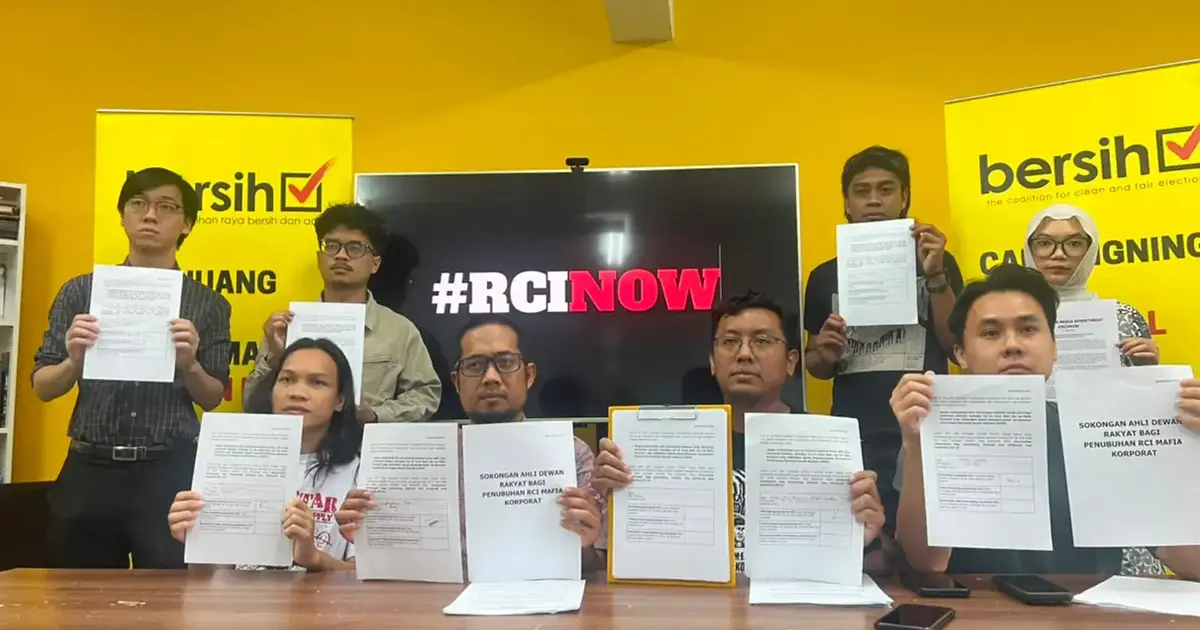
Bersih, Malaysia's independent electoral watchdog, has announced that 34 members of parliament have pledged their backing for a royal commission of inquiry into what the organisation characterises as 'corporate mafia' activities. The lawmakers span multiple political parties, including PKR, PAS, DAP and Umno, suggesting the push for such an inquiry has attracted cross-partisan support at the parliamentary level.
The revelation underscores growing concerns among sections of Malaysia's political establishment regarding organised business interests that allegedly operate with impunity across sectors. Bersih's framing of these entities as a 'corporate mafia' signals public perception of systemic corruption and unaccountable power wielded by well-connected business figures who may leverage political connections to circumvent legal oversight. The diversity of party backing indicates that awareness of these issues transcends traditional coalition divisions, though the specific nature of activities targeted remains central to understanding the significance of this push.
A royal commission of inquiry represents a formal investigative mechanism that carries substantial political weight in Malaysia's governance structure. Unlike parliamentary committees or routine oversight bodies, an RCI commands dedicated resources and investigative authority to subpoena witnesses, examine documents and produce binding findings that can inform subsequent legislative or prosecutorial action. The threshold for establishing such inquiries is typically high, requiring either government initiative or sustained parliamentary pressure demonstrating broad-based concern.
The multi-party composition of the supporting MPs reflects a tactical recognition that corporate misconduct transcends ideological boundaries. Business-related corruption, market manipulation, illegal monopolistic practices and abuse of regulatory capture affect constituents across different demographic and political segments. By securing commitments from lawmakers within both governing coalition parties and opposition benches, Bersih has positioned the RCI proposal as addressing a national governance failure rather than a partisan political grievance.
PKR's involvement in backing the inquiry aligns with the party's stated commitment to institutional reform and anti-corruption efforts, though the party has itself navigated questions regarding business accountability within its own political networks. DAP's support reflects the opposition coalition's broader emphasis on transparency and institutional checks, a consistent messaging theme across its tenure in office and opposition. PAS's participation introduces an interesting dynamic, suggesting that religious-conservative political formations also perceive threats to legitimate economic activity from unaccountable corporate behaviour. Umno's inclusion is perhaps most analytically significant, as it suggests segments within the former ruling party recognise that exposure and reform of corporate misconduct may serve political rehabilitation narratives.
The 'corporate mafia' terminology employed by Bersih deliberately invokes parallels to organised crime structures, suggesting hierarchies of intimidation, reciprocal obligation and protection networks that operate outside formal legal channels. Malaysian business observers have long documented concerns regarding concentrated market power, restrictive trade practices, asset stripping through related-party transactions and exploitation of regulatory gaps. The formal investigation such an RCI would conduct could illuminate how political connections facilitate these practices and identify structural weaknesses in corporate oversight frameworks.
From a Southeast Asian perspective, Malaysia's experience with corporate malfeasance reflects patterns evident across the region. Large conglomerates with political patronage, weak minority shareholder protections, opaque beneficial ownership structures and limited enforcement of securities regulations characterise corporate governance challenges shared with neighbours like Indonesia and Thailand. An RCI examining these mechanisms within the Malaysian context would generate insights relevant to regional governance debates and potentially establish precedent for similar investigations elsewhere.
The practical pathway from parliamentary backing to actual RCI establishment remains uncertain. While 34 MPs represent a notable constituency, formal establishment of a royal commission requires government endorsement or a sufficiently forceful parliamentary petition that compels government action. The current political configuration, coalition stability and the particular administrative priorities of executive leadership will substantially influence whether this proposal advances to formal institutional realisation or remains a parliamentary aspiration.
Bersih's role in aggregating and publicising this parliamentary support demonstrates the continued relevance of civil society organisations in channelling cross-partisan political demands. The watchdog's ability to broker commitments from lawmakers across ideological divides suggests that anti-corruption and institutional accountability messaging retains mobilising power within Malaysia's political sphere, even amid polarisation on other issues. This indicates that constituencies for governance reform exist within parliament itself, though translating parliamentary sentiment into institutional action requires navigating executive discretion.
The eventual scope and terms of reference for any RCI will prove crucial in determining its investigative depth and practical impact. Narrowly circumscribed inquiries risk producing toothless findings, whilst overambitious mandates may face obstruction or resource constraints. The selection of commissioners will equally influence credibility; appointments perceived as politically influenced rather than merit-based could undermine the inquiry's legitimacy and public receptivity to its conclusions.
Looking ahead, Bersih's announcement signals that corporate accountability remains a live political issue in Malaysia despite competing governance priorities. Whether the 34-MP backing translates into institutional action will serve as a significant indicator of parliament's capacity to pursue investigations that potentially implicate powerful business interests with political connections. The inquiry's eventual establishment would represent an important test of Malaysia's institutional willingness to scrutinise concentrated economic power.

