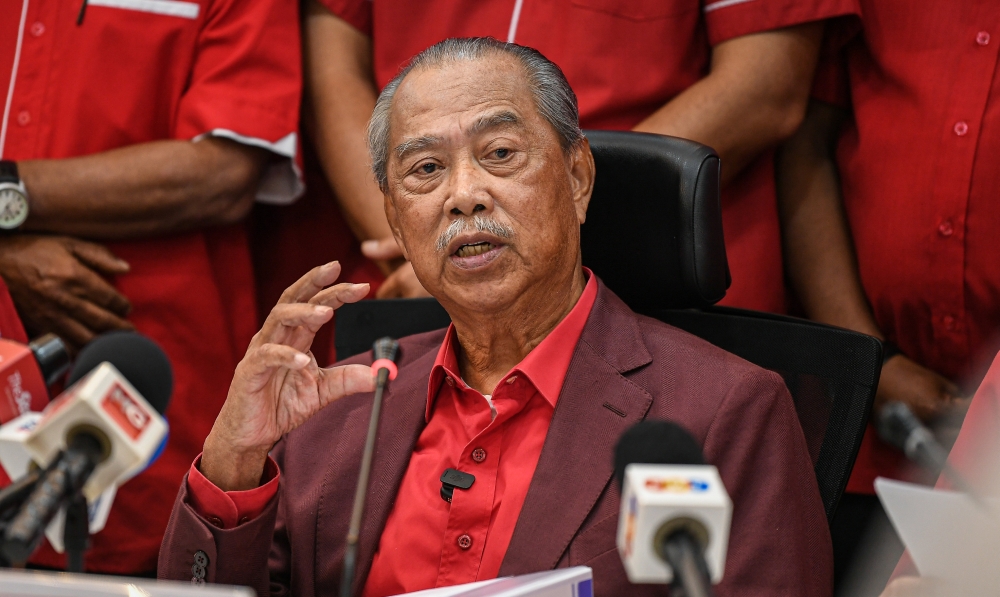
Parti Pribumi Bersatu Malaysia has signalled a significant shift in its political strategy by announcing it will contest the forthcoming Negeri Sembilan state election using its own party logo rather than the shared Perikatan Nasional symbol. The decision, disclosed by party president Muhyiddin Yassin, reflects escalating tensions within the opposition coalition and marks a departure from the unified electoral approach that has characterised PN campaigns in recent years.
The move represents a critical juncture for Perikatan Nasional, the alliance that brought together Bersatu, PAS, and several other opposition parties following the 2020 political upheaval. Since its formation, the coalition has positioned itself as a unified alternative to the ruling Barisan Nasional government, leveraging the combined electoral machinery and voter base of its constituent parties. However, mounting disagreements over seat allocation, policy direction, and leadership have increasingly strained these bonds, with the Negeri Sembilan contest now becoming the most visible manifestation of these fractures.
Muhyiddin's announcement carries particular weight given his status as a founding figure in PN's establishment and his continued influence over Bersatu's strategic decisions. By opting for the party's own branding, Bersatu effectively signals that it no longer views the PN coalition as the primary vehicle for its electoral ambitions in this key state contest. Negeri Sembilan, a strategically important state with a mixed urban-rural demographic, has been a bellwether for broader political trends in peninsular Malaysia, making the coalition's performance there consequential for both constituent parties and for the broader opposition movement.
The underlying grievances driving Bersatu's unilateral decision appear rooted in longstanding disagreements within PN regarding resource distribution and seat negotiations. In previous elections, coalition partners have clashed repeatedly over which party fields candidates in competitive constituencies, with smaller parties often feeling marginalised by PAS's assertiveness and numerical advantage. These disputes have rarely reached the point of public declarations, making Muhyiddin's forthright announcement particularly noteworthy as a signal that behind-the-scenes compromise has reached its limits.
PAS, as the numerically dominant member of PN, has increasingly set the tone for the coalition's direction, particularly following strong performances in recent elections. This dynamic has reportedly frustrated Bersatu leaders, who view their party as having comparable or superior organisational capacity and electoral relevance in certain regions. The Negeri Sembilan situation exemplifies this tension, with disagreements over candidate selection and campaign strategy apparently reaching an impasse that Bersatu resolved by pursuing an independent course.
From a broader Malaysian political perspective, the fracturing of PN carries significant implications for the opposition's viability as a government-in-waiting. The coalition's effectiveness has always depended on presenting a united front capable of challenging BN's entrenched machinery and deep reservoirs of state resources. Internal divisions that manifest in actual electoral competition—where PN members effectively campaign against one another—undermine this central proposition and risk fragmenting opposition support in ways that benefit the incumbent ruling coalition.
For voters in Negeri Sembilan specifically, the development introduces additional complexity into an already crowded political landscape. Bersatu's decision means local electorates will face a genuinely three-way or multi-way contest in many constituencies rather than a binary choice between BN and PN. This atomisation of opposition votes, should it persist across multiple seats, could inadvertently benefit BN candidates by allowing them to win with reduced vote shares in split fields. Strategic voters seeking to consolidate anti-government sentiment may find themselves navigating more difficult calculations about where their ballot can be most effective.
The timing of Bersatu's announcement also warrants examination. Coming amid broader discussions about potential electoral cooperation frameworks and potential general election timing, the move suggests that Bersatu leadership believes pursuing a more assertive independent identity serves the party's long-term positioning better than continued subordination within PN's decision-making structures. This could reflect confidence in Bersatu's standalone appeal or, alternatively, a pessimistic assessment of PN's electoral prospects and a desire to distance the party from anticipated losses.
Historically, Malaysian opposition coalitions have proven fragile when put under electoral stress, with constituent parties reverting to competitive postures once seats and campaign resources become finite. PN's current trajectory mirrors patterns seen in previous opposition alliances, where initial unity gave way to recriminations and competitive positioning as practical realities of elections forced difficult choices. Whether the Negeri Sembilan contest represents a temporary tactical deviation or a fundamental break in the PN structure remains unclear, but the decision certainly suggests the coalition's coherence cannot be taken for granted.
Looking forward, the Negeri Sembilan election will serve as a crucial test case for whether opposition politics in Malaysia can sustain meaningful coalition structures or whether the pull toward competitive party positioning proves irresistible. For observers tracking the evolution of Malaysian political dynamics, the Bersatu announcement signals that the opposition landscape remains fluid and contested, with no clear resolution yet to the fundamental questions about how different parties can effectively cooperate despite competing institutional interests and ambitions.

