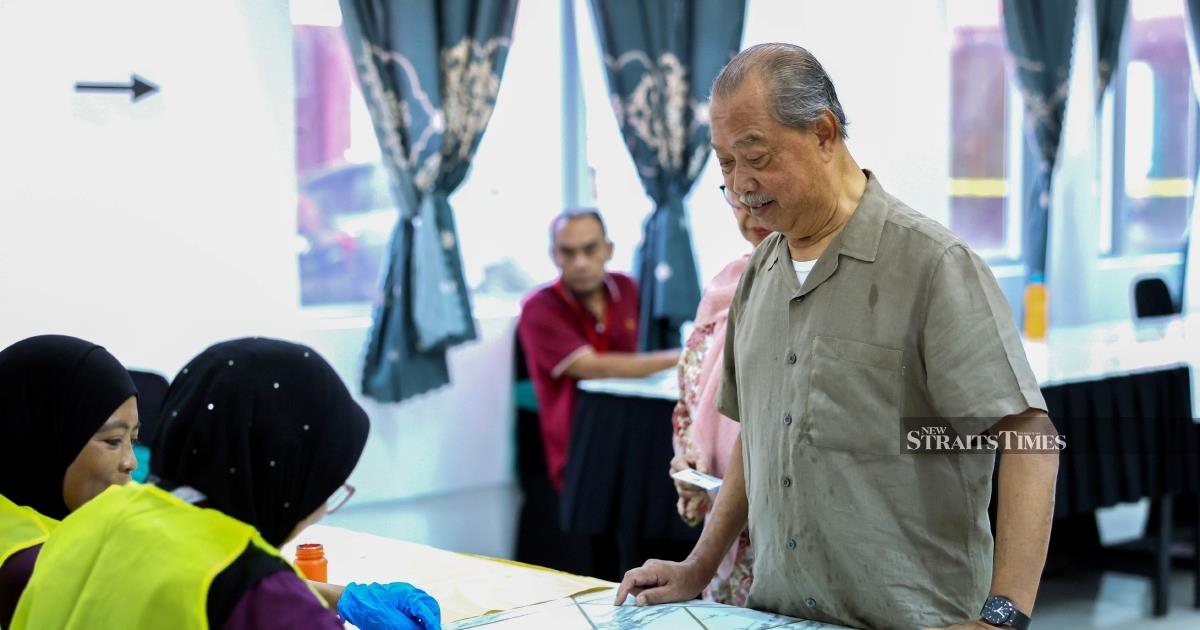
Bersatu's leadership has moved to reassure party members and supporters that recent high-profile departures will not fundamentally weaken the party's position, with president Tan Sri Muhyiddin Yassin expressing confidence in the organisation's resilience despite the resignation of Perlis Menteri Besar Abu Bakar Hamzah and the simultaneous exit of multiple regional figures.
The defections mark a significant moment for Bersatu, which has experienced considerable flux within its ranks over the past several years. The loss of a serving menteri besar carries particular weight, as such positions represent the highest executive authority at state level in Malaysia's federal system. These individuals typically command substantial local organisational networks and carry symbolic importance as elected representatives directly accountable to voters. That such an office-holder has chosen to depart suggests underlying dissatisfaction with either party direction or internal politics that reached a tipping point.
Muhyiddin's statement reflects a common defensive posture adopted by party leadership when confronting public setbacks. By characterising Bersatu as inherently robust, the party president signals to remaining members and the wider political community that the organisation retains its fundamental strength and capability. This messaging strategy serves multiple audiences simultaneously: it reassures grassroots activists concerned about party viability, projects stability to potential coalition partners evaluating whether Bersatu remains a reliable political ally, and preserves the president's own standing by framing departures as isolated incidents rather than systemic problems.
Understanding the context of these resignations requires examining Bersatu's trajectory since its establishment. The party was founded in 2016 by Muhyiddin himself and has undergone substantial membership changes, particularly following the 2022 general election and subsequent coalition realignments. The party's participation in various government formations has exposed it to the pressures and compromises inherent in coalition politics, which inevitably creates internal friction between different factional interests.
Perlis, despite being Malaysia's smallest state by population, holds symbolic importance in national politics. The state has historically served as a bellwether for shifts in political sentiment, and the resignation of its chief executive sends signals that ripple through party structures nationwide. When regional leaders depart, they typically take with them established support networks, institutional knowledge, and local connections accumulated over years of political engagement. The collective impact of such departures extends beyond simple numerical loss of personnel.
The timing of these resignations warrants consideration. Leadership departures typically cluster around moments of internal factional conflict, external political realignment, or anticipated organisational changes. Whether these events were coordinated or spontaneous, their proximity suggests an underlying current of dissatisfaction rather than isolated individual decisions. This clustering pattern often precedes broader restructuring within party organisations as remaining members reassess their own positions and future involvement.
For Malaysian political observers, the health of Bersatu carries implications beyond internal party management. As a component of Malaysia's coalition landscape, the party's stability directly affects the viability of whatever national alliance it belongs to at any given moment. Instability within coalition partners creates vulnerabilities that opposition forces can exploit, potentially shifting the parliamentary balance and triggering fresh negotiations around government formation. Conversely, if Bersatu can navigate these departures without experiencing cascading further losses, it demonstrates organisational resilience that might strengthen its negotiating position within future coalition arrangements.
The party's challenge lies in distinguishing between periodic turnover, which affects all political organisations, and systematic erosion that signals deeper structural problems. A single menteri besar's departure, while noteworthy, remains within the range of normal political movement. Should similar departures occur at comparable levels within other states over the following months, however, the narrative would shift from isolated incident to pattern indicating institutional dysfunction. How successfully Bersatu retains its remaining state and federal representatives in the coming period will substantially influence whether Muhyiddin's confidence assessment proves prescient or merely optimistic positioning.
The broader context of Malaysian politics suggests that Bersatu's survival, despite periodic turbulence, reflects the party's functional role within national coalition arrangements. No major political actor has sufficient incentive to allow Bersatu's complete collapse, as this would destabilise whatever alliance currently holds office or aspires to do so. This structural anchoring provides the party with resilience even as individual leaders exercise their prerogative to depart. Nevertheless, sustained departures could gradually reduce Bersatu's parliamentary contingent and electoral machinery to levels where it becomes less strategically valuable to coalition partners.
For Malaysian voters and analysts monitoring political stability, these developments underscore the fluid and often precarious nature of party structures in the country's current political environment. The ease with which high-ranking elected officials can resign and depart reflects the relative weakness of party discipline compared to other Westminster-derived systems, creating an environment where individual political calculations can rapidly translate into organisational consequences. Whether Bersatu emerges from this phase with its core structure intact, or whether it represents the opening stage of more substantial reorganisation, remains to be determined by events over the coming months.

