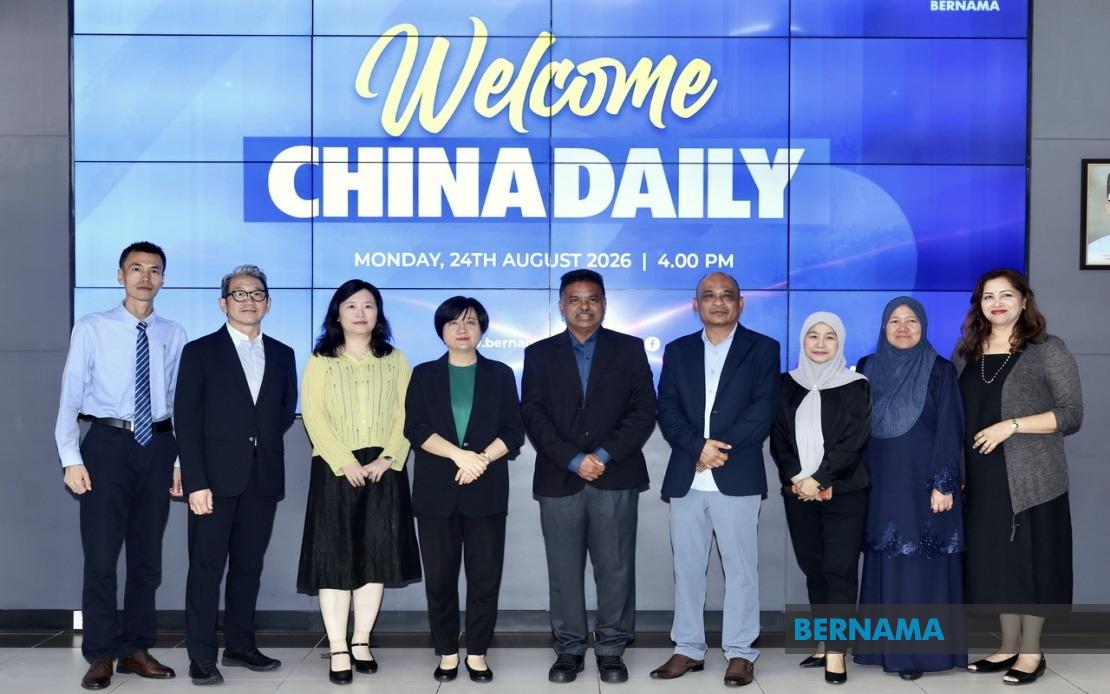
Malaysia's national news agency Bernama and China Daily have initiated talks to strengthen their media partnership through multiple channels, including personnel exchanges, professional development initiatives, and collaborative ventures that extend beyond conventional newsroom cooperation. The discussions took place during a recent visit by China Daily Asia-Pacific Editor-in-Chief Lu Haoting to Bernama's Kuala Lumpur headquarters, where both organisations outlined their vision for a more integrated working relationship that could reshape how the two news operations engage with audiences across the region.
Lu, who led a delegation that included Asia-Pacific Assistant Editor-in-Chief Sheila Shi, Business Development Director Kenrick Lee, and Kuala Lumpur Bureau Chief Peng Chao, emphasised that enhanced cooperation between journalists and newsroom professionals could significantly elevate the quality and reach of coverage produced by both agencies. She suggested that structured training programmes would allow media professionals from both sides to develop specialised skills and gain exposure to different editorial approaches, ultimately strengthening the calibre of reporting each organisation delivers to regional audiences.
The conversation between Lu's delegation and Bernama's leadership team, headed by Editor-in-Chief Arul Rajoo Durar Raj, revealed considerable alignment on potential collaboration areas. Beyond the traditional exchange of news content and story-sharing arrangements, both sides identified opportunities in business forums and cultural programming as vehicles for expanding their reach into communities across the Asia-Pacific region. This broadening of scope reflects a recognition that modern media organisations must engage audiences through diverse channels and event-based initiatives rather than limiting themselves to conventional news dissemination.
Bernama's senior management outlined the agency's existing track record of successful collaboration with Chinese media partners, highlighting past initiatives that encompassed content exchanges and joint documentary production. These precedents provided a foundation for discussions about deepening engagement with China Daily's Asia-Pacific operations, which maintains a substantial footprint covering political, economic, social, and cultural developments throughout the region. Arul Rajoo indicated that this history of productive partnership creates an optimal environment for scaling up cooperation to encompass additional personnel exchanges, expanded programme development, and enhanced cultural initiatives.
The timing of these discussions carries significance for Southeast Asian media dynamics. As news organisations across the region navigate an increasingly competitive digital landscape and adjust to changing consumption patterns, strategic alliances offer pathways to resource-sharing and audience expansion. For Bernama, which operates as Malaysia's official news agency and serves as a critical source for government information and national coverage, partnerships with international news organisations like China Daily provide opportunities to enhance its regional profile and operational capabilities.
China Daily's Asia-Pacific Bureau functions as a crucial component of the broader Chinese news organisation's international architecture, maintaining editorial offices and reporting operations throughout the region. The bureau's mandate spans coverage of significant political developments, economic trends, social movements, and cultural phenomena across multiple countries and territories. This wide geographic mandate means that cooperation with Bernama could enable more comprehensive coverage of Malaysian affairs while also facilitating China Daily's distribution of Asia-Pacific regional reporting within Malaysian media markets.
The potential for journalist exchanges represents one of the most substantive aspects of the proposed partnership. When news organisations exchange personnel on temporary or rotational assignments, they create opportunities for reporters to develop deeper understanding of different media environments, editorial philosophies, and audience preferences. Malaysian journalists working within China Daily's operations, and conversely Chinese journalists embedded within Bernama's structures, would gain firsthand experience with distinct approaches to news gathering and story presentation. This cross-pollination of professional perspectives often yields more nuanced and contextually informed reporting.
Training programmes emerged as another critical pillar of the envisioned cooperation framework. Media organisations increasingly recognise that investing in professional development of their workforce delivers returns through improved editorial quality, enhanced technical capabilities, and stronger institutional knowledge. Joint training initiatives between Bernama and China Daily could address shared challenges in digital transformation, multimedia storytelling, data journalism techniques, and audience analytics. Such programmes might also facilitate exchange of best practices in areas where one organisation has developed particular expertise.
The expansion of cooperation into business forums and cultural activities signals recognition that modern news organisations function as platforms for broader community engagement beyond journalism. Business forums hosted jointly by Bernama and China Daily could attract corporate and government audiences interested in Malaysian-Chinese economic relations and investment opportunities. Cultural activities might include film festivals, documentary screenings, or heritage showcases that leverage both organisations' content libraries and community relationships. These initiatives serve dual purposes: they generate revenue opportunities for participating organisations while simultaneously fostering cross-cultural understanding among regional populations.
For Malaysian readers and policymakers, closer media cooperation between Bernama and China Daily carries implications worth considering. Increased coordination between national and international news agencies can enhance Malaysia's visibility within regional media narratives while potentially facilitating more balanced coverage of Malaysian affairs within Chinese media outlets. However, such partnerships also warrant scrutiny regarding editorial independence and the maintenance of professional standards that Malaysian audiences expect from their primary national news source.
The discussions between these two organisations reflect broader patterns of media internationalisation occurring throughout Southeast Asia. As digital disruption reshapes the economics of journalism worldwide, news organisations increasingly pursue strategic partnerships to achieve economies of scale, expand audience reach, and share content production costs. Whether centred on government-linked agencies like Bernama or private news corporations, these collaborations are becoming standard features of contemporary media strategy.
The proposed cooperation framework between Bernama and China Daily will likely develop progressively, beginning with lower-risk initiatives like content exchanges and gradually expanding toward more ambitious joint projects if initial phases prove successful. Senior management from both organisations will need to establish clear protocols regarding editorial autonomy, content ownership, and decision-making authority to ensure the partnership functions smoothly while maintaining the institutional integrity each organisation values. As these discussions advance, they will provide insights into how Southeast Asian national news agencies navigate relationships with major international media players.

