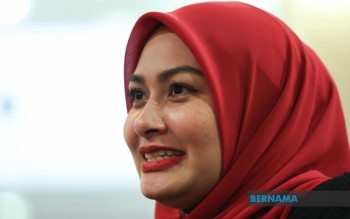
The hajj pilgrimage fund faces mounting pressure to wean itself off a single revenue stream that has become dangerously concentrated, with parliamentary attention now focused on reducing institutional vulnerability to income fluctuations. During debate on the Royal Commission of Inquiry report into Tabung Haji's financial troubles, Bentong MP Young Syefura Othman highlighted that the fund's dependence on sukuk income generated by Urusharta Jamaah Sdn Bhd represents a structural weakness requiring urgent remedial action from government.
The financial architecture underpinning Tabung Haji reveals a troubling imbalance. According to findings presented to parliament, UJSB sukuk contributions account for almost 26 per cent of the institution's total annual income—a proportion sufficiently large to create systemic risk should market conditions shift or the investment vehicle underperform. Young Syefura characterised this concentration as a vulnerability that demands transparent disclosure of government strategies to manage the sukuk early redemption process and diversify revenue sources. The fundamental concern centres on whether the fund can sustain operations if this income stream becomes unstable or diminishes unexpectedly.
There remains an unresolved question around the scale of financial damage accumulated through earlier investment decisions that regulators now consider problematic. Young Syefura requested the government publish specific figures detailing total losses and asset depreciation arising from fourteen investment decisions selected by the Royal Commission for forensic examination. These investments span multiple sectors and entities including TH Plantations Bhd, TH Properties, FGV Holdings, and several other holdings, collectively representing substantial capital deployment that warrants transparent accounting of outcomes achieved and capital remaining at risk.
The forensic audit process itself has become a focal point in parliamentary scrutiny. Beyond merely quantifying losses, the inquiry must establish accountability mechanisms should evidence emerge of negligence, abuse of authority, or breach of fiduciary duty among decision-makers. Young Syefura emphasised that identification of responsible parties and proportionate disciplinary measures remain essential preconditions for restoring institutional credibility and ensuring similar lapses do not recur under current or future management structures.
Restoring confidence in Tabung Haji requires substantive governance overhaul extending far beyond technical adjustments to balance sheets. Young Syefura advocated for enhanced supervisory involvement from heavyweight regulatory institutions including Bank Negara Malaysia and the Securities Commission Malaysia, entities possessing specialised expertise in financial oversight and investment management. This expanded supervisory framework would introduce additional layers of institutional checks capable of identifying excessive risk-taking before capital becomes imperiled.
The investment approval process itself demands fundamental redesign according to emerging parliamentary consensus. Young Syefura proposed that all major investment decisions undergo rigorous independent risk assessment complemented by stringent due diligence protocols. These procedural safeguards would functionally prevent repetition of earlier errors where inadequate analysis preceded capital deployment. The principle operates on straightforward logic: comprehensive pre-investment evaluation substantially reduces probability of catastrophic losses materialising subsequently.
Personnel selection for fiduciary roles must reset entirely around demonstrated competence and trustworthiness standards. Young Syefura endorsed adoption of "fit and proper" criteria governing board member and senior executive appointments, a principle already embedded within Malaysian regulatory frameworks governing financial institutions and insurance companies. This approach would systematically exclude candidates lacking appropriate expertise or bearing reputational risk, thereby establishing human capital foundations aligned with institutional needs.
The hajj fund's rehabilitation extends beyond technical financial engineering toward re-establishing Tabung Haji as an institution genuinely sustained by robust portfolio performance rather than artificial revenue injections from related party transactions. Young Syefura's insistence on reducing UJSB sukuk dependency reflects determination that the institution ultimately survive through competitive investment management and operational efficiency rather than reliance on concentrated income sources vulnerable to market disruption. This represents the authentic path toward long-term financial sustainability.
Minister Zulkifli Hasan's briefing to parliament came as government and legislators grapple with implications flowing from the Royal Commission's investigations. The comprehensive nature of Young Syefura's inquiries suggests parliament intends thorough interrogation of government responses before accepting official remediation claims. The coming period will reveal whether announced corrective measures genuinely address structural vulnerabilities or merely constitute cosmetic adjustments to institutional architecture that remains fundamentally compromised by earlier mismanagement decisions.

