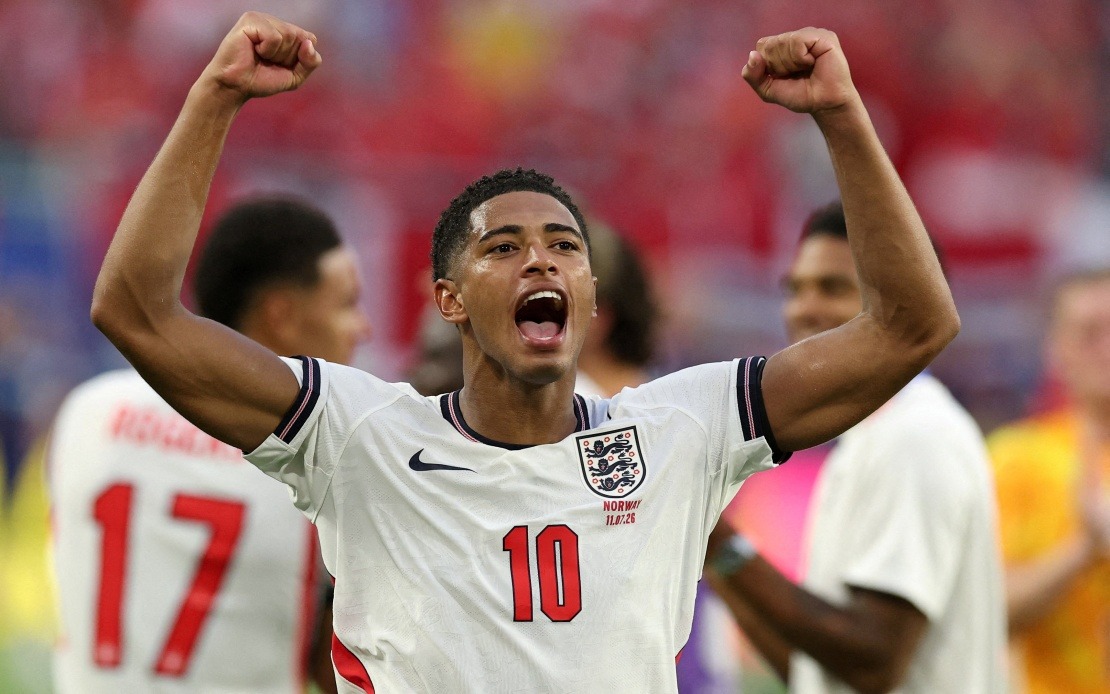
England secured their place in the 2026 FIFA World Cup semi-finals with a dramatic 2-1 victory over Norway in a quarter-final encounter that required extra time to settle. Real Madrid midfielder Jude Bellingham delivered the decisive performance, scoring both of England's goals in a match played at Miami Stadium on Saturday. The victory extends Thomas Tuchel's side's journey in what has become one of the competition's most competitive tournaments, with the Three Lions now just two wins away from claiming their first world championship in nearly six decades.
Norway's Andreas Schjelderup had given the Scandinavian nation an early advantage with a clinical finish in the 36th minute, capitalizing on space afforded by England's defence to beat goalkeeper Jordan Pickford. The goal appeared to have set the stage for a potential upset, with Norway mounting a credible challenge against one of football's traditional powerhouses. However, England responded with characteristic resilience, with Bellingham equalizing before the interval when he latched onto Anthony Gordon's pass, created space within the penalty area, and delivered a composed low finish past Nyland.
The second half intensified as both teams pressed for a winner in normal time. Norway came agonizingly close to regaining the lead in the 53rd minute when striker Erling Haaland met Julian Ryerson's cross with a downward header, only for Pickford to react with excellent reflexes and divert the attempt wide of the post. Two minutes later, Norway's Torbjorn Heggem appeared to have broken the deadlock after bundling the ball into the net from close range following a corner-kick scramble. The goal would have justified Norway's competitive display, but a Video Assistant Referee review determined that Haaland had committed a two-handed shove on England defender Elliot Anderson during the build-up, resulting in the decision to disallow the strike.
With neither team able to find a breakthrough as regulation time expired, the contest progressed into the extra period where England finally showcased their greater experience and quality. In the 93rd minute, Bellingham struck the decisive blow after Morgan Rogers unleashed a fierce strike from outside the penalty area. Norway goalkeeper Orjan Nyland could only parry the attempt, and Bellingham reacted fastest to the rebound, converting from close range to secure England's passage to the semi-finals. The goal exemplified the clinical finishing that has characterized England's campaign throughout the tournament.
England's advancement represents a significant achievement in their World Cup trajectory. The last time the nation reached the semi-final stage was the 2018 edition in Russia, and they remain chasing a second world title to match their sole triumph achieved on home soil in 1966. The approaching semi-final matchup will pit them against either Argentina, the defending champions, or Switzerland, depending on the outcome of that quarter-final fixture. Both opponents present formidable obstacles, yet England's demonstrated ability to recover from adversity suggests they possess the mental fortitude required for the remaining challenges.
For Norway, despite the outcome, this quarter-final appearance represents their most successful World Cup campaign to date. The Scandinavian nation's previous best performance was reaching the round of 16 in 1938 and, more recently, at the France 1998 tournament. This progression demonstrates Norway's growing competitiveness within the international football landscape and suggests their program is moving in a positive direction. The contributions of attacking talent such as Haaland, while ultimately insufficient to advance, provided glimpses of the attacking potency Norway can muster.
Bellingham's performance exemplified the kind of match-winning moments that separate tournament contenders from also-rans. The 21-year-old midfielder, already established as a cornerstone of Real Madrid's immediate future, showcased the composure and finishing ability expected of players competing at the highest levels of the game. His two goals came at critical junctures, first stabilizing England's position and then ultimately deciding the contest, demonstrating why he has become such a vital component of Tuchel's tactical system.
The implications for Southeast Asian football enthusiasts watching the tournament extend beyond mere entertainment value. England's progression exemplifies how established footballing nations maintain their competitive edge through systematic development, strong institutional structures, and the ability to attract and retain elite talent. The contrast between England's resources and infrastructure and those available to developing football nations in the region underscores the structural challenges that regional programs must navigate to compete on the global stage.
As England prepares for their semi-final encounter, they face the dual challenge of maintaining momentum while confronting opponents of the highest caliber. The semi-finals will likely determine which teams have genuinely evolved their playing systems and mentality to dominate modern World Cup football, where tactical discipline, physical conditioning, and mental resilience prove as decisive as individual brilliance. For England supporters and neutrals following the tournament, the upcoming stages promise compelling football from the world's best teams competing for sport's most prestigious prize.

