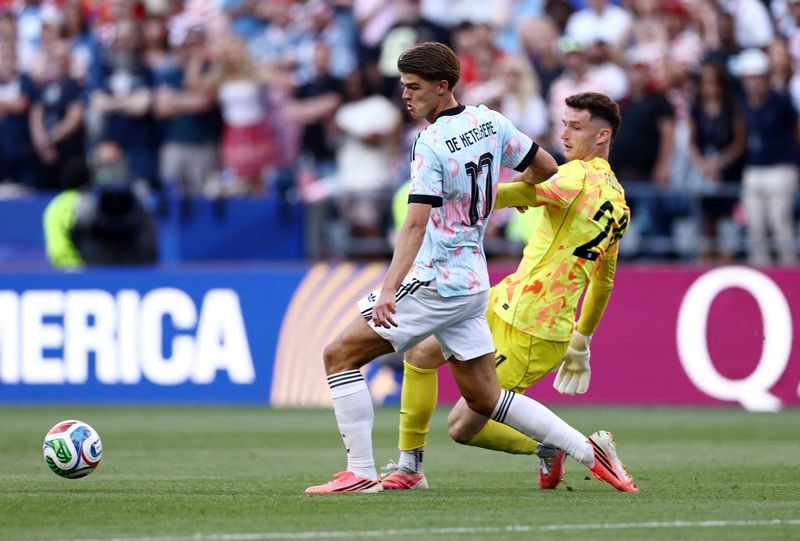
Belgium have discovered an unexpectedly potent formula at the World Cup, dismantling co-hosts the United States 4-1 on Monday with a starting eleven that excluded their most celebrated names. Coach Rudi Garcia's decision to bench Kevin De Bruyne, Jeremy Doku and Romelu Lukaku signals a dramatic shift from the traditional approach that has long defined the Red Devils' identity, yet the gamble has delivered immediate and convincing results that suggest Belgium may have found their most dangerous playing style of the tournament.
The transformation comes after a torrid group stage that tested Garcia's patience and credibility. Belgium stumbled through their opening matches, drawing against both Morocco and Croatia before salvaging their campaign with a commanding 5-1 victory over New Zealand to secure top spot. Their progression appeared fragile, balanced on a knife's edge against Senegal in the round of 16, where they looked destined for elimination until mounting an extraordinary comeback from two goals down with just five minutes remaining. That scrappy survival masked deeper concerns about the team's cohesion and tactical flexibility under pressure.
Garcia's overhaul in the round of 16 clash at Seattle introduced Nicolas Raskin, Amadou Onana and Dodi Lukebakio into the midfield and attack, with Hans Vanaken departing the starting formation and Charles De Ketelaere repositioned as a central striker. De Bruyne, the orchestrator of Belgium's midfield brilliance across multiple campaigns, did not even feature on the bench. The structural change fundamentally altered how Belgium operated, moving beyond the diamond formation and creative dependency that had previously defined their approach. De Ketelaere's repositioning proved immediately productive, the young attacker netting twice in the opening forty-five minutes to establish commanding control.
The tactical adjustment revealed how an aggressive and positionally disciplined midfield could dominate the contest. Captain Youri Tielemans pushed higher into attacking areas, orchestrating the press and repeatedly winning contested second balls to regain possession. Rather than relying on De Bruyne's passing range to construct attacks from deep, Belgium instead suffocated the American side through territorial dominance and quick transitions. The width of the pitch became a critical asset, with Belgium stretching the United States' defensive shape and exposing weaknesses in a static back line that appeared overwhelmed by the intensity and organization facing them.
The hosts never recovered from the opening assault. Their midfield lacked the technical security or positional awareness to resist Belgium's coordinated pressing, and their attacking transition offered little threat to the European side's organized defensive structure. What emerged was a stark contrast to Belgium's earlier performances—a team playing with coherence and purpose, their movement synchronized and their possession both controlled and purposeful. The comfort of their victory grew as the match progressed, an unfamiliar sensation in a tournament where Belgium had consistently been forced into reactive football and defensive desperation.
Even when Onana departed with a knee injury in the first half, Garcia's tactical framework remained intact. Vanaken, at thirty-three years old and previously marginal in the manager's selection plans, assumed Onana's anchor role and delivered both defensive stability and, remarkably, his own goal contribution. The experienced midfielder's performance vindicated Garcia's faith in the system rather than individual brilliance, providing the technical security that allowed others to flourish. This flexibility demonstrated the coherence of the tactical design—that Belgium functioned as an organized collective rather than a vehicle for their star players' abilities.
Garcia had publicly expressed uncertainty about his selection until hours before kickoff, suggesting last-minute deliberation and perhaps doubt about abandoning the familiar hierarchy. Yet he articulated a clear strategic intent: establishing control from the contest's opening exchanges and utilizing superior organization to dominate proceedings. The manager's explanation revealed the calculation at work—De Bruyne represented an option to deploy if circumstances demanded, a tactical flexibility that proved unnecessary once Belgium established their authority. The reserve option remained available but unused, the team performing sufficiently that restoring the familiar structure would constitute unnecessary disruption.
The decision to exclude Belgium's most recognized names represents a significant rupture with recent tradition and the narrative that has surrounded this squad. For several years, Belgium's tournament hopes have rested on the aging genius of players entering their final peak years. De Bruyne, now thirty-two, has dominated football's discourse as an elite midfielder, yet his absence created space for younger, hungrier performers to establish themselves. The configuration García deployed against the United States suggested that Belgium's trajectory might depend not on extracting final performances from declining superstars but on developing a team architecture capable of functioning with balanced contributions across the formation.
This tactical reorientation carries implications for Belgium's remaining tournament ambitions. The Friday quarter-final against Spain in Los Angeles presents a far more formidable opponent than the United States, a team with its own sophisticated approach and proven ability to control possession and tempo. Spain's organizational discipline and positional intelligence will test whether Belgium's new approach represents a genuine tactical breakthrough or a temporary advantage against a specific opponent lacking the sophistication to counter it. The Spanish side's experience and technical quality at central midfield promise a sterner examination of Garcia's system.
Belgium's transformation also reflects broader shifts within European football, where the individual brilliance of elite attacking midfielders increasingly matters less than collective organization and systemic coherence. Teams have learned to compress space, neutralize creativity through numerical superiority and forcing quick decisions, and exploit the spaces created by attacking-minded play. Belgium's earlier struggles suggested they remained tethered to an older paradigm in which De Bruyne's genius could be unleashed to unlock stubborn defenses. Garcia's adjustment acknowledges that modern tournament football rewards teams capable of executing a coherent system with minimal individual improvisations.
The coach's own credibility, previously under scrutiny after the unconvincing group stage, has been restored through one decisive performance. Garcia had faced criticism from supporters questioning his tactical selections and his management of the squad's considerable talents. The emphatic victory against the United States provides breathing room and justification for his controversial decisions, yet questions will persist about whether this approach can sustain success against opponents with greater sophistication and deeper tactical resources. The manager has essentially wagered that a team playing together outperforms a collection of individual talents lacking cohesion.
As Belgium prepares for Spain, Garcia faces a complex strategic calculation regarding the integration of his benched superstars. Whether to restore De Bruyne and return to more familiar patterns, or to maintain the system that has suddenly generated performances of genuine quality, will define the remainder of Belgium's campaign. The solution may involve a compromise that balances the tactical coherence demonstrated against the United States with the individual quality that De Bruyne and Lukaku represent. For now, Belgium's experiment in collective football has delivered immediate and undeniable success, suggesting that the familiar hierarchies within this squad may require reconsideration as they pursue more substantial tournament achievements.

