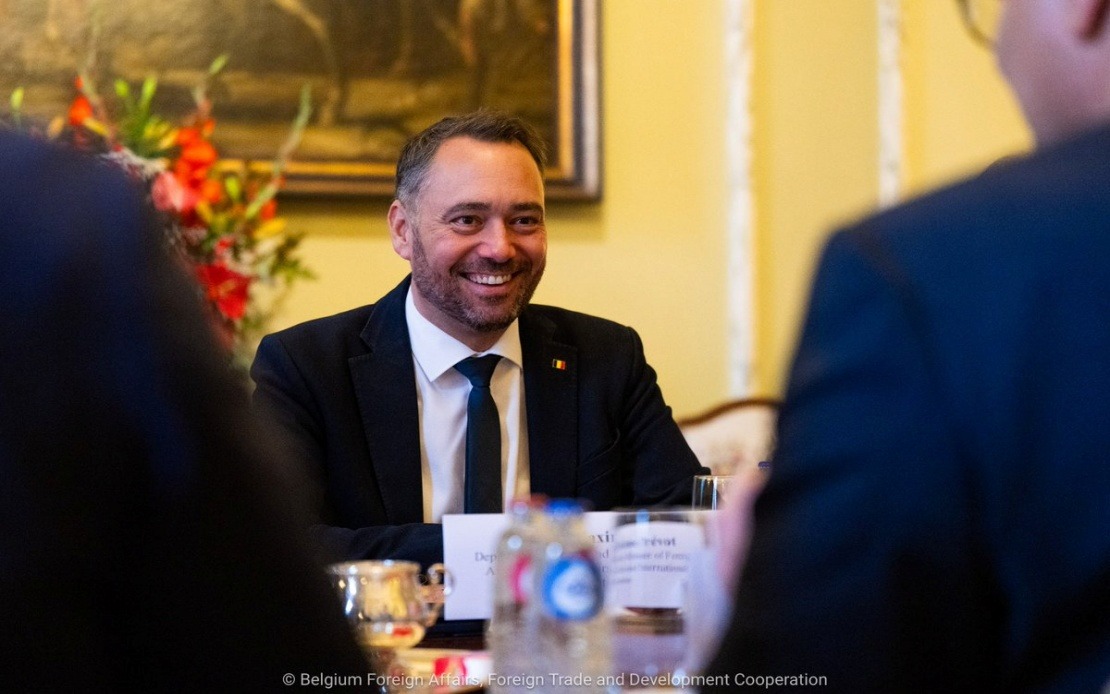
Belgium's Deputy Prime Minister and Foreign, European Affairs and Development Cooperation Minister Maxime Prévot is set to arrive in Malaysia on Thursday for a two-day working visit that will explore deeper economic and strategic partnerships between the two nations. The trip represents his inaugural tour of Malaysia since assuming his ministerial portfolio in February 2025, and comes at a time when both countries are seeking to expand collaboration beyond traditional trade channels.
The centrepiece of Prévot's itinerary will be a bilateral meeting with Deputy Prime Minister Datuk Seri Fadillah Yusof on July 2, who concurrently holds the Energy Transition and Water Transformation portfolio. This pairing of senior officials underscores the Malaysian government's emphasis on positioning renewable energy at the core of the bilateral agenda. The scheduled discussion will encompass a comprehensive review of existing Malaysia-Belgium relations alongside an exploration of emerging cooperation opportunities, with particular emphasis on renewable energy transition, rare earth element sourcing and strategic collaboration within the halal industry.
The focus on rare earth elements is particularly significant for Malaysia's industrial strategy. As a nation with established expertise in processing and refining rare earth materials, Malaysia represents a crucial partner for Belgium and the broader European Union as they seek to diversify supply chains away from over-reliance on Asian producers. These critical minerals are essential for manufacturing everything from wind turbine components to advanced electronics, making secure and sustainable sourcing a strategic priority for European energy transition initiatives.
The halal industry dimension reflects an often-overlooked aspect of Malaysia's economic positioning within international commerce. Beyond the Middle East and parts of Africa, European companies increasingly recognise the commercial potential of halal-certified products and services. Belgium, as a gateway to continental European markets, offers Malaysian firms unprecedented access to distribution networks and consumer bases that were previously inaccessible. The bilateral discussions are likely to explore mechanisms for simplifying certification processes and harmonising standards between Malaysian and European halal bodies.
On the renewable energy front, Belgium brings substantial technical expertise and investment capacity. As an industrial economy committed to decarbonisation targets within the European Union's climate framework, Belgian companies have developed significant competencies in solar, wind and hydrogen technologies. Malaysia's tropical climate and substantial solar resource potential make it an attractive destination for Belgian renewable energy firms seeking to expand operations into Southeast Asia. Conversely, Malaysia's manufacturing prowess in renewable energy components positions it as a potential supplier to Belgian and European markets.
Beyond bilateral matters, Prévot's visit will encompass Malaysia-European Union relations, a relationship that extends far beyond commodity trade. The EU represents Malaysia's fourth-largest trading partner globally, and strategic dialogue at the ministerial level helps reinforce institutional frameworks governing commercial, regulatory and diplomatic engagement. Discussions are expected to address regional and international developments of mutual concern, including geopolitical dynamics in the Indo-Pacific and cooperative approaches to emerging global challenges.
The scale of existing commercial ties provides a foundation for ambitious partnership expansion. Bilateral trade between Malaysia and Belgium reached RM9.74 billion in 2025, with Malaysian exports comprising RM6.85 billion of this total, demonstrating Malaysia's competitive advantage in value-added manufacturing and resource processing. The trade balance reflects Malaysia's strength in industries ranging from electronics and petrochemicals to agricultural products and processed materials destined for European consumers and manufacturers.
Belgian investment confidence in Malaysia remains robust, evidenced by cumulative project approvals totalling RM5.1 billion across 67 ventures as of 2025. These investments span diverse sectors and are projected to generate approximately 4,605 employment opportunities, contributing meaningfully to Malaysia's economic development and technology transfer objectives. The breadth of Belgian participation suggests diverse engagement rather than concentration in any single industry, indicating sustained confidence across multiple Malaysian economic sectors.
Prominently featured in Prévot's agenda is a ministerial address at the 39th Asia-Pacific Roundtable, organised by the Institute of Strategic and International Studies (ISIS) Malaysia. This platform provides him with opportunity to articulate European perspectives on regional security, economic integration and multilateral cooperation frameworks before an audience of regional policymakers, academics and business leaders. His participation signals Belgium and the EU's commitment to sustained engagement with Southeast Asian strategic deliberations.
The bilateral protocol also includes an audience with Sultan of Perak Sultan Nazrin Muizzuddin Shah, acknowledging Malaysia's constitutional framework and the significance of royal engagement in state affairs. Such courtesies underscore the diplomatic importance attributed to the visit and reflect established protocols governing high-level foreign ministerial visits to Malaysia.
For Malaysian stakeholders, the visit represents a concrete opportunity to advance renewable energy transition objectives while simultaneously expanding market access for halal products and rare earth materials. The timing is strategically advantageous, as Malaysia pursues aggressive renewable energy capacity expansion targets while concurrently seeking to position itself as a critical node within regional and global supply chains for energy transition materials. The bilateral dialogue offers pathways for technological collaboration, joint investment ventures and regulatory harmonisation that could yield mutual economic benefits over the medium to long term.

