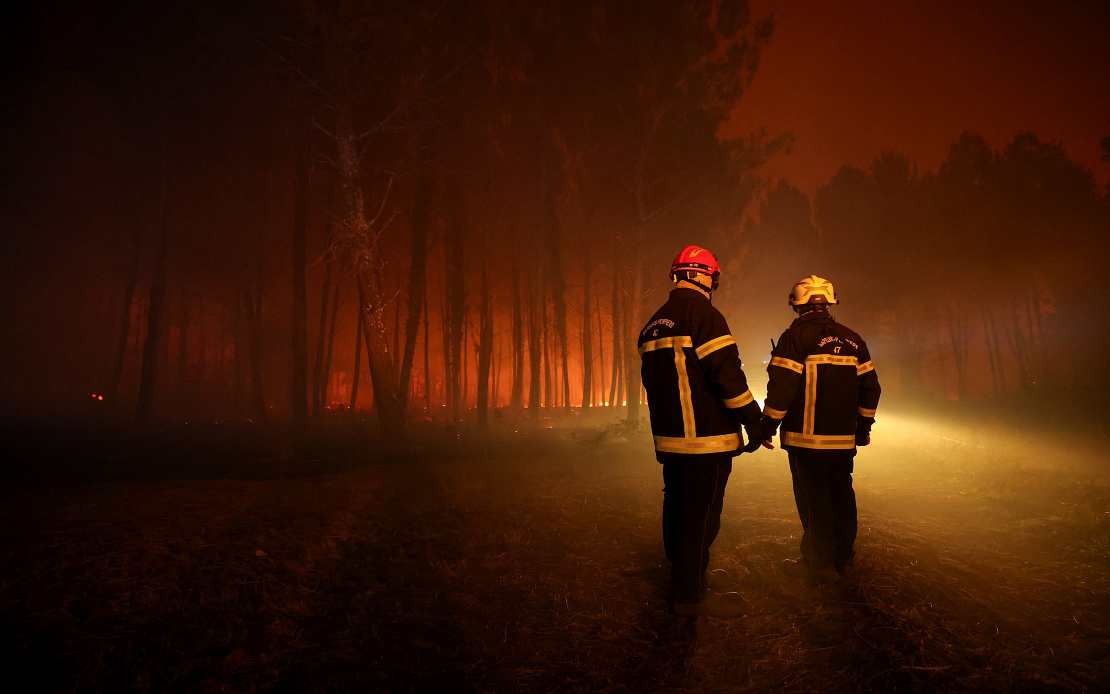
Eastern Belgium is contending with an unprecedented environmental crisis as a massive wildfire continues to ravage the High Fens nature reserve near the German border, having consumed approximately 2,700 hectares by Saturday evening and displacing around 600 residents from surrounding communities. The scale of this disaster far exceeds any previous fire event recorded in the country, underscoring the escalating threat posed by climate-driven extreme weather patterns across Europe.
Authorities in Liege confirmed that the burned area nearly doubled throughout Saturday, expanding from about 1,600 hectares in the morning as the blaze continued its relentless advance across the landscape. This dramatic acceleration highlights the speed at which uncontrolled wildfires can spread when conditions are optimal for combustion. Historical data from the European Forest Fire Information System provides sobering context: the previous record wildfire in Belgium, which occurred in 2011, burned nearly 1,400 hectares—meaning the current disaster has already surpassed that event by nearly 1,000 hectares.
The fire ignited around 2 pm on Friday within the High Fens nature reserve and immediately presented formidable challenges to emergency responders. The topography of the protected area, characterized by rugged and uneven terrain, has severely hampered conventional firefighting tactics that typically rely on ground-based operations. Crews have found it extraordinarily difficult to position equipment and personnel effectively, forcing them to adopt alternative strategies and rely more heavily on aerial support.
Weather conditions have further compounded the crisis. Shifting wind patterns have created unpredictable fire behavior, alternately spreading thick plumes of smoke across nearby regions and redirecting flames in ways that challenge suppression efforts. Approximately 600 residents from neighboring villages and tourist accommodations have been ordered to evacuate, including families staying at holiday facilities and attendees of a children's summer camp in the vicinity. These preventive measures reflect the genuine danger posed by rapidly advancing smoke and potential fire spread, given how quickly circumstances can deteriorate in large wildfires.
Recognizing the scale of the emergency and the limitations of domestic resources, Belgium invoked the European Union Civil Protection Mechanism to request cross-border assistance. This decision reflects both the severity of the situation and the spirit of mutual aid embedded in European disaster response protocols. The mechanism rapidly yielded tangible support, with firefighting aircraft arriving from the Czech Republic, Sweden, and the Netherlands by Saturday. These aerial resources represent a crucial capability that Belgium's own fleet could not fully provide, enabling water drops and retardant applications across areas inaccessible to ground teams.
The multinational response extends beyond aircraft support. Firefighters mobilized from across Belgium's provinces were joined by personnel and equipment from neighboring Germany and Luxembourg, demonstrating regional solidarity in tackling this transnational threat. Beyond professional emergency services, the Belgian military committed resources to the operation, while local farmers contributed their knowledge of the terrain and provided logistical support to coordinate ground operations. This fusion of military, civilian, and volunteer expertise represents the comprehensive mobilization required when disasters exceed normal capacity.
The underlying cause of this catastrophe lies in the extreme climatic conditions currently affecting Western Europe. Belgium experienced an intense heat spell throughout the week, with temperatures soaring to 37 degrees Celsius in certain regions on Friday alone. Such elevated temperatures dramatically reduce moisture content in vegetation and create ideal conditions for rapid fire ignition and propagation. The combination of heat, low humidity, and accumulated dry biomass transforms landscapes into tinderboxes where even minor ignition sources can trigger infernos.
For Southeast Asian readers, this Belgian crisis offers instructive parallels and warnings. Countries in the region have faced similar challenges during dry seasons, most notably during the 2015 Southeast Asian haze crisis when Indonesian peat fires blanketed Malaysia, Singapore, and neighboring nations with hazardous smoke. The mechanisms of wildfire escalation—heat, drought, difficult terrain, and international cooperation requirements—remain consistent across geographic boundaries. The speed with which professional resources can become overwhelmed, the necessity for cross-border coordination, and the vulnerability of civilian populations all represent universal risks that transcend continents.
The High Fens wildfire also underscores how climate change is altering fire risk profiles in regions historically less prone to such disasters. Belgium, with its temperate maritime climate and regular precipitation, has never previously experienced fires of this magnitude. The event signals a troubling trend: as global temperatures climb, previously stable regions are entering new risk categories. This geographical shift in wildfire threat distributions has profound implications for emergency preparedness, resource allocation, and international cooperation frameworks across the world.
Moving forward, Belgium will confront difficult questions about landscape management, fire prevention infrastructure, and adaptation strategies for a warming climate. The immediate priority remains containing and extinguishing the current blaze while ensuring resident safety and environmental protection. However, the longer-term challenge involves restructuring how the nation and region approaches wildfire prevention, given that historical precedent increasingly fails to predict future events. For Malaysia and other developing nations, observing how developed economies respond to such emerging climate challenges offers valuable data points as they formulate their own climate adaptation and disaster resilience policies.

