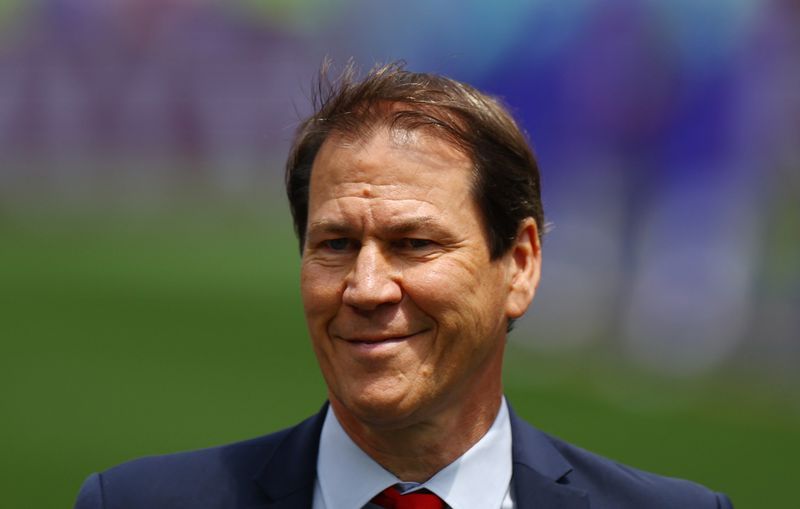
Rudi Garcia's tenure as Belgium's head coach has ended by mutual consent, with both the French tactician and the Belgian football association announcing on Monday that they would not extend his contract beyond July 31. The decision concludes an 18-month spell during which Garcia navigated the Red Devils through a challenging rebuilding period, ultimately delivering a World Cup quarter-final appearance that fell short of expectations following elimination by eventual tournament winners Spain.
Garcia's World Cup campaign proved volatile in its execution and reception, marked by early struggles that tested both his tactical decisions and his relationship with Belgian media. The team drew with Egypt and Iran in their opening matches, performances that drew considerable criticism from press and supporters alike. These early stumbles prompted Garcia to call a media meeting to defend and explain his strategic approach, an unusual move that underscored the pressure surrounding the campaign's opening phase. Despite the shaky beginning, Belgium progressed from their group with a convincing 5-1 victory over New Zealand that offered temporary respite from the mounting scrutiny.
The knockout stages exposed both the fragility and resilience of Garcia's squad. Against Senegal in the last-32 encounter, Belgium faced near elimination while trailing by two goals with time virtually exhausted. A critical goalkeeping error provided the platform for a dramatic comeback, and a controversial VAR penalty decision awarded in the final minute of extra time secured a 3-2 victory that kept their tournament alive. The match exemplified how thin the margin between success and failure had become, as fortune and fortune both played decisive roles in determining Belgium's passage.
Following that escape, Garcia orchestrated a significantly more convincing performance against hosts United States, recording a 4-1 triumph that temporarily vindicated his selections and tactical framework. This result prompted fresh praise from observers who had previously questioned his team construction and in-game management. Yet this vindication proved fleeting, as Belgium's subsequent quarter-final confrontation with Spain returned scrutiny to Garcia's decision-making, particularly his substitution involving goalkeeper Thibaut Courtois, a move that appeared to invite criticism regardless of the tournament's final outcome.
Vincent Mannaert, the Belgian federation's sports director, framed the coaching change as reflecting a natural conclusion rather than a dismissal, emphasizing Garcia's contributions during a period when the federation operated under challenging sporting and financial constraints. In an official statement, Mannaert credited Garcia with restoring team cohesion and delivering a competitive World Cup showing following what had been a tumultuous pre-tournament environment. Mannaert thanked Garcia and his entire backroom staff for their efforts throughout the 18-month partnership, language that suggested a cordial rather than acrimonious parting of ways.
Garcia responded with characteristic professionalism, expressing gratitude for working with the Belgian squad and wishing the national team success as they navigate an ongoing generational transition that he had initiated. His statement acknowledged the broader challenge of modernizing a squad that had previously been dominated by a golden generation of established stars, a reconstruction that necessarily involved difficult choices regarding selection and formation adjustments. The French coach positioned his departure as occurring at a natural juncture in the team's evolution.
Responsibility for identifying Garcia's successor falls to Mannaert, who must prepare Belgium for competitive fixtures beginning in late September when they contest Nations League matches against Italy in Rome and subsequently host France at home. These encounters represent the federation's next major challenge and will define the strategic direction chosen for the team's development. The timing allows several weeks for the federation to conduct a thorough search for a replacement capable of managing the continued evolution of the squad.
Garcia joins an unusually extensive group of World Cup coaches who have departed their positions during or immediately following the tournament. The departures extend across multiple continents and competitive traditions, encompassing departures from Croatia, the Czech Republic, France, Germany, Ghana, Haiti, Jordan, Mexico, the Netherlands, Portugal, Scotland, Senegal, Tunisia, and Uruguay. This phenomenon suggests that the pressures surrounding national team football and the expectations surrounding World Cup performance have intensified the turnover among international coaching positions, creating an environment where tournament performance directly determines employment security.
For Malaysian observers and regional football enthusiasts, Garcia's departure underscores broader trends in international football management where tournament results trigger immediate coaching transitions rather than longer-term developmental planning. The Belgian federation's decision to make a change reflects a pragmatic assessment that the team requires different leadership to achieve the knockout progression they target. As Southeast Asian national teams continue to develop their own coaching strategies and recruitment philosophies, the Garcia case demonstrates how even coaches with substantial experience face pressure to produce immediate results in World Cup environments, where narrow margins between success and failure carry enormous career consequences.

