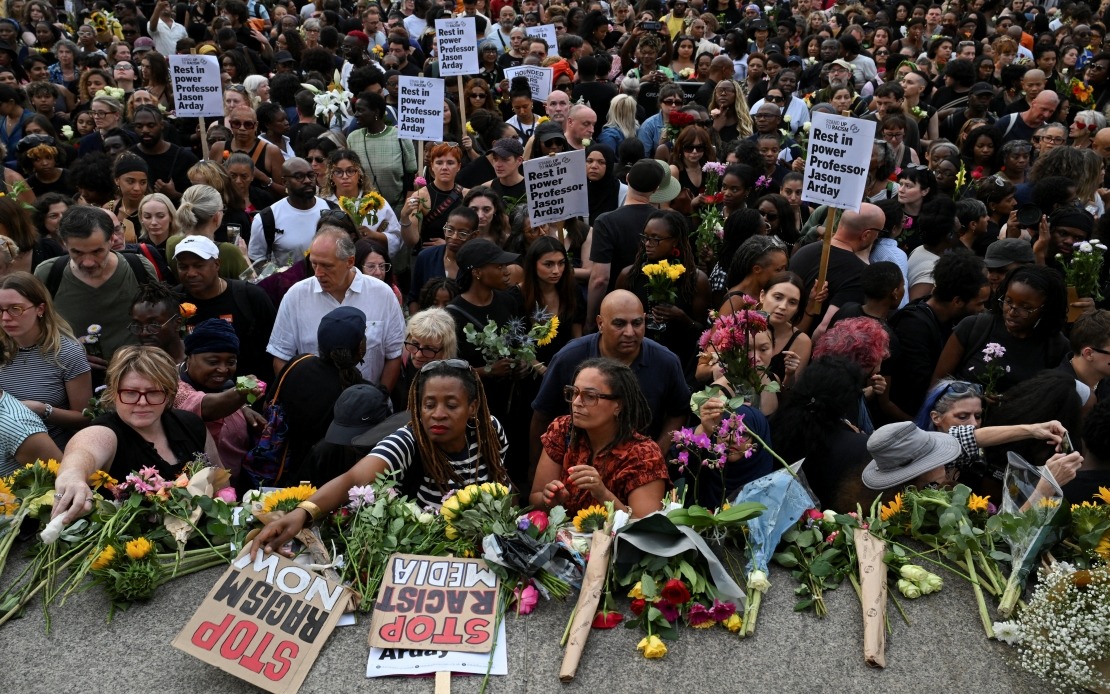
Ghent University in Belgium has suspended a postdoctoral researcher who made plagiarism allegations against Jason Arday, the University of Cambridge's youngest Black professor who died last month. The suspension of Nathan Cofnas from the university's philosophy and moral sciences department marks an escalation in a controversy that has exposed tensions between academic freedom, institutional responsibility, and discrimination concerns within higher education.
Arday, 41, achieved prominence when he became Cambridge's youngest Black professor in 2023 after his appointment as professor of sociology of education. His appointment had been celebrated as a milestone for diversity in academia, particularly given his remarkable personal journey. Born to Ghanaian immigrant parents and raised in a working-class family in south London, Arday had overcome significant challenges including autism, learning difficulties, and being nonverbal until age eleven. He did not learn to read and write until he was eighteen, making his academic ascent particularly noteworthy. His public advocacy for students facing similar obstacles had positioned him as an influential figure in discussions about inclusive education and institutional change.
Yet this trajectory was disrupted dramatically in July when Cofnas and others raised questions about alleged plagiarism in Arday's academic work. These accusations triggered a cascade of scrutiny regarding aspects of his research record and personal narrative. Facing mounting pressure, Arday stepped down from his Cambridge position on August 5th, releasing a statement that notably refused to concede the allegations against him. He characterised his resignation as a personal decision and cautioned observers against interpreting it as validation of the criticisms he faced. A week after his departure, Cambridge announced it would undertake a formal investigation into circumstances surrounding his appointment. However, before that inquiry could proceed substantively, Arday was found dead at his south London residence on August 14th. Police indicated they were treating the death as unexpected, though not suspicious.
Cofnas, a postdoctoral researcher who previously held a fellowship at Emmanuel College within Cambridge, announced his own suspension through social media this week. He stated publicly that the university was investigating him for alleged discrimination against Arday, and indicated he believed dismissal was imminent. Ghent University confirmed the suspension in an official statement, noting that Arday's death should provoke deeper institutional reflection about how universities handle such disputes.
The suspension raises complex questions about institutional responses to research integrity allegations. Cofnas has consistently advocated publicly for what he describes as "race realism." This position became more widely known in 2024 when he lost a research associate role at Cambridge following publication of a blog post asserting that Black people possess lower average intelligence than white people and that a genuine meritocracy would contain approximately zero Black professors at institutions like Harvard. Such statements had provoked strong opposition within the university community and contributed to his departure from Cambridge.
Ghent University's response attempts to balance competing institutional values. In a joint statement, rector Petra De Sutter and vice-rector Herwig Reynaert emphasised that the institution places high value on academic freedom and open debate, even when viewpoints prove controversial. However, they stressed that such freedom is not absolute. Rather, they argued, it carries corresponding responsibilities and may be limited to safeguard the rights of others. This formulation reflects an increasingly common position among European universities confronting challenges around speech and discrimination simultaneously.
The university indicated it takes Cofnas's recent public statements with utmost seriousness, stating it has implemented appropriate measures within its authority and existing legal frameworks. Officials declined to specify what additional disciplinary steps might follow, preferring not to prejudge future outcomes at this stage. This cautious approach suggests complex legal and procedural considerations may be at play.
For Malaysian and Southeast Asian observers, this case illuminates several critical issues facing contemporary academia globally. Universities across the region increasingly aspire to international research prominence and compete for diverse talent. Yet they must simultaneously navigate questions about how institutional processes function when allegations emerge against researchers and the extent to which speech protections should extend to expressions that many find offensive or discriminatory. The Arday case demonstrates how accusations of research misconduct can become entangled with broader disputes about inclusion, representation, and the boundaries of acceptable academic discourse.
The timing and circumstances surrounding Arday's death have intensified scrutiny of the institutional response. His sudden passing transformed what might have been a contained academic controversy into a tragedy with broader implications. Universities now face increased accountability regarding how they investigate allegations, how they communicate with affected parties, and whether their processes account adequately for vulnerable individuals facing reputational attacks. The death has prompted what Ghent described as necessary reflection across the sector.
Moreover, the international dimensions merit attention. Cofnas holds positions across multiple countries, and his suspension by a Belgian institution following work conducted partly at Cambridge reflects the increasingly globalised nature of academic employment and institutional governance. Decisions made at European universities now carry consequences for researchers' careers across continents. For academics in developing higher education systems across Southeast Asia, the case demonstrates how deeply connected they have become to international academic networks and standards, for better and worse.
The investigation into Cofnas's conduct and the broader ramifications of his accusations remain ongoing. What began as a narrow dispute about research integrity has exposed fault lines within institutions regarding accountability, protection of vulnerable scholars, and the relationship between research ethics and broader social responsibility. As universities worldwide grapple with these tensions, the Cambridge and Ghent cases will likely influence how similar situations are handled in Malaysian institutions developing their own policies on academic misconduct and institutional responsibility.

