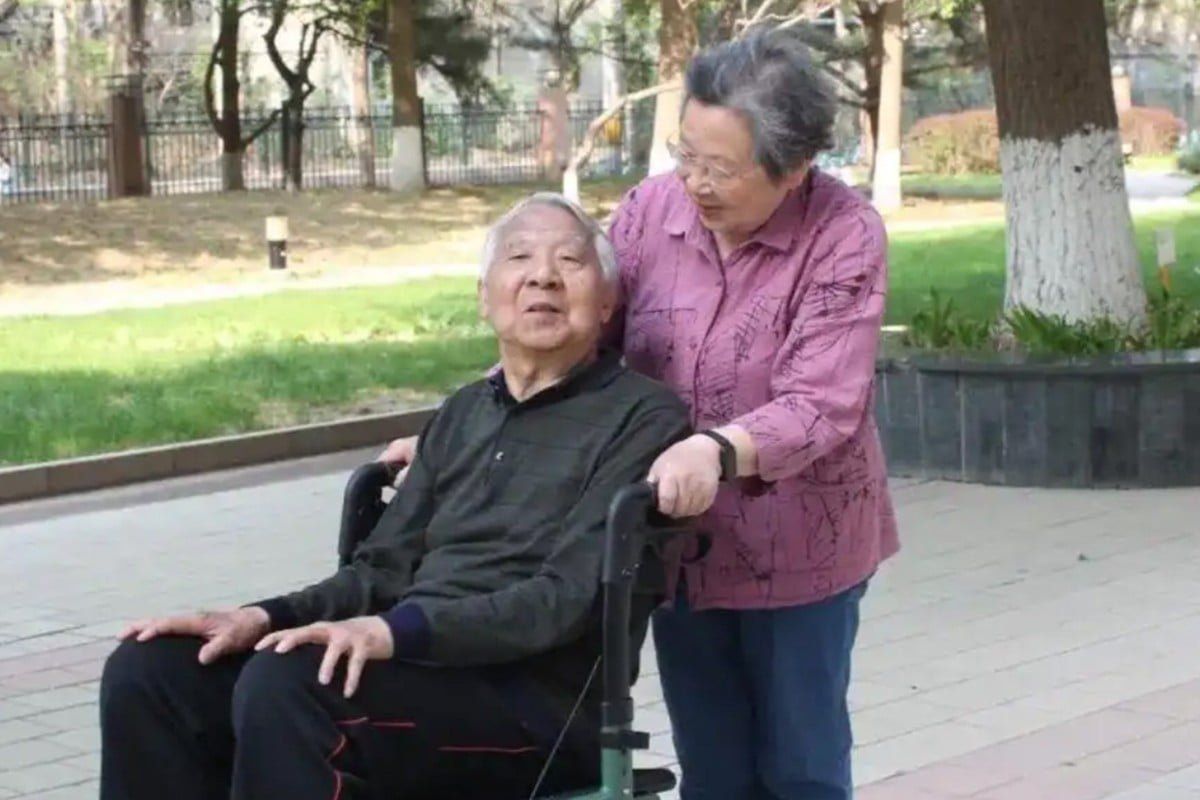
At an age when most people expect to retire, Wen Bo has taken on perhaps the most demanding role of her six-decade marriage: full-time caregiver to her husband as he navigates the progressive challenges of Alzheimer's disease. Her quiet commitment and thoughtful approach to preserving not just his physical health but his fundamental sense of purpose and identity has resonated with millions across China, offering a counterweight to prevailing narratives about decline and dependency in old age.
The couple's partnership spans more than six decades, beginning in secondary school and formalizing in 1960. Throughout their lives together, they cultivated an outward-looking existence—swimming, walking, and travelling both domestically and internationally—patterns that shaped them as active, engaged individuals. This history matters because it informs how Wen Bo approaches her husband's current condition. She is not tending to a stranger suddenly afflicted, but preserving the autonomy and vitality that characterized the man she chose to marry and spend her life alongside.
When Wen's husband began experiencing memory loss and incontinence in 2023, the family faced a decision point common to millions of Chinese households undergoing modernization. Their two sons, occupied with their own careers and families, could not take on primary caregiving duties. Rather than institutionalize her husband or distribute his care across family members already stretched thin, Wen made a deliberate choice to become his dedicated carer, a decision that reflects both traditional values and contemporary necessity.
What distinguishes Wen's approach is her systematic commitment to understanding Alzheimer's beyond mere symptom management. She has self-educated through books and online resources, converting this knowledge into daily practice. Her caregiving regimen combines cognitive stimulation—mathematics problems, puzzles, and painting sessions—with physical activity designed to maintain whatever mobility and mental acuity remain possible. These are not rote exercises but deliberate interventions rooted in gerontological research about how structured cognitive engagement can slow cognitive decline.
The results speak for themselves. Medical professionals note that Wen's husband's condition has deteriorated at a slower pace than typical Alzheimer's trajectories, and he has retained enough capacity to operate an electric wheelchair independently and occasionally remember to encourage his wife to rest. Perhaps more importantly, these cognitive activities preserve something intangible but essential: a sense of participation and competence. When he completes an arithmetic test with only a single error—a recent milestone Wen shared—he experiences the satisfaction of achievement rather than the shame of failure.
Wen's vigilance about preserving emotional connection reveals deeper philosophical commitments about personhood and dementia. She insists on reminding her husband of her name each evening, recognizing that being forgotten by one's spouse presents not merely a cognitive loss but an existential threat. Her statement—"He has to remember my name. I am his wife. I should be the last person he forgets"—encapsulates a rejection of the notion that advanced dementia patients are empty vessels. For Wen, the relationship itself becomes both anchor and purpose.
She also deliberately structures opportunities for her husband to contribute to household functioning, allowing him to complete simple tasks at his own pace. This approach runs counter to well-meaning but ultimately infantilizing caregiving that removes all agency from the patient. By maintaining expectations that he can still do things, Wen preserves what gerontologists term "felt autonomy"—the subjective experience of having control and mattering to others, which research increasingly shows correlates with better health outcomes and slower cognitive decline.
Wen's public articulation of her philosophy has proven remarkably influential. Through social media posts chronicling daily caregiving moments, she has articulated a vision of Alzheimer's care centered on dignity, social participation, and the preservation of identity. Her assertion that people with Alzheimer's "should not be defined by their illness" and that "self-respect, a sense of existence, and the feeling of being needed are essential" challenges both cultural stigmas and institutional approaches that reduce dementia patients to medical problems to be managed.
The resonance of Wen's story occurs against a demographic backdrop that gives her message urgency. China's population aged 60 and older has surpassed 320 million—more than one-fifth of the total population—presenting unprecedented challenges for family structures and social policy. Unlike Western nations that developed institutional frameworks for elder care across decades, China must rapidly construct responses to its demographic transition while still operating within cultural expectations about filial responsibility and family-based caregiving.
For younger Chinese grappling with anxiety about their parents' futures, Wen's documented experience provides both practical guidance and emotional reassurance. Online commenters have noted that her posts demonstrate what later life could look like when anchored by companionship and purpose, rather than isolation and decline. Others report that her caregiving strategies and philosophical reflections have given them confidence about navigating their own parents' ageing, suggesting that systematic, thoughtful approaches can mitigate some of dementia's harshest impacts.
Wen has acknowledged, with characteristic pragmatism, that she would consider hospice care if her husband's condition deteriorated substantially. This willingness to accept institutional support when necessary, rather than pursuing endless heroic measures, adds another dimension to her approach. She models not unlimited sacrifice but sustainable, loving care calibrated to what circumstances permit.
As China confronts its demographic reality, individual stories like Wen Bo's assume significance beyond personal narrative. Her caregiving approach—combining cognitive engagement, emotional connection, preserved autonomy, and realistic acceptance of progression—offers a template for thinking about how societies might age with dignity. In making her private devotion public, she has inadvertently become something larger: a witness to what becomes possible when love meets knowledge, when commitment meets innovation, and when the measure of a life remains not memory retained but relationships honored.

