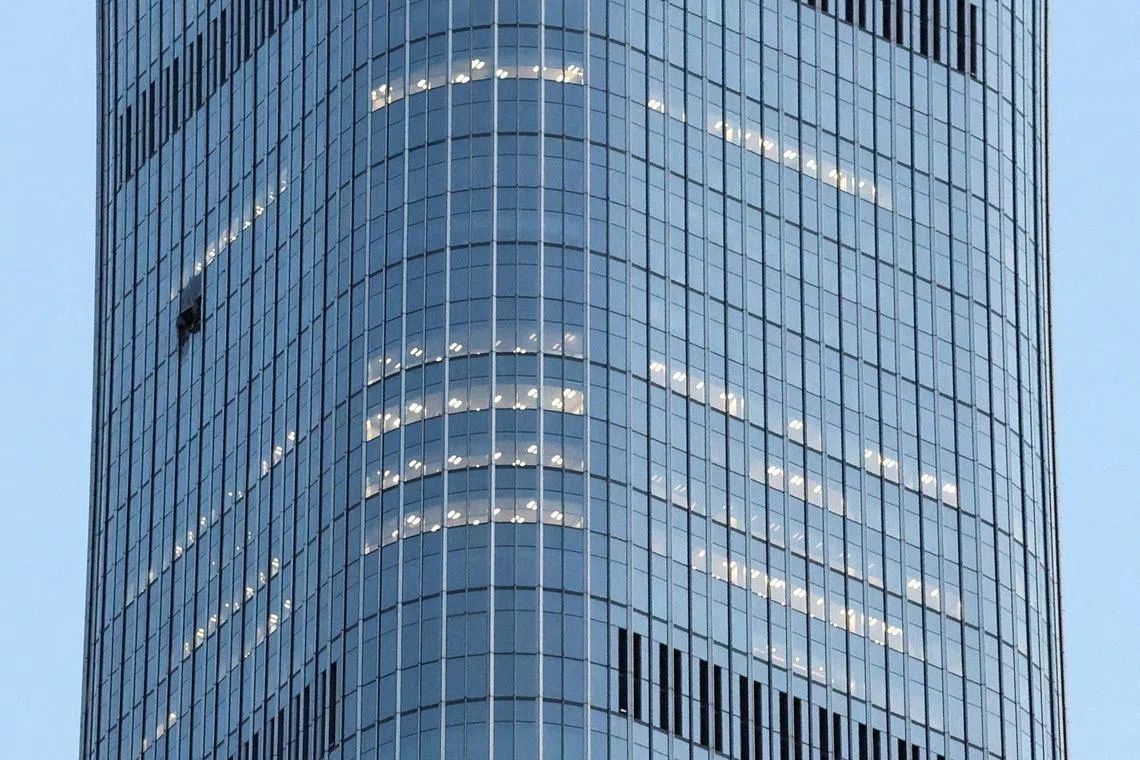
A 66-year-old pilot who crashed his small aircraft into Beijing's tallest building on June 26 had long battled mental health challenges and repeatedly written about ending his life, according to a statement released Thursday by the capital's Chaoyang district government. The crash into the 528-metre CITIC Tower, located in the heart of Beijing's Central Business District, raised immediate questions about aviation security in one of the world's most heavily monitored airspaces, particularly given its proximity to sensitive government areas.
The incident sent shockwaves through the Chinese capital not merely because of the rarity of such an event, but because of what it exposed about potential vulnerabilities in a system renowned for its stringent controls. The CITIC Tower stands approximately seven kilometres from Zhongnanhai, the heavily fortified compound that houses China's most senior political leadership. The crash also came uncomfortably close to the Communist Party's 105th anniversary celebrations, which occurred days later at the nearby Great Hall of the People off Tiananmen Square.
Authorities identified the pilot only by his surname, Liu, describing him as a divorced man who lived alone in Beijing. According to the government statement, Liu "had long suffered from insomnia and anxiety," with his personal diary containing multiple references to "ending his life." The characterisation of the incident as stemming from "personal reasons" rather than mechanical or systemic failure became the official narrative, presented swiftly to contain potential speculation and anxiety in the capital's business district.
The sequence of events on the afternoon of June 26 began with Liu departing from a general aviation airport in suburban Pinggu district. He conducted an initial supervised flight followed by a solo flight, the authorities disclosed. During that solo flight, Liu deviated from his designated airspace and subsequently lost contact with the airport before the collision occurred at 5:55 pm local time. The aircraft involved was a two-seat propeller-driven light aircraft registered as B-12PP, a registration number confirmed officially for the first time in Thursday's statement.
Liu's pilot credentials raised important questions about screening procedures. He had obtained a sport pilot license in 2021 and upgraded to a private pilot license in 2024, suggesting he had navigated the certification process relatively recently. Obtaining a private pilot licence in China nominally requires comprehensive medical examinations and appropriate certifications. Yet pilots interviewed anonymously about the incident, citing its sensitivity, acknowledged the unclear circumstances surrounding how Liu managed to obtain clearance while apparently struggling with documented mental health concerns that should theoretically have surfaced during medical evaluations.
The security implications extended beyond the individual's fitness to fly. China maintains some of the world's strictest airspace controls, yet Liu's aircraft penetrated an area adjacent to a permanent no-fly zone and crossed highly restricted airspace utilised by commercial aircraft arriving at and departing from Beijing Capital Airport, one of the capital's two major aviation hubs. Chinese civil aviation regulations mandate that all flights, including general aviation operations, receive advance approval. General aviation operators must submit detailed flight plans to flight-control authorities before 3 pm on the day preceding takeoff, and flying over urban areas is generally prohibited under Chinese law.
The government's narrative faced immediate scepticism from internet users who questioned how such an incident could occur in an airspace subject to what many perceived as near-total state oversight. The crash inflicted visible damage to the building, with journalists witnessing a hole in the windows of one of the upper floors and observing debris and a small fire at the structure's base. Yet authorities rapidly suppressed documentation of the event, with police at the scene preventing journalists and onlookers from photographing the building. Chinese social media platforms were similarly scrubbed of photos and videos within hours of the incident.
The heavy-handed suppression of information itself became newsworthy, with users on Chinese social media platforms posting questions about security gaps even as the government statement was released. These posts were swiftly deleted, a pattern consistent with Beijing's approach to incidents that might trigger broader concerns about state security or system reliability. The timing intensified scrutiny, as the incident occurred just days before the Party's major anniversary event, potentially explaining the urgency with which authorities sought to contain the narrative.
For Malaysian and regional readers, the incident illuminates how even societies with the most elaborate security apparatus face real vulnerabilities when individual actors determine to breach them. It also demonstrates how rapidly information management becomes a priority when such breaches occur, raising questions about transparency and public safety communication in tightly controlled systems. The case suggests that mental health screening in aviation remains inconsistently applied even in highly regulated environments, a concern that resonates across Asia where aviation industries are expanding rapidly and regulatory frameworks continue developing.
The crash represented a rare breach of China's airspace security, one that authorities attributed entirely to individual psychological factors and deliberate deviation from protocol rather than systemic failures. Yet the gaps that emerged—the ability of a solo pilot to lose contact, deviate from designated areas, penetrate restricted airspace, and approach sensitive locations—suggest that even advanced surveillance and control systems possess exploitable weaknesses. Whether those weaknesses reflect genuine security blind spots or intentional flexibility within the system remains unclear, particularly given Beijing's subsequent emphasis on suppressing public discussion of the incident rather than providing comprehensive explanations.

