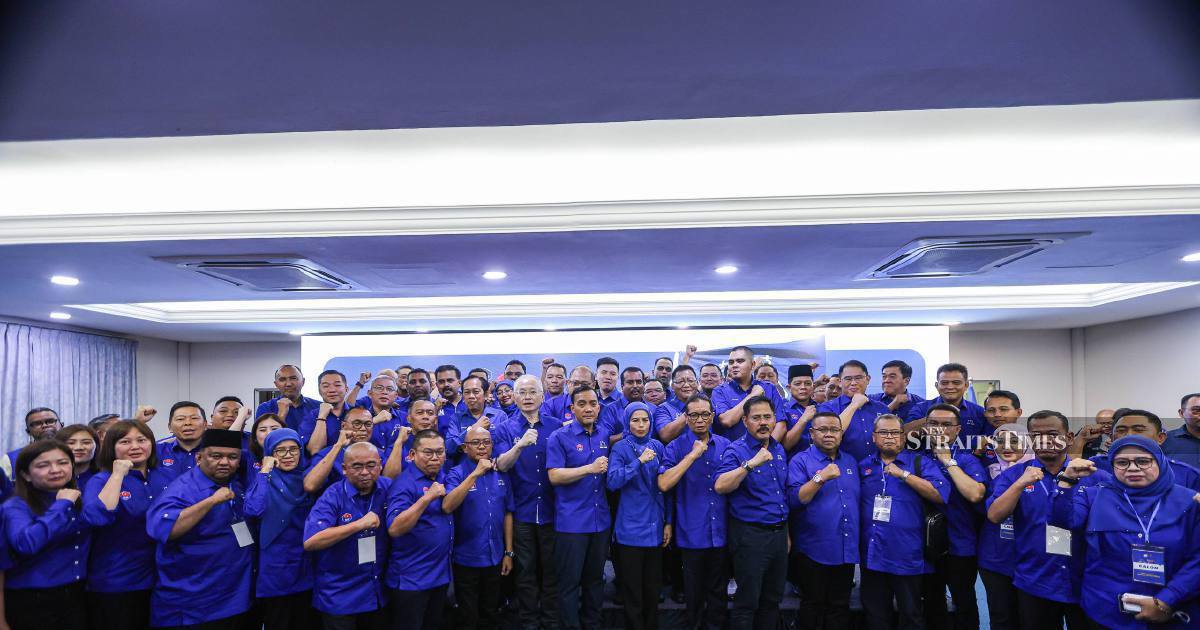
Barisan Nasional has formally released its comprehensive lineup of 56 candidates seeking election in Johor on July 11, completing the coalition's preparations for one of Malaysia's most significant regional electoral contests. The announcement represents a pivotal moment in the BN campaign, as the coalition seeks to consolidate its dominance in a state it has governed since independence, despite facing increasing pressure from rival political movements across the country.
The decision to field a full slate across all contested seats signals BN's confidence in its organisational machinery and its assessment of electoral viability in different constituencies. By committing candidates to the complete spectrum of available seats, the coalition demonstrates it is not yielding ground in any district, a strategic posture that contrasts with the selective approaches sometimes adopted by other coalitions facing resource constraints or internal disputes over seat allocation.
Johor represents extraordinarily significant political territory for BN at the national level. As the federation's second-largest state by population and a traditional stronghold of Malay-Muslim conservatism, the state's electoral outcome carries implications extending far beyond regional governance. The political complexion of Johor's state assembly frequently influences broader dynamics within federal politics, given the state's capacity to either reinforce or challenge the legitimacy of the governing coalition in Putrajaya.
The composition of the candidate list itself warrants examination for what it reveals about BN's internal power structures and evolving priorities. The allocation of nominations among BN's component parties—United Malays National Organisation (UMNO), Malaysian Chinese Association (MCA), Malaysian Indian Congress (MIC), and the various allied parties—reflects ongoing negotiations about representation and influence within the coalition. These internal dynamics often prove as consequential for long-term BN stability as the results against opposition parties.
Johor's electoral landscape has transformed considerably over recent election cycles. While the state remained a BN bastion through much decades, the 2018 general election shattered assumptions about unassailable Malay-Muslim support for the ruling coalition. The subsequent 2022 state election saw BN recover significant ground, but opposition movements retain organisational presence and voter bases in urban and semi-urban constituencies where younger voters and educated professionals have proven responsive to alternative political messaging.
The timing of the July 11 election creates a compressed campaign window that strategically favours the incumbent BN coalition. Shorter election periods typically advantage parties with superior ground machinery, greater financial resources, and existing administrative platforms—all advantages the BN apparatus possesses. However, this timeline simultaneously pressures opposition forces to mobilise rapidly and coordinate across their own internally diverse coalition structures, a challenge that has historically proven difficult for anti-government alliances in Malaysia.
For Malaysian observers, the Johor election functions as an important barometer of national political sentiment and trends. The state frequently experiences electoral patterns that presage or reflect broader shifts in the federal political environment. A decisive BN victory would underscore the coalition's capacity to recover from the 2018 watershed, while gains for opposition parties would indicate that anti-BN sentiment retains potency even after years of BN-led recovery efforts and consolidation.
The candidate announcement phase typically generates considerable commentary regarding seat selections, the elevation or sidelining of incumbent representatives, and the introduction of fresh political faces. These decisions reveal what BN leadership considers the coalition's competitive positioning across different districts and what demographic or ideological adjustments leadership believes necessary to strengthen electoral prospects. Notably, BN's capacity to refresh its candidate roster while maintaining continuity in well-performing constituencies reflects the institutional depth and succession planning capacity that larger, longer-established political organisations typically possess.
From a Southeast Asian perspective, Malaysia's regional political developments merit attention given the federation's multicommunal character and the ongoing negotiations required to balance competing ethnic, religious, and regional interests within democratic structures. Electoral outcomes in states like Johor demonstrate how these balancing mechanisms function in practice and whether mainstream coalitions can successfully accommodate diverse constituencies within a framework that also preserves the constitutional position of Islam and Bumiputera interests that remain central to Malaysia's foundational political bargains.
The coming campaign period will likely showcase familiar themes in Malaysian electoral competition: BN's emphasis on developmental delivery, administrative stability, and protection of constitutional arrangements will probably feature prominently alongside opposition critiques regarding governance accountability, anti-corruption efforts, and economic inclusivity. How voters respond to these competing narratives in Johor will offer valuable insights into the durability of the political settlement emerging from the 2022 general election and whether Malaysia's major coalitions have adequately addressed underlying voter concerns that earlier destabilised the political system.
As the campaign unfolds, the performance of individual candidates across different constituencies, campaign messaging refinement, and the capacity of opposition coalitions to present coherent alternatives will all influence the election's outcome. For regional observers and policymakers monitoring Malaysia's political trajectory, the Johor election represents an opportunity to assess whether the federation's political institutions and electoral processes continue functioning to channel popular preferences effectively while maintaining the interethnic and interreligious stability that remains essential to Malaysia's broader stability and development.