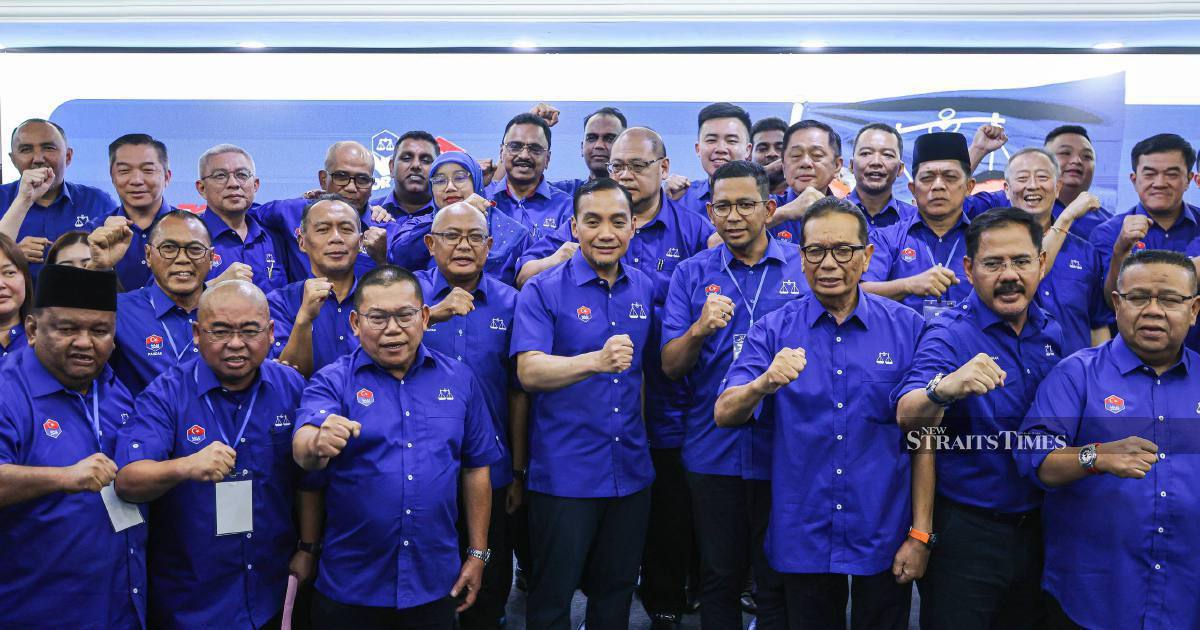
Barisan Nasional's Johor leadership has drawn a firm line in the sand regarding post-election alliances, explicitly rejecting any possibility of governing through a coalition arrangement with competing political parties. The declaration comes as the established ruling bloc seeks to consolidate its position ahead of the state election and signals a decisive shift away from the collaborative political models that have characterised Malaysian politics in recent years.
The unequivocal rejection of coalition partnerships reflects BN's confidence in its electoral prospects across Johor, where the coalition has traditionally maintained substantial influence. By publicly ruling out power-sharing arrangements, the leadership has attempted to project strength and autonomy, suggesting the party believes it possesses sufficient grassroots support to secure an independent mandate. This positioning also serves to differentiate BN from other political formations that have relied on multi-party agreements to form government.
The significance of this stance extends beyond mere electoral rhetoric. For more than two decades, Malaysian politics has increasingly gravitated toward coalition-building, with governments at both federal and state levels frequently depending on alliances spanning multiple parties with divergent ideological commitments. BN's assertion that it will govern unilaterally if victorious represents a departure from this pattern and implies a confidence in securing an outright majority rather than a simple plurality of parliamentary seats.
For Johor specifically, the implications are considerable. The state has served as a crucial power base for BN historically, and control of Johor translates into significant influence within the broader federal political architecture. By signalling its intention to govern without external coalition partners, BN is essentially committing to implementing its agenda without negotiating policy compromises with rival parties that might dilute its mandate or constrain executive decision-making.
The firm stance also carries implications for other political formations anticipating the possibility of coalition formation. Parties that might have hoped to gain ministries or policy influence through partnership arrangements are receiving an unambiguous signal that BN views such negotiations as closed before voting even occurs. This approach differs markedly from the post-election coalition agreements that have become routine across Malaysian politics, where parties often negotiate power-sharing terms based on electoral outcomes.
The regional dimension warrants consideration as well. Johor occupies a strategic position within Southeast Asia, serving as Malaysia's industrial and commercial gateway to Singapore and the broader southern corridor. Political stability and clear governance structures are therefore economically significant. BN's assertion of solo governance potentially appeals to business constituencies and investors who may perceive clearer decision-making structures and reduced bureaucratic complications arising from multi-party government arrangements.
This declaration also reflects internal party dynamics within BN. The coalition comprises multiple components with occasionally competing interests, and asserting unified external positioning strengthens internal cohesion by framing the election as a test of BN's viability as a governing force capable of independent action. The statement thus serves multiple domestic political audiences simultaneously: potential voters, coalition members, and rival formations.
The political landscape in Johor has shifted considerably since 2023, and BN's confidence may be assessed against actual polling dynamics and grassroots sentiment. The coalition's Johor leadership has evidently calculated that its electoral position is sufficiently robust to permit such categorical declarations without political risk. Whether this confidence aligns with voter intentions will become clear when elections are conducted.
The rejection of coalition options also signals strategic assumptions about which parties might otherwise emerge as coalition partners. By pre-emptively foreclosing negotiations, BN is implicitly asserting that potential alliance candidates lack sufficient electoral viability to merit post-election bargaining. This approach inverts the negotiation dynamic: rather than competing parties bidding for coalition terms based on election results, BN has declared itself available only for solo governance.
Regional analysts have observed that Malaysian coalition politics increasingly reflects not ideological alignment but rather pragmatic seat mathematics and ministerial distribution. BN's unilateral stance therefore represents a significant statement about how it envisions post-election politics functioning. If successful, it could reshape expectations around coalition-building across Malaysian politics more broadly.
The stakes for BN extend beyond immediate state-level governance. Johor represents a test case for whether the traditional ruling coalition can reassert dominance without external partnerships. Success would strengthen BN's federal positioning and potentially influence coalition strategies across other states. Conversely, electoral underperformance could force the coalition to recalibrate its approach or face governance complications if its majority proves insufficient for solo rule.
For Malaysian political observers, BN's categorical rejection of coalitions represents a notable departure from recent patterns. The statement reflects confidence, strategic calculation, and a deliberate effort to reframe how political legitimacy and governing authority are understood following electoral contests. Whether this approach ultimately proves viable or merely represents rhetorical positioning will substantially influence Malaysian politics beyond Johor itself.

