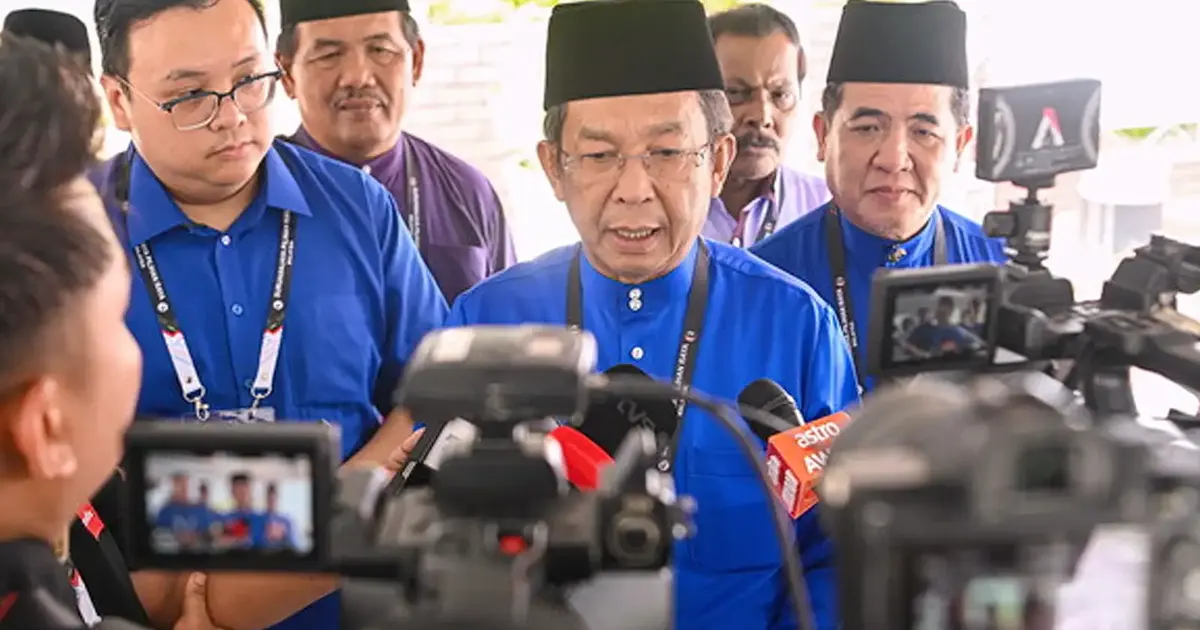
Barisan Nasional has made clear that deliberations over who will lead Negeri Sembilan as Menteri Besar will remain on hold until the coalition secures electoral victory in the state. State Umno chief Jalaluddin Alias outlined this measured approach, emphasising that such consequential leadership decisions should follow, not precede, confirmation of voter support at the ballot box.
The strategy reflects a pragmatic political calculus increasingly common in Malaysian state politics, where coalitions avoid internal divisions that could undermine their election campaigns. By deferring the question of succession, Barisan Nasional sidesteps potentially contentious negotiations that might alienate component parties or signal fractures within the coalition to voters. This approach allows the coalition to present a unified front focused entirely on the case for re-election rather than becoming entangled in behind-the-scenes jostling among rival candidates.
Jalaluddin's remarks suggest that Barisan Nasional possesses considerable depth of leadership talent within its ranks in Negeri Sembilan. Rather than elevating a single presumptive candidate before polling day, the coalition benefits from maintaining optionality and preserving options until the outcome is certain. Multiple capable administrators are apparently positioned to assume the state's top executive role, indicating that the party is not dependent on any single individual for continuity of governance.
Negeri Sembilan occupies a strategically important position within Malaysia's political landscape. The state has historically alternated between different ruling coalitions, making it a genuine swing jurisdiction where election results remain genuinely competitive rather than predetermined. Control of Negeri Sembilan provides any national coalition with parliamentary seats, economic policy leverage, and symbolic significance as a barometer of political mood shifts across the nation's middle ground.
The Menteri Besar position itself carries substantial administrative responsibility and political influence. The officeholder oversees state finances, development projects, land matters, and day-to-day governance across Negeri Sembilan's territory and population. Selecting the right individual requires careful assessment not only of political seniority but also administrative competence, stakeholder relationships, and perceived fairness in representing the state's diverse constituencies and economic interests.
Barisan Nasional's conditional approach also reflects lessons learned from Malaysian political history, where pre-election announcements of leadership preferences have occasionally backfired by either alienating coalition partners or creating expectations that prove difficult to manage. By keeping options open and waiting for electoral clarity, the coalition avoids locking itself into commitments that might prove electorally counterproductive or strategically limiting once results are known and coalition negotiations begin in earnest.
Within Umno specifically, the party's Negeri Sembilan branch will likely play a central role in advising on candidate selection once electoral victory is achieved. The state party apparatus possesses detailed knowledge of local political dynamics, factional balances within Umno, relationships with other Barisan Nasional component parties, and broader considerations affecting Negeri Sembilan's position within the national political framework. These grassroots insights will prove invaluable when the time comes to finalise the decision.
For voters in Negeri Sembilan, this deferral strategy carries both advantages and limitations. It preserves genuine democratic uncertainty about leadership outcomes and prevents any single candidate from gaining undue prominence that might skew electoral competition. Conversely, it means voters entering the polling booth cannot know with certainty who will occupy the Menteri Besar's office if their preferred coalition wins, requiring them to make voting decisions based on broader political judgments rather than specific leadership preferences.
The coalition's position also reflects confidence in its electoral prospects in the state. Rather than defending a vulnerable position, Barisan Nasional appears sufficiently secure in its political standing to approach the election without needing to deploy the tactical advantage that announcing a popular frontrunner candidate might provide. This confidence suggests internal polling or political assessment indicates competitive or favourable positioning heading into the campaign period.
Timing considerations also influence this decision-deferral strategy. Announcing a preferred candidate too far in advance risks allowing opposition parties to focus their attacks on a specific individual rather than addressing the broader case for or against Barisan Nasional's governance record. Maintaining uncertainty about leadership until the last possible moment keeps the focus on the coalition's policy agenda and its comparative advantages against rival coalitions competing for voter support.

