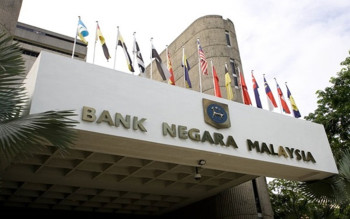
The financial troubles that engulfed Tabung Haji, Malaysia's Islamic pilgrimage fund manager, were preceded by repeated regulatory warnings that went unheeded, according to disclosures made in Parliament. Religious Affairs Minister Dr Zulkifli Hasan revealed during a special sitting of the Dewan Rakyat that Bank Negara Malaysia had dispatched five separate warning letters to the fund's chairman and the Religious Affairs ministry alerting them to the widening disparity between the institution's assets and liabilities. The central bank had stressed that immediate corrective action was essential to prevent TH from continuing to breach legal requirements governing its financial operations.
The severity of TH's position cannot be understated. At the time these warnings were issued, the situation represented what Bank Negara characterised as a potential systemic risk to Malaysia's broader financial stability. Rather than serving as a catalyst for urgent reform, however, these communications from the regulator appear to have been disregarded by TH's leadership. The failure to act on such explicit central bank guidance underscores broader governance failures within the institution that would later be documented in detail by an independent inquiry into the fund's operations.
The pattern of regulatory concern escalated beyond Bank Negara's warnings. In 2017, the Auditor-General added its voice to the chorus of concern, issuing a formal reprimand through an Emphasis of Matter notation in the Financial Statements Report for that year. This notation specifically flagged suspicious changes to TH's impairment policy, which had been modified twice within the same reporting period. The alterations appeared designed to artificially inflate the fund's stated profitability for 2017, a troubling indication of potential financial manipulation at the accounting level.
The mounting regulatory pressure eventually prompted action within TH's leadership structure. Following the Auditor-General's reprimand, the fund's newly constituted board took the significant step of engaging international accounting firm PricewaterhouseCoopers to conduct a comprehensive reassessment of TH's true financial standing and performance. This 2018 engagement marked a turning point in the institutional response, bringing external professional expertise to bear on the fund's accounting practices and valuation methodologies.
When PwC completed its independent analysis, the findings validated the gravest concerns raised by regulators. The international firm's report confirmed that financial manipulation had indeed occurred within TH's accounts. More specifically, the audit revealed a startling discrepancy: of the RM4.6 billion in total assets that TH had reported, only RM556 million had actually been valued by qualified professional valuers. This implied that approximately 88 percent of reported assets lacked proper professional validation, representing an enormous gap between paper valuations and independently verified asset values. The discovery suggested that TH's true financial position was substantially worse than disclosed in official accounts.
This crisis of confidence and governance eventually led to a formal government investigation. In 2021, authorities established a Royal Commission of Inquiry to examine TH's institutional weaknesses during the six-year period spanning 2014 to 2020. The commission's members were formally appointed on January 20, 2022, and they subsequently conducted an extensive review of the fund's operations and management practices. The Yang di-Pertuan Agong received the resulting 211-page report on August 30, 2022, and the document was made publicly available on July 29 of the following year.
The RCI's comprehensive investigation uncovered systematic deficiencies across TH's management and operational frameworks. The report documented 25 specific recommendations aimed at addressing identified weaknesses and preventing future crises. By July 30, 2023, when Minister Zulkifli provided his parliamentary briefing, TH's board had reportedly implemented 75 percent of these recommendations, signalling a commitment to institutional reform. However, the progress on implementation requires careful scrutiny given the institution's demonstrated track record of ignoring warnings from respected regulators.
The Tabung Haji saga carries implications extending beyond a single institution's difficulties. The fund manages savings and investments accumulated by hundreds of thousands of Malaysian Muslim pilgrims preparing for or reflecting on their Hajj journeys. Its financial distress raises questions about governance oversight within religious institutions and the responsiveness of boards to regulatory guidance. For Malaysian investors and contributors to pilgrimage savings schemes, the episode underscores the importance of independent financial auditing and the potential consequences when institutional leadership prioritises short-term appearances over long-term stability.
The sequence of events also illuminates regulatory dynamics within Malaysia's financial system. Bank Negara's multiple warnings, while unheeded, demonstrated that the central bank was actively monitoring systemic risks. The Auditor-General's concurrent notifications added further weight to official concerns. Yet the passage of time between initial warnings and eventual public acknowledgement of problems suggests that enforcement mechanisms may require strengthening, particularly when prestigious national institutions are involved. The unwillingness of TH's leadership to respond expeditiously to these red flags points to potential accountability gaps that merit consideration in future regulatory reform discussions.
Going forward, the implementation of the RCI's recommendations and the broader restoration of TH's financial health will be closely watched by Malaysian policymakers, contributors, and financial regulators. The Fund's recovery programme now operates under significantly enhanced scrutiny, and any further irregularities would likely provoke swifter intervention. For Malaysian religious endowments and Islamic financial institutions more broadly, the TH experience offers important lessons about the necessity of maintaining rigorous governance standards and responding promptly to regulatory guidance before institutional crises develop.

