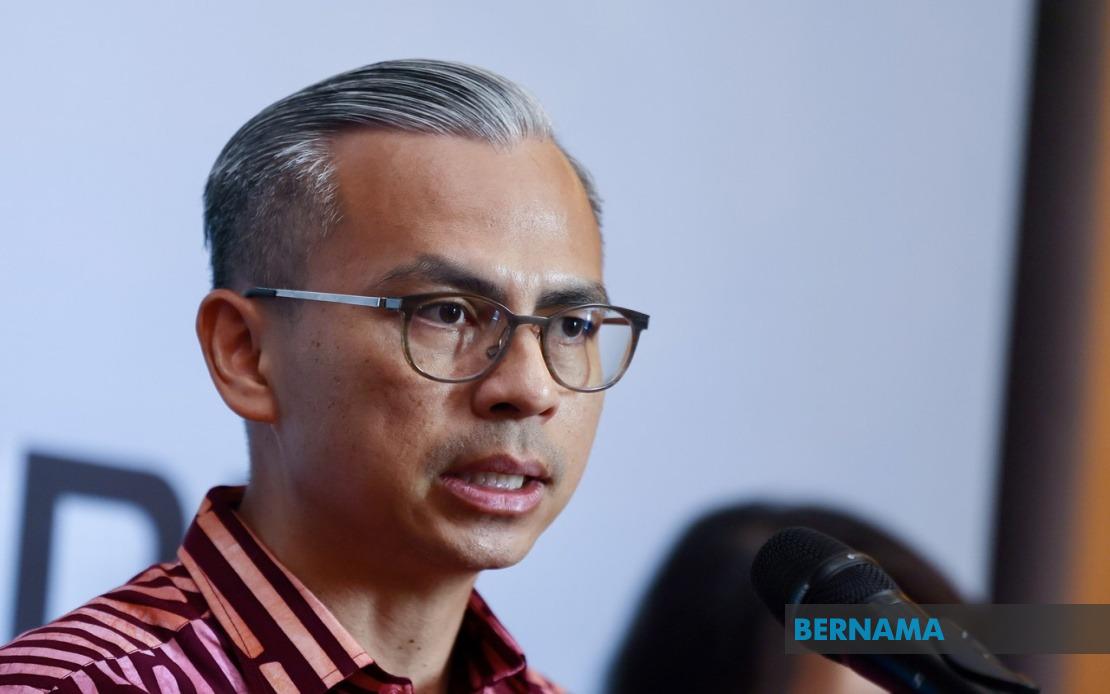
Bank customers continuing to encounter RM1 charges when withdrawing cash at interbank automated teller machines should escalate their complaints to Bank Negara Malaysia, Communications Minister Datuk Fahmi Fadzil announced at the ministry's weekly press briefing in Kuala Lumpur on July 2. The regulatory authority possesses the power to pursue corrective measures against any banking institution that contravenes the newly implemented fee waiver, which commenced the previous day.
Fahmi, serving as spokesperson for the MADANI Government, provided clarity regarding the scope and implementation mechanics of the fee structure elimination. The waiver specifically targets ATMs that are owned and operated by banks participating in Malaysia's shared automated teller network—a framework that permits customers to access funds from any compatible machine without bearing the RM1 transaction charge. This arrangement represents a significant cost reduction for Malaysian households and workers who regularly transfer money between different banking networks, a particularly common practice given the nation's competitive financial services landscape.
The initiative encompasses approximately 84 per cent of all bank-owned ATM terminals across the country, translating to nearly 16,000 machines now operating under the waived-fee model. This extensive coverage demonstrates substantial progress toward achieving universal fee elimination across the banking sector's core infrastructure. However, the remaining 16 per cent of machines—operated by private, non-bank entities under distinct commercial frameworks—retain the authority to maintain their existing fee structures. These independently-managed terminals operate under separate contractual arrangements outside the primary banking network's jurisdiction.
The Communications Minister emphasized the importance of customer awareness in distinguishing between qualifying and ineligible machines. Patrons should examine the logo displayed on each terminal; the presence of a particular bank's branding indicates participation in the shared network, while machines operated by third-party providers will lack such identification. This visual guidance enables consumers to make informed decisions about which ATMs to utilize, thereby avoiding unexpected charges when accessing their funds.
Public confusion regarding the implementation had prompted BNM's clarification, following numerous inquiries circulating across social media platforms. Many Malaysians sought verification of their rights under the new arrangement, reflecting understandable uncertainty when financial protocols shift. The regulatory communication addressed these concerns directly, ensuring customers understood exactly which facilities had adopted the waiver and which remained outside its scope.
Both the Association of Banks in Malaysia and the Malaysian Islamic Banking and Financial Institutions Association are preparing a coordinated public statement to elaborate further on the practical rollout of the fee waiver. This joint announcement is anticipated to furnish supplementary guidance that will help customers and banking staff implement the policy consistently across all participating institutions. Such coordinated communication reflects the banking sector's commitment to transparent implementation and customer service standardization.
For Malaysian savers and wage earners, the elimination of this recurring charge carries meaningful implications. Workers remitting portions of their income to family members in different states or customers maintaining multiple accounts across various banks have historically absorbed these RM1 charges repeatedly—accumulating to substantial annual expenses for frequent users. The waiver consequently preserves household liquidity while reducing the administrative friction that has characterized interbank fund transfers.
The policy change also signals the MADANI Government's emphasis on financial inclusion and cost-of-living relief measures. By targeting ATM fees, authorities have addressed a consumer pain point that affects middle-income and lower-income Malaysians disproportionately, as these groups rely more heavily on cash transactions and interbank transfers than wealthier segments utilizing wealth management services. The move aligns with broader governmental commitments to ease financial pressures on ordinary citizens.
Beyond the ATM fee matter, Fahmi highlighted Malaysia's expanding appeal as a fintech destination, citing a major international financial technology company's decision to establish a Global Development Centre at Tun Razak Exchange. This facility will focus on digital talent cultivation and technological advancement, particularly within Agentic AI sectors. The company's commitment represents its inaugural investment of this magnitude in Malaysia, underscoring confidence in the country's regulatory environment and political steadiness.
Fahmi attributed this investment attraction directly to the political stability and economic consistency maintained by the current administration. Foreign investors, he argued, perceive Malaysia as a reliably governed jurisdiction with coherent policies conducive to long-term technology sector development. The establishment of such centers generates employment for Malaysian software engineers and AI specialists while positioning the nation competitively within Southeast Asia's emerging technology ecosystem.
The dual announcement—addressing immediate consumer financial relief while simultaneously promoting Malaysia's technological ambitions—reflects a governmental strategy encompassing both immediate populist measures and forward-looking structural investments. The ATM fee waiver addresses pressing household economic concerns, while the fintech center announcement targets strategic economic positioning within the digital economy's expanding sectors.
Customers encountering RM1 charges despite the policy's implementation should document the incident details and submit formal complaints to Bank Negara Malaysia through designated channels. This reporting mechanism enables regulators to identify non-compliant institutions systematically and enforce corrective action, ensuring the policy achieves its intended universal effect across participating networks. The regulatory authority's responsive approach to implementation violations underscores commitment to protecting consumer interests.

