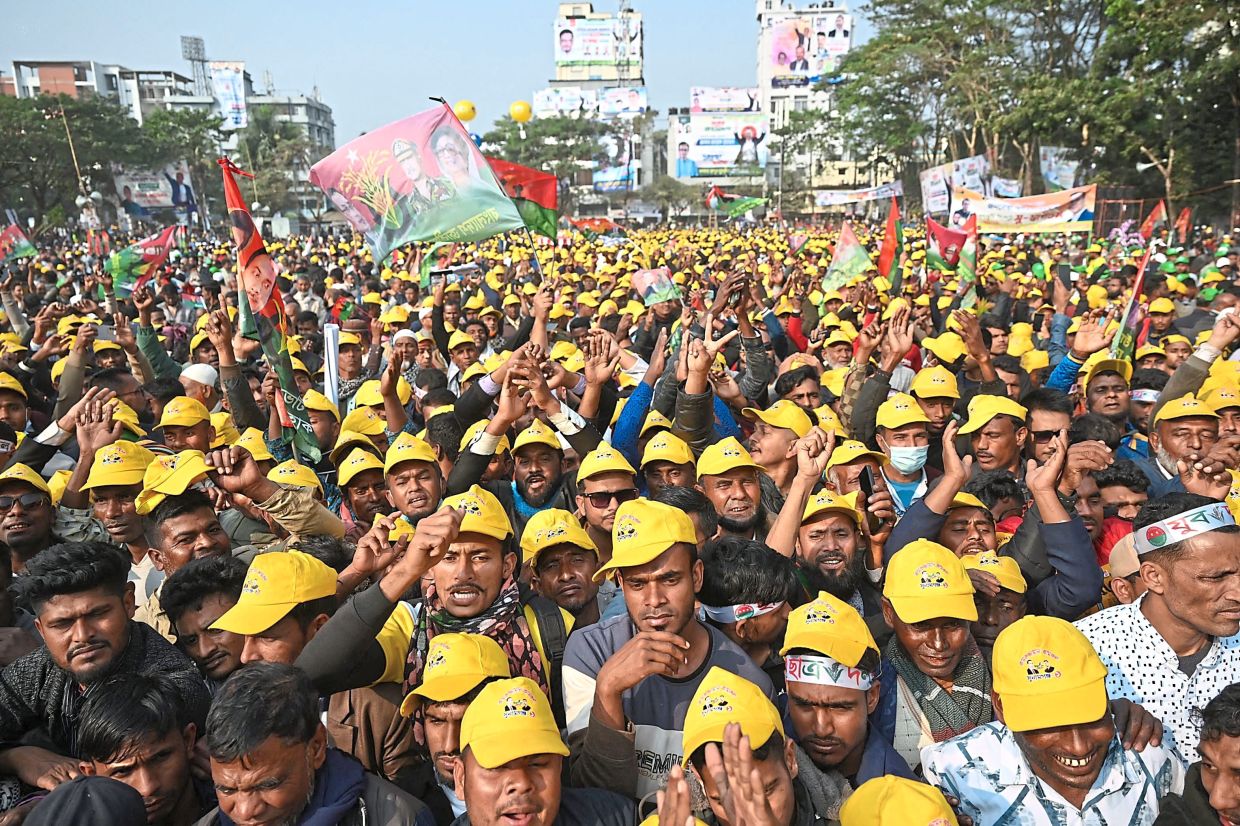
Bangladesh's parliament is set to elect a new president on Thursday, with ruling party figure Mirza Fakhrul Islam Alamgir widely expected to secure the largely ceremonial five-year position. The 78-year-old secretary general of the Bangladesh Nationalist Party (BNP) and local government minister has emerged as the frontrunner to become the 23rd president of the South Asian nation of 170 million people, marking another significant milestone in the country's political reconstruction following the dramatic upheaval of 2024.
Alamgir's ascension to the presidency represents a symbolic culmination of the BNP's remarkable political trajectory over the past two decades. Having operated in opposition during the final years of Sheikh Hasina's tumultuous government, the party secured a landslide electoral victory in February — the first nationwide polls held after the revolution that toppled Hasina's administration. Prime Minister Tarique Rahman's BNP capitalised on widespread public discontent with the previous regime, translating that momentum into parliamentary dominance that now enables the party to install its senior figures into constitutional positions.
The outgoing president, Mohammed Shahabuddin, stepped down in July citing health reasons, cutting short a term that was originally scheduled to end in 2028. Shahabuddin, a close confidant of the deposed Hasina, had become increasingly untenable as a symbol of the old order given the deep public resentment against Hasina's administration. His resignation freed the path for parliament to select a replacement more aligned with the new political consensus. The timing of his departure was widely interpreted as an acknowledgment that retaining symbols of the previous regime would complicate Bangladesh's efforts to move beyond the legacy of authoritarian governance.
Alamgir's own public comments on his elevation underscore the political significance of the moment. In remarks to reporters earlier this week, he described his nomination as the result of divine blessing and party support, pledging to maintain close connection with ordinary citizens despite assuming the presidency. Such statements reflect the broader discourse surrounding post-revolutionary politics in Bangladesh, where leaders emphasise public service and accountability after years of allegations of abuse and corruption under Hasina's administration.
The outgoing Hasina remains in self-imposed exile in India, refusing to return for legal proceedings in Dhaka. She was convicted in absentia in November on crimes against humanity charges, a verdict that underscores the severity of allegations levelled against her government. International human rights organisations documented extensive abuses during her tenure, including extrajudicial killings, systematic suppression of opposition activities, manipulation of judicial processes, and electoral irregularities. These revelations contributed substantially to the popular uprising that ultimately forced her from office and triggered the broader political realignment now unfolding.
Alamgir will face nominal competition from Oli Ahmed, the opposition's preferred candidate nominated by an 11-party alliance led by the Islamist Jamaat-e-Islami. However, given the ruling BNP's commanding parliamentary majority, the outcome appears predetermined. The parliamentary voting procedure, scheduled to commence around 2pm Bangladesh Standard Time, follows constitutional convention for presidential elections in the country. The largely ceremonial nature of the presidency means that while Alamgir's election carries symbolic weight, executive authority remains vested in the Prime Minister and cabinet.
Born on January 26, 1948, Alamgir brings decades of political and governmental experience to the position. He emerged as a prominent figure during the 1969 anti-military uprising that challenged Pakistani rule, participating in the student movements that laid ideological groundwork for Bangladesh's independence struggle two years later. This historical pedigree connects him to the founding generation of the modern nation-state, lending legitimacy to his elevation at a moment when Bangladesh seeks to strengthen democratic institutions and move beyond recent authoritarian governance.
Following his early activism, Alamgir pursued an academic career teaching economics before transitioning into government service and electoral politics. His ministerial portfolio expanded across multiple sectors including agriculture, aviation, and tourism, reflecting the broad responsibility he has undertaken throughout his public life. However, his most defining political period came during Hasina's rule, when he functioned as a key opposition leader even as BNP leader Khaleda Zia faced imprisonment and her son Rahman remained in exile.
The repression Alamgir endured during Hasina's government further amplifies the symbolic dimension of his presidential election. He was arrested numerous times on charges he and his supporters characterised as politically motivated persecution. His ability to maintain the BNP's organisational coherence and political presence during those difficult years has earned him recognition within party circles. By installing Alamgir in the presidency, the BNP honours one of its most steadfast figures while simultaneously projecting an image of continuity and institutional strength to both domestic and international audiences.
Alamgir's personal background reflects the professional accomplishments expected of senior political figures. Married to Rahat Ara Begum, a retired financial sector official, he maintains a family structure anchored by two daughters. This stability contrasts sharply with the tumultuous political environment in which he has operated, suggesting capacity for measured judgment despite the turbulent circumstances characterising contemporary Bangladeshi politics.
The election unfolds against the broader context of Bangladesh's institutional reconstruction. The country faces the challenge of consolidating democratic reforms and ensuring that the political transformations triggered by the 2024 revolution produce durable improvements in governance and accountability. Alamgir's presidency, while largely ceremonial, contributes to this project by embodying the transfer of power from a thoroughly discredited regime to leadership associated with resistance against authoritarianism. How effectively the new government translates this symbolic change into substantive institutional and legal reforms will substantially shape Bangladesh's political trajectory in the coming years.

