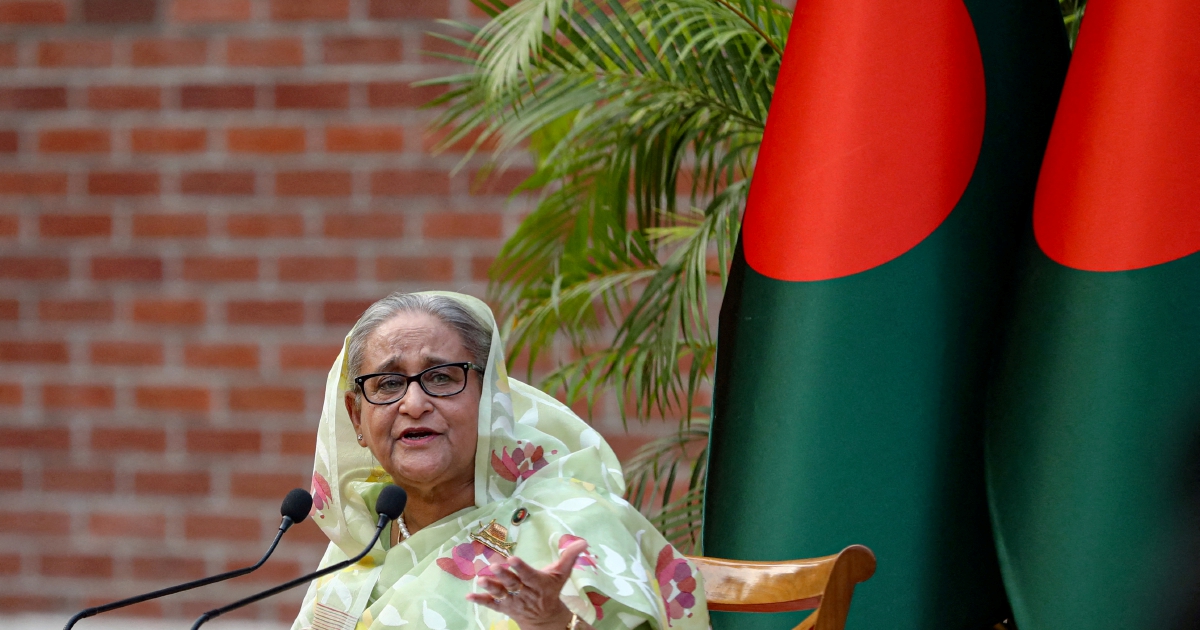
Bangladesh authorities have moved to confiscate assets valued at 760 billion taka—roughly US$6.2 billion—that are allegedly linked to former prime minister Sheikh Hasina, her immediate family, and a network of ten major business groups, officials announced on Wednesday. The asset seizure represents one of the most extensive financial clawback operations undertaken by the South Asian nation and signals the incoming administration's determination to hold the previous leadership accountable for alleged corruption and financial misconduct during her tenure.
The scope of the confiscation extends beyond Hasina herself to encompass her close relatives and business entities with which they maintained financial connections. This multi-pronged approach suggests that investigators view the wealth accumulation as symptomatic of a broader pattern of illicit enrichment that pervaded her administration. The involvement of a substantial number of private business groups indicates that the inquiry has cast a wide net, attempting to unravel interconnected financial arrangements that allegedly benefited the former premier and her associates.
For Malaysian observers, this development carries particular relevance to broader regional discussions about accountability in South Asia and governance standards across ASEAN's immediate neighbourhood. Malaysia has itself grappled with high-profile corruption cases in recent years, most notably the 1Malaysia Development Berhad scandal, which serves as a cautionary example of how financial misconduct at the highest levels can compromise national institutions and investor confidence. Bangladesh's aggressive pursuit of these assets suggests a regional pattern where new administrations prioritise asset recovery and transparency as mechanisms for political legitimacy.
The timing of these seizures follows significant political turbulence in Bangladesh, where Hasina's government was replaced following widespread public discontent. The confiscation effort appears designed to restore faith in institutional integrity and demonstrate that the transitional authorities are committed to dismantling networks of privilege that ordinary Bangladeshis perceived as enriching a narrow elite. This narrative resonates powerfully in societies where inequality and perceived corruption among political leaders rank among the most potent sources of popular frustration.
The specific identification of ten business groups in the confiscation order raises questions about the depth of financial entanglement between the political establishment and the private sector under Hasina's administration. Such interconnectedness—where government contracts, regulatory decisions, and commercial opportunities flow disproportionately toward entities with political connections—represents a structural problem that extends beyond individual wrongdoing. For the region's business communities and foreign investors, the implications are significant: political transitions may trigger sudden reversals of previously advantageous arrangements and create legal uncertainty for companies accused of impropriety.
International observers will likely scrutinise how Bangladesh executes this asset seizure, particularly regarding due process protections and the evidentiary standards employed. The legitimacy of such financial actions depends partly on transparent legal procedures that allow the accused opportunities to contest claims through established judicial mechanisms. Countries in the region monitoring Bangladesh's approach will consider what this precedent suggests about potential vulnerabilities in their own business environments, particularly for companies that benefited from preferential access under previous administrations.
The conversion of seized assets into government revenue poses its own set of challenges for Bangladesh's authorities. Freezing and confiscating $6.2 billion worth of property, securities, bank accounts, and commercial holdings requires sophisticated coordination between financial regulators, law enforcement agencies, and judicial bodies. Moreover, assets held abroad may prove difficult to recover without international cooperation, potentially limiting the ultimate amount that Bangladesh can actually claim and redirect toward public purposes.
For Southeast Asian nations contemplating similar anti-corruption initiatives, Bangladesh's action illustrates both the potential and the pitfalls of aggressive asset recovery. While popular sentiment generally supports efforts to retrieve allegedly stolen public wealth, the sustainability and effectiveness of such campaigns depend on institutionalising the processes involved so that they transcend individual political transitions. Without robust legal frameworks and independent oversight, asset seizures risk becoming tools of political vendetta rather than genuine accountability mechanisms.
The case also underscores evolving expectations regarding corporate governance and beneficial ownership transparency across South Asia. Many of the business groups implicated in the confiscation order likely maintained intricate corporate structures designed to obscure ultimate beneficial ownership and facilitate capital flight. Bangladesh's willingness to pursue these entities aggressively may encourage similar scrutiny in neighbouring countries and globally, potentially creating compliance pressures for regional companies that relied on opaque ownership arrangements.
Stakeholders in Bangladesh's financial sector and business community will be carefully monitoring how these confiscations ultimately unfold. The thoroughness with which authorities execute the seizure, their handling of legitimate claims from innocent third parties affected by frozen assets, and the transparency of any subsequent asset disposition will shape perceptions of whether this represents genuine institutional reform or selective political persecution. These perceptions, in turn, will influence Bangladesh's ability to attract and retain both domestic and foreign investment moving forward.

