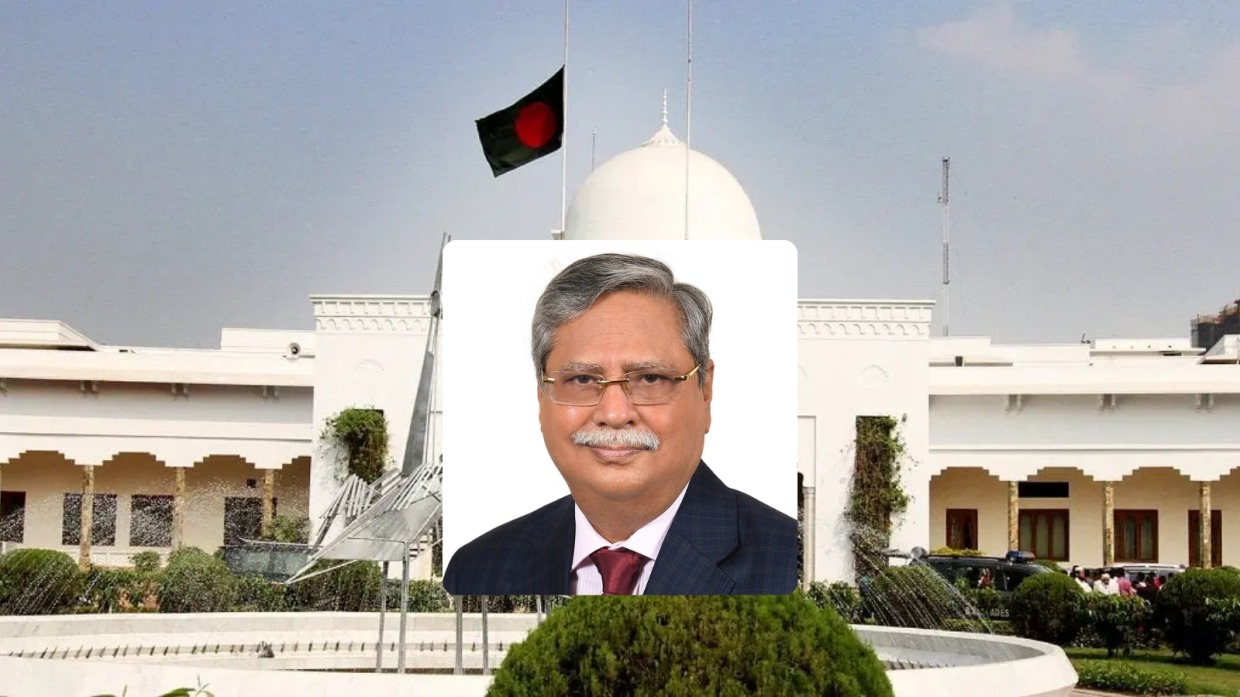
Bangladesh faces yet another institutional shake-up as President Mohammed Shahabuddin appears poised to step down from his constitutional role, according to informed sources tracking developments within the country's political establishment. The expected departure would mark a significant turning point in the nation's governance structure, removing the final high-level holdover from the period preceding last year's transformative mass uprising. Shahabuddin, who assumed office in April 2023, has become increasingly isolated within the current political framework dominated by the Bangladesh Nationalist Party-led administration.
The momentum toward Shahabuddin's exit has accelerated in recent weeks, with government sources indicating that a formal announcement could emerge within days. The timing reflects deeper anxieties within ruling circles about maintaining cohesion and messaging control during a critical transitional period. A government-connected source characterised his continued presence as an anachronism, noting that retaining a pre-uprising figure in the nation's highest constitutional office no longer served the administration's strategic interests or public narrative.
The catalyst for intensified pressure appears rooted in a May telephone conversation between Shahabuddin and exiled former Prime Minister Sheikh Hasina while he was visiting London for medical treatment. Hasina has remained in India since fleeing Bangladesh in July 2024, facing a death sentence and with her Awami League party banned from operating within the country. When intelligence agencies subsequently detected the communication between the president and the fugitive former premier, a clear message was reportedly conveyed to Shahabuddin: his resignation would be welcomed. This incident exposed what government circles viewed as inappropriate reconnection with discredited figures from the previous era.
However, senior Bangladesh Nationalist Party leadership characterised the phone conversation as merely one element within a more intricate political calculation. The resignation question has acquired fresh urgency following Hasina's recent public announcement that she and senior Awami League figures intend to return from exile around December and surrender themselves to Bangladeshi authorities. This declaration, made in July, has alarmed the current administration, which views any potential reconciliation narrative or dignified return scenario as threatening to the government's political positioning and the broader reform agenda initiated after the 2024 uprising.
The government has intensified its crackdown on attempts by Awami League cadres to reorganise and regroup within Bangladesh itself. Prime Minister Tarique Rahman issued explicit directives during a Cabinet meeting in mid-July, instructing relevant agencies to strengthen ongoing enforcement operations against the Awami League, the affiliated Bangladesh Chhatra League, Jubo League, and related organisations. This comprehensive suppression campaign reflects deep concern about residual sympathies or potential revival efforts among networks that previously wielded significant institutional power. The presence of a president perceived as maintaining old connections contradicts this hardline stance.
Shahabuddin's own statements have telegraphed his eventual departure for months. In December, during the tenure of the Muhammad Yunus-led interim government, he explicitly stated his intention to step down midway through his term following parliamentary elections, expressing that he felt humiliated by the interim administration's approach. After the BNP-led government took office, he modulated his position, declaring in a February newspaper interview that he would remain if the government desired his continued service but would resign voluntarily if the administration preferred his exit. This carefully calibrated language essentially positioned his remaining in office as contingent on governmental preference rather than constitutional entitlement.
The constitutional implications of Shahabuddin's potential resignation are straightforward. Under Bangladesh's constitutional framework, the Speaker of Parliament would assume the role of acting president until a successor undergoes election through the formal constitutional process. This transition mechanism ensures institutional continuity while allowing the BNP-led government to shape the selection of a new president more closely aligned with its vision and priorities. No definitive timeline or succession candidate has yet been publicly identified, suggesting the government wishes to manage the transition carefully without appearing to orchestrate the departure.
Government sources have expressed irritation over reports suggesting that Shahabuddin had been attempting to re-establish dormant contacts with various individuals and networks. These alleged reconnection efforts are interpreted within ruling circles as potentially undermining the administration's control over the political narrative and its management of the transition process. The government's preference for presidential continuity appears conditional on absolute institutional loyalty and the avoidance of independent diplomatic or political outreach that might complicate the administration's stated objectives.
The broader context illuminates why Shahabuddin's position has become untenable. The July 2024 uprising fundamentally delegitimised the Awami League government and its associated networks, creating an expectation that institutional positions would be filled by figures associated with the reform movement or the current political dispensation. Retaining a president appointed under the previous regime, regardless of his individual qualities or constitutional neutrality, contradicts the symbolic messaging the BNP-led administration wishes to project. His removal would reinforce the narrative that the government exercises decisive control over institutions and remains intolerant of potential rival centres of influence.
Sources close to the presidential residence indicated that critical decisions could materialise within one to two days of late July, with Shahabuddin scheduled to host non-resident ambassadors from four countries on July 29. This diplomatic engagement may represent one of his final official functions, a symbolic conclusion to his tenure before a formal resignation statement. The relatively low-key scheduling suggests the government has already determined his departure but prefers orchestrating the announcement through controlled channels rather than permitting an abrupt or dramatic exit.
For regional observers, Shahabuddin's expected resignation underscores the incomplete nature of Bangladesh's post-uprising institutional renovation. While electoral processes have commenced and new leadership has assumed executive functions, the deeper work of ensuring alignment across constitutional offices and power structures continues. The case also illustrates the practical constraints facing administrations attempting comprehensive political transitions: institutional positions retain symbolic weight, and maintaining symbolic coherence often requires reshaping appointments made under previous dispensations. Bangladesh's unfolding events will likely influence how other post-uprising governments in the region approach similar questions of institutional continuity versus institutional renewal during transformative political moments.

