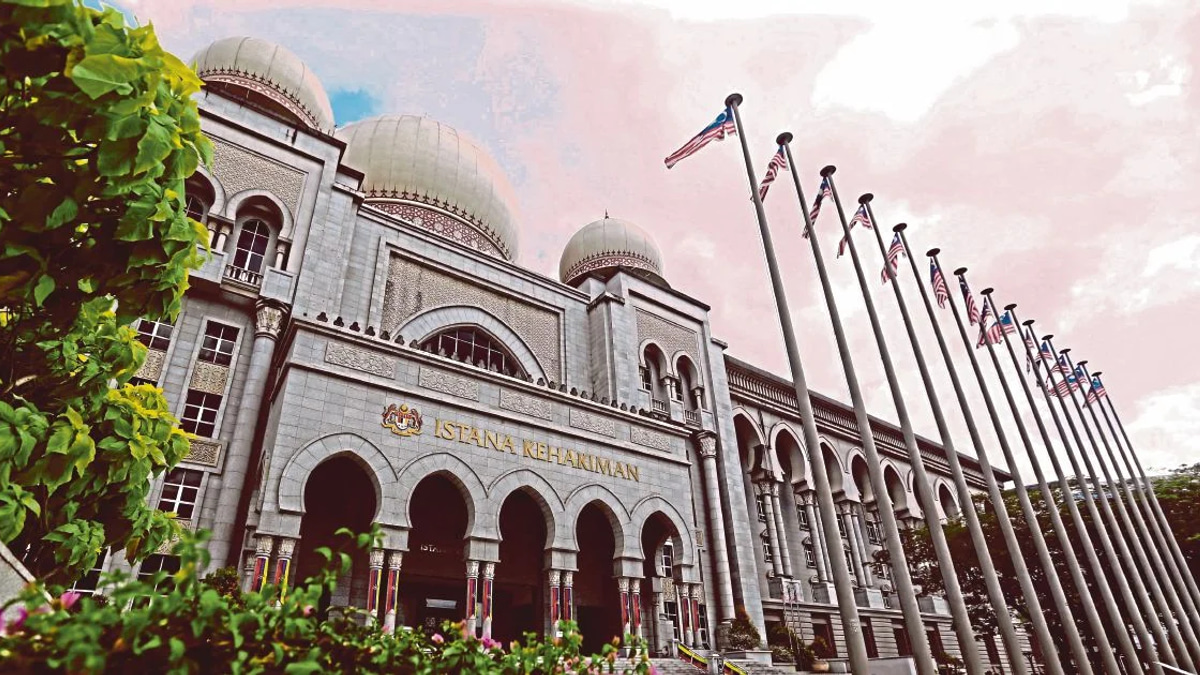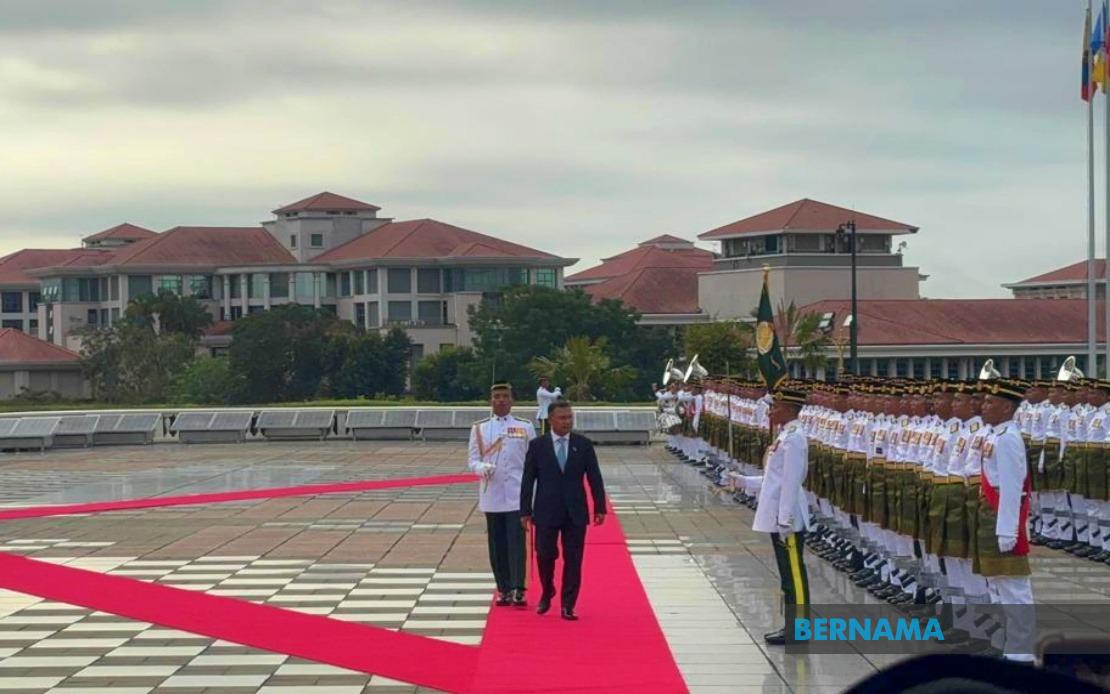
Bangladesh Prime Minister Tarique Rahman arrived in Malaysia on a two-day official visit, receiving the ceremonial reception befitting a head of government at the Perdana Putra Complex in Putrajaya on June 22. Prime Minister Datuk Seri Anwar Ibrahim led the welcoming delegation, with both nations' anthems played in traditional protocol. The formal honours extended to the visiting dignitary reflected the diplomatic significance Malaysia places on its relationship with Bangladesh, a growing economic and strategic partner in South Asia.
The reception featured the inspection of a ceremonial guard of honour comprising three officers and 103 personnel drawn from the First Battalion of the Royal Ranger Regiment under Major Nur Ahmad Zaim Zahari's command. The presence of multiple senior Malaysian officials underscored the high-level nature of the engagement. Deputy Prime Minister Datuk Seri Dr Ahmad Zahid Hamidi, Foreign Minister Datuk Seri Mohamad Hasan, Home Minister Datuk Seri Saifuddin Nasution Ismail, Communications Minister Datuk Fahmi Fadzil, and other Cabinet members attended alongside foreign diplomats and government officials, demonstrating comprehensive government participation in the bilateral engagement.
Following customary protocols, Prime Minister Tarique signed the official guest book before entering private discussions with Anwar Ibrahim. The one-on-one setting allowed both leaders to address matters of particular concern to their governments before broader bilateral talks commenced. This format enabled candid exchanges on sensitive regional and international issues while building personal rapport essential to sustained diplomatic relationships. The subsequent multilateral meeting involved senior ministers and officials from both nations, establishing a framework for detailed policy discussions across multiple government departments.
The substantive agenda covered Malaysia-Bangladesh bilateral relations across an extensive spectrum of collaborative opportunities. Trade and investment featured prominently, reflecting both nations' commitment to deepening economic integration. Human resource management emerged as another priority, acknowledging the significant Bangladesh diaspora in Malaysia and the potential for structured workforce development programmes. The semiconductor sector gained inclusion as a forward-looking cooperation area, aligning with Malaysia's established expertise in electronics manufacturing and Bangladesh's growing industrial ambitions. Energy collaboration represents a logical extension of Malaysia's petroleum exports, whilst agricultural cooperation taps complementary comparative advantages. Educational exchange programmes promise to enhance human capital development and cultural understanding between the two societies.
Beyond economic matters, the leaders were expected to exchange perspectives on regional and international issues of mutual concern. This broader diplomatic conversation reflects the growing complexity of geopolitics in Asia, where bilateral relationships increasingly incorporate security considerations, multilateral forum participation, and global governance positions. Bangladesh's strategic location in South Asia and its role in regional groupings like BIMSTEC and the Bay of Bengal Initiative align with Malaysia's own engagement across Southeast Asia and the Indian Ocean region.
The visit culminated in formal agreements advancing the partnership framework. A Memorandum of Understanding on Cultural Cooperation promises systematic expansion of educational, artistic, and people-to-people exchanges. Equally significant were two Exchanges of Notes addressing counter-terrorism research—a critical shared priority in an era of transnational security threats—and investment promotion and facilitation mechanisms designed to streamline commercial transactions. These instruments establish institutional pathways for sustained cooperation beyond the visit itself. Prime Minister Anwar subsequently hosted an official luncheon honouring his Bangladeshi counterpart, a traditional gesture concluding high-level state visits.
The economic dimensions of Malaysia-Bangladesh relations demonstrate substantial scope for expansion. In 2025, bilateral trade totalled RM12.18 billion, equivalent to USD2.84 billion, positioning Bangladesh as Malaysia's 28th largest trading partner globally and its second most significant partner in South Asia after India. Malaysian exports to Bangladesh reached RM10.08 billion, reflecting Malaysia's competitive advantage in petroleum products and refined fuels—sectors where domestic reserves and advanced refining capacity provide sustained competitive advantage. Bangladesh's growing energy demands, driven by rapid industrialisation and rising living standards, ensure continued market opportunities for Malaysian petroleum exports.
Bangladeshi exports to Malaysia, valued at RM2.10 billion, centre on textiles, apparel, and footwear sectors where Bangladesh possesses labour-cost advantages and established manufacturing infrastructure. This complementary trade pattern demonstrates efficient regional specialisation, with Malaysian capital-intensive energy and chemical sectors exchanging goods with Bangladesh's labour-intensive manufacturing. The composition reflects broader regional supply chain integration, where countries leverage comparative advantages within the broader Asian economic ecosystem.
Bangladesh's ranking as Malaysia's second-largest South Asian trading partner and export destination reflects both the nation's population scale—170 million people representing substantial consumer demand—and industrial development trajectory. The category encompassing textiles, apparel, and footwear imports signals Bangladesh's emergence as a competitive manufacturing centre, competing with other Southeast Asian nations in price-sensitive consumer goods sectors. As Bangladesh progresses along its development trajectory, opportunities emerge for Malaysian investment in higher-value manufacturing segments and technology-intensive industries, potentially upgrading the bilateral trade relationship beyond commodity and labour-intensive exchanges.
Prime Minister Tarique's delegation composition reflected the comprehensive nature of the visit. His spouse Dr Zubaida Rahman's participation emphasised the diplomatic character of the engagement. The inclusion of Foreign Minister Dr Khalilur Rahman alongside senior government officials ensured high-level representation across critical policy domains. This structured delegation composition facilitates parallel working-group discussions extending beyond bilateral meetings, enabling technical cooperation across multiple governmental levels.
For Malaysia, the Bangladesh visit reinforces strategic positioning in South Asia beyond traditional ASEAN frameworks. As regional geopolitics become increasingly multipolar, with competition between major powers intensifying, smaller nations must cultivate multifaceted partnerships. Bangladesh represents a natural ally—a Muslim-majority democratic nation sharing maritime concerns, development challenges, and strategic interests across the Indian Ocean region. Deepening Malaysia-Bangladesh relations contributes to regional stability while diversifying Malaysia's economic partnerships beyond the more established ASEAN relationships.
The timing of this official visit reflects both nations' recognition that bilateral relations merit elevation beyond routine diplomatic engagement. High-level state visits signal governmental commitment to partnership expansion and communicate to domestic and international audiences the importance attributed to specific relationships. For Bangladesh, Malaysia offers technological expertise, capital investment potential, and established regional networks. For Malaysia, Bangladesh provides market access, raw material diversity, and complementary industrial capacity. The visit's formal character and comprehensive agenda suggest both governments view expanded cooperation as mutually beneficial, laying groundwork for sustained engagement across multiple domains extending well beyond the immediate post-visit period.
%22%2F%3E%3C%2Fpattern%3E%3C%2Fdefs%3E%3Crect%20width%3D%22100%25%22%20height%3D%22100%25%22%20fill%3D%22url(%23ph55poxg)%22%2F%3E%3Crect%20width%3D%22100%25%22%20height%3D%22100%25%22%20fill%3D%22url(%23ph55poxp)%22%2F%3E%3Ctext%20x%3D%2250%25%22%20y%3D%2250%25%22%20text-anchor%3D%22middle%22%20dominant-baseline%3D%22central%22%20fill%3D%22rgba(255%2C255%2C255%2C0.95)%22%20font-family%3D%22Georgia%2C%20'Times%20New%20Roman'%2C%20serif%22%20font-weight%3D%22700%22%20font-size%3D%22170%22%20letter-spacing%3D%22-0.02em%22%3ESelangor%3C%2Ftext%3E%3C%2Fsvg%3E)