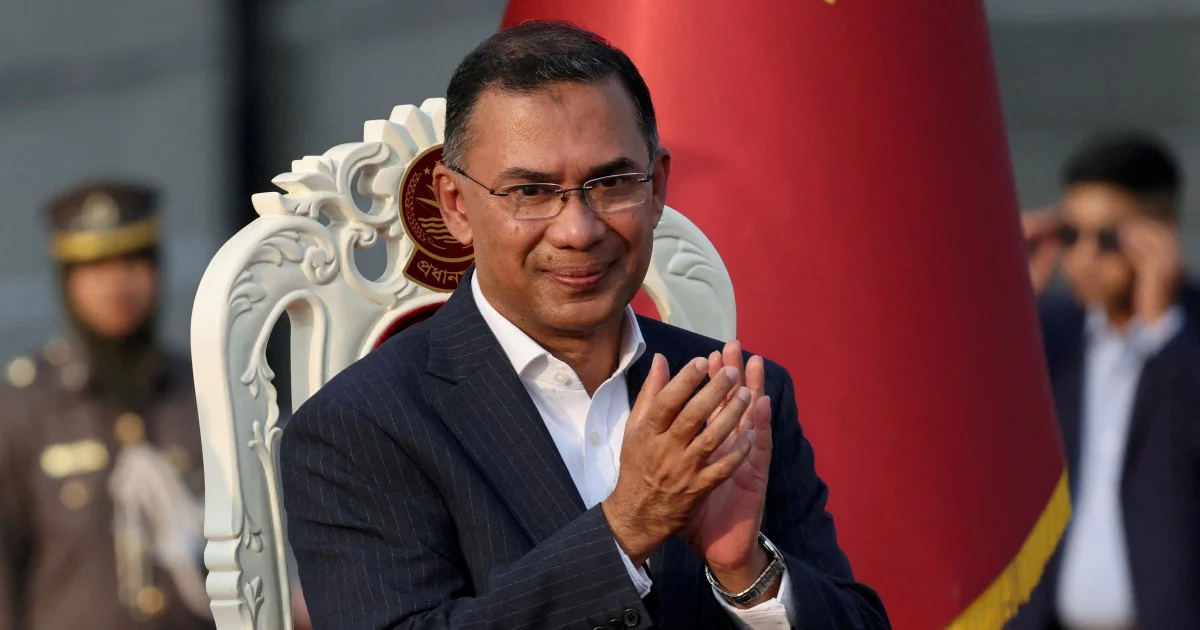
Bangladesh Prime Minister Tarique Rahman touched down at Sepang today, beginning a significant diplomatic engagement that underscores the growing importance of Malaysia-Bangladesh ties within the broader South Asian and Southeast Asian framework. The visit signals renewed commitment from Dhaka to deepen partnerships with Kuala Lumpur across multiple sectors, at a time when both nations are navigating complex regional dynamics and seeking to expand their international engagement.
The timing of Rahman's visit reflects a broader pattern of diplomatic activity in the region, where nations are increasingly recognising the strategic value of strengthening ASEAN-South Asia connections. Bangladesh, as an emerging economy with over 170 million people and growing strategic influence, represents a crucial counterpart for Malaysia's regional diplomacy. Similarly, Malaysia's position as a developed ASEAN member and major regional economic hub makes it an attractive destination for Bangladeshi leadership seeking to forge deeper institutional relationships.
Official sources indicate that the visit encompasses discussions on enhancing bilateral cooperation in multiple domains of mutual interest. These are likely to include trade and investment relations, given Malaysia's significant presence in Bangladesh's manufacturing sector and Bangladesh's potential as a market for Malaysian goods and services. Both nations also share interests in addressing maritime security, ensuring stable regional development, and navigating the complexities of contemporary geopolitical tensions that affect the Indo-Pacific region.
The diplomatic engagement carries particular weight given Bangladesh's recent political transitions and Malaysia's evolving role in regional affairs. For Malaysia, cultivating stronger ties with Bangladesh provides opportunities to expand its economic footprint in South Asia while also positioning itself as a bridge between ASEAN and the broader South Asian region. For Bangladesh, deepening relations with Malaysia can facilitate knowledge transfer, investment inflows, and stronger institutional cooperation in areas ranging from technology to governance.
Trade relations between the two nations have historically been modest but possess significant growth potential. Malaysian companies have established manufacturing operations in Bangladesh, attracted by competitive labour costs and preferential trade arrangements. Enhanced bilateral dialogue during this visit could unlock opportunities for expanding these economic ties, particularly in sectors such as textiles, electronics, pharmaceuticals, and petrochemicals where both nations possess complementary strengths and capabilities.
Beyond commerce, the visit likely encompasses discussions on cultural and people-to-people exchanges. Bangladesh maintains a significant diaspora within Malaysia, contributing to labour markets and remitting substantial sums back home. Strengthening institutional frameworks to protect and support these workers, while facilitating educational and cultural exchanges, represents another dimension of bilateral cooperation that could be advanced during this engagement.
Regional security and maritime cooperation are probable topics on the agenda. Both nations have interests in ensuring stability in the Bay of Bengal and surrounding waters, as well as in addressing transnational challenges such as human trafficking, maritime piracy, and environmental degradation. Malaysia's experience in regional security cooperation through ASEAN mechanisms could provide valuable lessons for Bangladesh's bilateral security strategies.
The visit also reflects broader geopolitical considerations affecting South and Southeast Asia. With major powers competing for influence across the region and tensions in the Indo-Pacific region creating uncertainty, smaller and medium-sized nations like Malaysia and Bangladesh are seeking to build resilient partnerships that can withstand external pressures while advancing their own development objectives. Such bilateral visits serve as anchors for these relationships, creating platforms for sustained dialogue beyond formal ministerial meetings.
Future cooperation frameworks that could emerge from this visit might include expanded educational exchanges, professional development programmes, and institutional partnerships between universities and research centres. Such initiatives foster long-term relationships that transcend political cycles and create constituencies within both nations invested in sustained bilateral cooperation.
The Rahman visit exemplifies how Malaysia continues to engage actively with South Asian partners, recognising that regional stability and prosperity depend on robust connections across traditional geographic boundaries. For Bangladesh, such engagement with ASEAN members helps diversify its international partnerships and reduces dependence on any single regional power, enhancing its strategic autonomy in an increasingly multipolar world.
As both nations seek to navigate challenges ranging from climate change to economic transformation, the opportunities for cooperation extend far beyond traditional diplomatic courtesies. Joint initiatives in green energy, disaster management, agricultural innovation, and digital infrastructure could generate mutual benefits while contributing to broader regional development objectives. The success of this visit will be measured not merely in joint statements issued at its conclusion, but in tangible cooperation frameworks established and implemented in the months and years ahead.
%22%2F%3E%3C%2Fpattern%3E%3C%2Fdefs%3E%3Crect%20width%3D%22100%25%22%20height%3D%22100%25%22%20fill%3D%22url(%23ph4j62ug)%22%2F%3E%3Crect%20width%3D%22100%25%22%20height%3D%22100%25%22%20fill%3D%22url(%23ph4j62up)%22%2F%3E%3Ctext%20x%3D%2250%25%22%20y%3D%2250%25%22%20text-anchor%3D%22middle%22%20dominant-baseline%3D%22central%22%20fill%3D%22rgba(255%2C255%2C255%2C0.95)%22%20font-family%3D%22Georgia%2C%20'Times%20New%20Roman'%2C%20serif%22%20font-weight%3D%22700%22%20font-size%3D%22320%22%20letter-spacing%3D%22-0.02em%22%3EIran%3C%2Ftext%3E%3C%2Fsvg%3E)