Bangladesh has signalled its intention to forge a substantially stronger relationship with Malaysia, with recent diplomatic overtures underscoring Dhaka's confidence in the bilateral partnership. The choice of Malaysia as Prime Minister Tarique Rahman's first official destination overseas carries considerable symbolic weight, demonstrating how Bangladesh's new leadership prioritises engagement with Kuala Lumpur at a critical juncture for the South Asian nation.
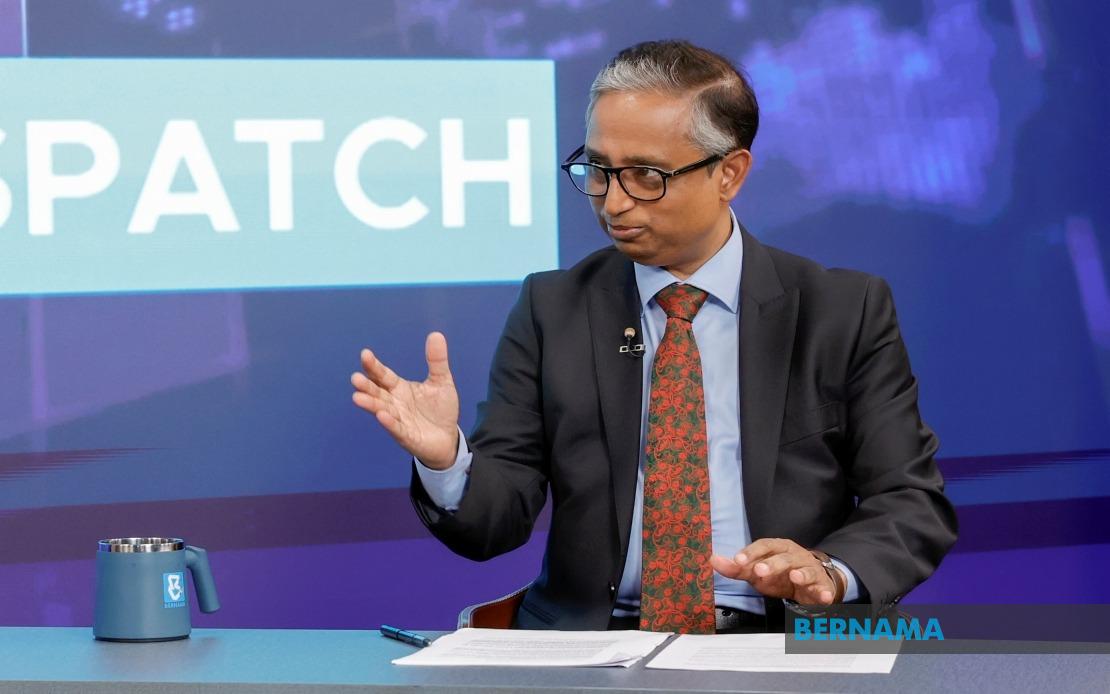
Bangladesh High Commissioner to Malaysia Manjurul Karim Khan Chowdhury underscored the significance of the visit during remarks on Bernama TV, noting that despite lasting fewer than 24 hours, the engagement yielded tangible results and reinforced mutual commitments. The brevity of the trip belies its importance: both Tarique and Prime Minister Datuk Seri Anwar Ibrahim used the occasion to publicly reaffirm their determination to elevate cooperation and explore fresh opportunities spanning multiple economic and development sectors.
The diplomatic visit, occurring at Anwar's invitation last month, has injected new momentum into a relationship that has historically remained somewhat beneath the surface of regional discourse. For Bangladesh, positioning Malaysia as a first port of call demonstrates Dhaka's strategic calculation that the Malaysian leadership understands South Asian development challenges and can offer meaningful partnership beyond ceremonial exchanges. This carries particular resonance given Malaysia's established role within ASEAN and its experience as a middle-income economy that has navigated industrialisation and infrastructure expansion.
Trade imbalances currently characterise the relationship, with Malaysia's exports to Bangladesh valued at RM10.08 billion in 2025, concentrated heavily in petroleum products, while Bangladesh supplies RM2.10 billion in imports dominated by textiles, apparel and footwear. The overall trading volume of RM12.18 billion positions Bangladesh as Malaysia's 28th largest trading partner globally, though it ranks second within South Asia after India—a position both nations view as underutilising their potential. Tariff barriers represent a critical constraint; Bangladeshi products currently face approximately 32 per cent duties when entering the Malaysian market, substantially limiting competitiveness and mutual trade expansion.
Both governments have committed to accelerating negotiations on a free trade agreement, targeting completion by 2027. Such an arrangement would fundamentally reshape bilateral economic dynamics by dramatically reducing these tariff obstacles. For Bangladesh, notably, a successful FTA would unlock opportunities for manufacturing enterprises to produce goods destined not merely for Malaysia but for the broader ASEAN marketplace, transforming the nation into a potential regional production hub. Malaysian companies would gain reciprocal access to Bangladesh's textile and apparel sectors whilst establishing manufacturing bases to supply duty-free to other ASEAN members.
Beyond trade mechanics, Chowdhury extended an explicit invitation for Malaysian capital to flow into Bangladesh's expanding infrastructure requirements. The South Asian nation is actively pursuing development across telecommunications networks, road and bridge construction, advanced manufacturing facilities and the digital economy. Such opportunities address a fundamental challenge facing Bangladesh's development trajectory: securing sufficient foreign direct investment to sustain growth whilst managing currency pressures and external imbalances. Malaysian investors, drawing on experience in comparable emerging markets, could find substantial returns in these sectors whilst contributing to Bangladesh's transition toward higher-value manufacturing.
Bangladesh's parallel push for enhanced engagement with ASEAN structures introduces another dimension to the bilateral warming. Dhaka is actively lobbying for acceptance as a sectoral dialogue partner within ASEAN, a status that would grant it formal consultative access to the regional bloc's decision-making processes on specific issue areas. Chowdhury explicitly sought Malaysian support for this aspiration, suggesting that deepening the bilateral relationship serves as a stepping stone toward broader Southeast Asian integration. For Malaysia, backing Bangladesh's sectoral partnership would expand ASEAN's reach into South Asia whilst positioning Kuala Lumpur as a trusted intermediary between the regions.
The timing of this diplomatic push reflects broader geopolitical currents within South Asia and across the Indian Ocean. Bangladesh, having recently undergone significant domestic political transition, appears intent on recalibrating its external alignments and demonstrating that it remains integrated within global economic structures. Malaysia, simultaneously, benefits from positioning itself as a bridge between South and Southeast Asia at a moment when regional powers are reassessing connectivity strategies and supply chain vulnerabilities exposed by previous disruptions.
From a Malaysian perspective, deepening ties with Bangladesh addresses several strategic objectives. As ASEAN seeks to enhance its diplomatic weight and economic footprint, cultivating stronger relationships with significant South Asian economies strengthens the bloc's overall positioning. Bangladesh, with a population exceeding 170 million and growing manufacturing capacity, represents a substantial market and production base. Malaysian companies operating in Bangladesh or utilising it as a manufacturing platform gain exposure to both the domestic market and, through an eventual FTA, preferential access to ASEAN's wider economic space.
The infrastructure development angle carries particular resonance for Malaysian enterprises with proven expertise in construction, telecommunications and digital services. Having successfully delivered major projects domestically and across ASEAN, Malaysian firms could apply such capabilities in Bangladesh whilst Malaysian financial institutions explore lending and advisory opportunities. The infrastructure needs are genuine and substantial, creating opportunities for long-term commercial engagement rather than transactional relationships.
For Bangladesh, the premium placed on the Malaysia relationship reflects recognition that its development aspirations require diversified partnerships beyond traditional donors and investors. Malaysia's middle-income status makes it particularly relevant; Bangladeshi policymakers can draw directly on Malaysian experience navigating industrial development, technology absorption and regional integration. The textile and apparel sectors, which dominate Bangladesh's current export base, similarly benefit from Malaysian expertise in upgrading production techniques and navigating quality standards demanded by regional and global buyers.
Looking forward, the announced FTA negotiations will prove critical in determining whether these diplomatic gestures translate into sustained economic deepening. Tariff reduction alone, whilst important, must be accompanied by complementary investments in logistics infrastructure, standards harmonisation and skilled workforce development. Both nations possess the administrative capacity to manage such transitions, though implementation challenges remain. The 2027 target, whilst ambitious, provides sufficient runway for technical negotiations whilst maintaining political momentum from recent high-level engagement.
The Bangladesh-Malaysia partnership ultimately reflects how middle-income nations across South and Southeast Asia are repositioning themselves within evolving regional architectures. Rather than remaining confined within traditional regional blocs, Bangladesh is signalling willingness to deepen cross-regional connections whilst Malaysia consolidates its role as a facilitator of broader Asian integration. The trajectory of their bilateral relationship over the coming months will reveal whether current diplomatic warmth translates into the substantial economic partnership both nations proclaim they seek.

