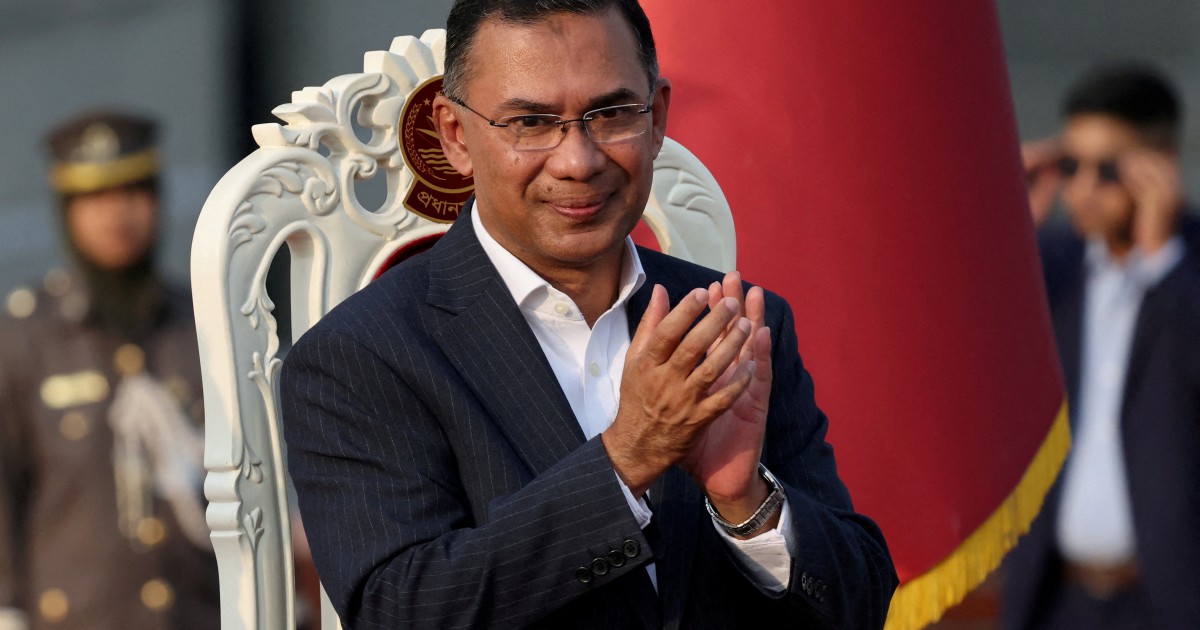
Bangladesh's government has taken a hardline position on bilateral relations with India, declaring that Prime Minister Tarique Rahman will not travel to New Delhi unless the Indian authorities extradite Sheikh Hasina, the former Bangladeshi premier who escaped to India during last year's civil unrest. The announcement, made on Sunday, signals deepening friction between Dhaka and Delhi over the high-profile fugitive and underscores how domestic political upheaval in Bangladesh continues to strain its relationship with its largest neighbour.
Sheikh Hasina's departure from Bangladesh in August 2024 marked a dramatic end to her tenure following widespread anti-government protests that spiralled into violent confrontations. The uprising, driven by public discontent over economic hardship, corruption allegations, and concerns about democratic backsliding, forced her from office and prompted her hasty evacuation to India, a nation with which she has long maintained close ties. Since landing in Delhi, her presence has become a persistent irritant in Bangladesh-India relations, with Dhaka viewing her continued residence on Indian soil as an affront to national sovereignty and its new political order.
The Bangladeshi government's insistence on Hasina's extradition reveals the stakes at play in restoring normal diplomatic engagement with India. Rather than pursuing quiet backdoor negotiations, Dhaka has chosen to air this demand publicly, suggesting confidence in its political position domestically and a determination to assert control over its own political narrative. This approach carries risks, however, as it could lock both nations into entrenched positions and make compromise more difficult should either side feel compelled to maintain face before domestic audiences.
India's handling of the Hasina situation reflects the complexities New Delhi faces in managing regional diplomacy. As South Asia's pre-eminent power, India has traditional strategic interests in maintaining stability in Bangladesh and preserving influence over the country's foreign and security policies. Hasina, who built her career on close cooperation with India and relied heavily on Indian military and economic support, represents continuity with the past from New Delhi's perspective. Yet acceding to extradition demands risks portraying India as beholden to external pressure and sets a troubling precedent for how it treats high-ranking political figures seeking refuge.
The extradition question also highlights the absence of a bilateral treaty governing such transfers between the two nations. India's legal framework typically requires formal extradition agreements or reciprocal arrangements before surrendering individuals to another country. Bangladesh has made no public indication that it is pursuing formal extradition proceedings through established judicial channels, instead relying on political statements. This gap between rhetorical demands and legal mechanisms leaves both countries operating in uncertain territory.
Sheikh Hasina's political significance extends far beyond her personal circumstances. Throughout her career, she championed closer ties with India and promoted secular, liberal policies that positioned Bangladesh within New Delhi's regional orbit. Her departure removed a major pro-India voice from Bangladeshi politics and coincided with the emergence of a government without comparable institutional ties to India. The new administration, shaped by protest movements and civil society pressure, has greater autonomy from Indian influence and may pursue more independent foreign policies. From this vantage point, India's retention of Hasina becomes symbolically important—a card it can play in future negotiations with Dhaka.
For Malaysia and other Southeast Asian nations observing this standoff, the Bangladesh-India impasse carries important implications for regional stability and the balance of power in South Asia. Bangladesh's strategic location and role in managing maritime security, counterterrorism, and trade flows across the Indian Ocean region mean that instability or a fractured relationship between Dhaka and Delhi affects the broader neighbourhood. A prolonged diplomatic freeze could complicate efforts to address transnational challenges and reduce cooperation on issues ranging from refugee protection to counternarcotics.
The conditioning of high-level visits on extradition demands also represents an escalatory step in how Dhaka is managing the political transition. While new governments often seek to establish their independence from predecessors, demanding the removal of a former leader—particularly one seeking shelter abroad—risks appearing vindictive or politically motivated rather than principled. This perception could undermine Bangladesh's international standing and make it harder to attract investment and cooperation from major powers concerned about political instability.
Looking ahead, both nations face pressure to find a face-saving resolution. India might explore options such as quietly convincing Hasina to relocate to a third country, thereby removing the immediate irritant without technically acceding to Bangladeshi demands. Alternatively, Bangladesh could soften its public position if new circumstances render the extradition question moot. Yet without diplomatic channels actively working toward compromise, the standoff is likely to persist, complicating efforts to normalise the bilateral relationship and potentially casting a shadow over trade, security cooperation, and people-to-people exchanges that have traditionally underpinned South Asian integration.

