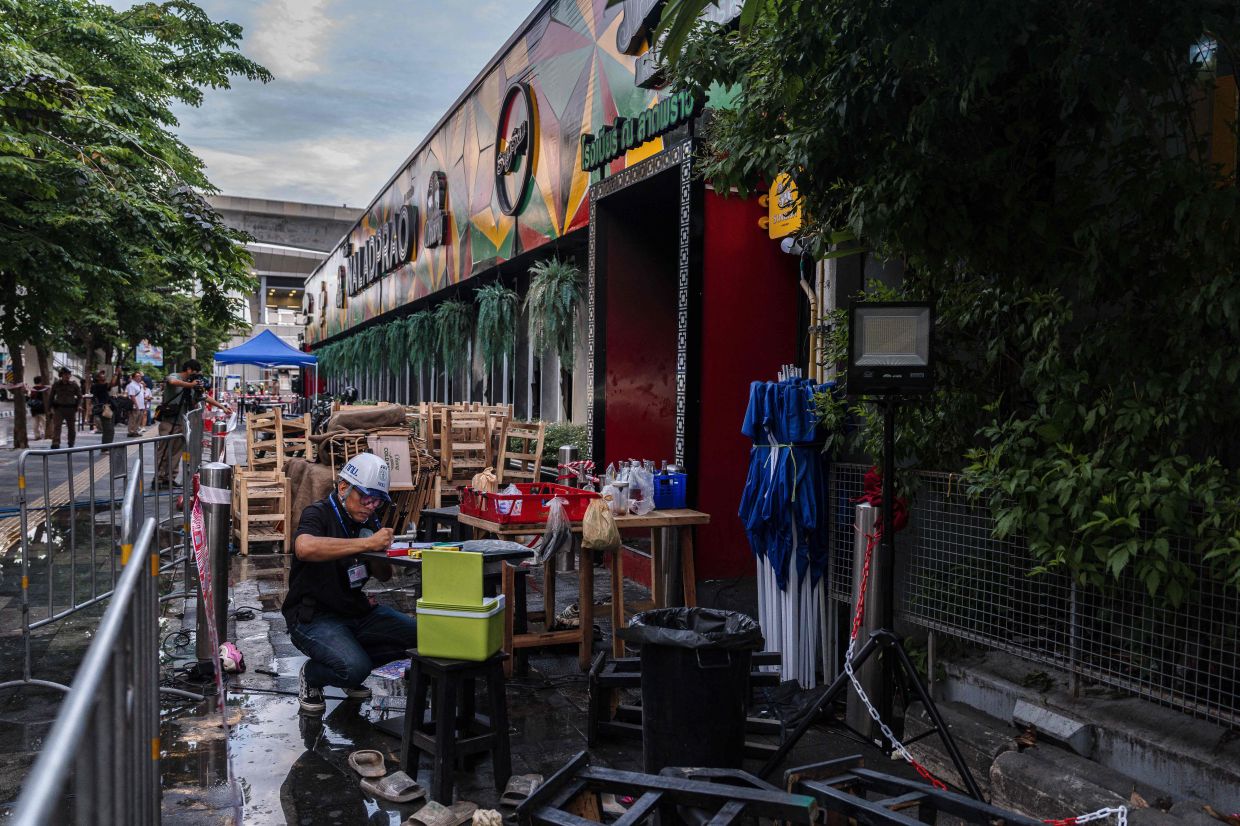
Bangkok's municipal authorities have moved swiftly to establish support systems for those affected by a devastating fire that engulfed a restaurant and brewery-style establishment in the Lat Phrao district, claiming 27 lives and leaving 18 others injured. The tragedy, which unfolded in the early hours of Monday morning, has prompted immediate action from city leadership to assist bereaved families whilst simultaneously launching investigations into how the disaster occurred and what systemic failures allowed it to reach such catastrophic proportions.
Bangkok Governor Chadchart Sittipunt arrived at the scene shortly after 2.40am on Monday, initiating a rapid municipal response that prioritised both victim assistance and regulatory accountability. He mandated the establishment of a coordination centre within the Chatuchak District Office to serve as a centralised point for relatives and injured survivors seeking verified information and support services. The governor simultaneously issued directives for official agencies to scrutinise the venue's operating permits, licensing compliance, and adherence to fire-safety codes, signalling that the city intends to examine not merely what happened but why existing safeguards proved inadequate.
The composition of the victims, comprising nine men and 18 women, underscores the tragedy's scale. Official identification procedures were still ongoing at the time of the governor's statement, as medical authorities and relevant agencies worked methodically through forensic processes. Eighteen additional people sustained injuries ranging from serious to minor, with all receiving hospital treatment. The Bangkok Fire and Rescue Department confirmed these casualty figures at 3.45am, approximately an hour after firefighters initially responded to emergency calls. This timeline reveals a crucial detail: rescue personnel arrived approximately five minutes after receiving the emergency report, yet flames had already spread throughout the building's interior by their arrival.
The rapid fire progression has emerged as a central focus of preliminary investigations. Suriyachai Rawiwan, director of the Fire and Rescue Department, noted that thick smoke permeating the building severely hampered rescue operations, preventing teams from reaching trapped individuals effectively. Governor Chadchart's observations at the scene suggest an unusual combustion pattern: flames appeared to have consumed ceiling areas with remarkable speed whilst plastic furniture in several zones sustained comparatively minimal damage. This anomaly has prompted initial theories regarding the involvement of toxic smoke generated by interior decorative materials, potentially causing victims to lose consciousness before flames reached them directly. However, authorities emphasised that specialists must conduct formal analysis before confirming this hypothesis.
Evacuation routes present another troubling aspect emerging from preliminary inspections. Rescue teams and investigators found evidence that many victims had attempted escape toward toilet facilities at the building's rear, suggesting either unfamiliarity with emergency exits or perceived hazards blocking primary escape routes. An initial assessment identified two emergency exits at the rear of the premises, yet some fatalities were discovered near an emergency exit on the building's left side where objects may have obstructed passage. The kitchen's location on one of the two identified escape routes raises questions about whether this design feature compromised evacuation safety, particularly under smoke-filled conditions where visibility would be severely compromised.
The investigative agenda now encompasses multiple dimensions of compliance and safety management. Bangkok authorities will examine whether the venue's operating documents and permits were current and legitimate, inspect the physical condition and quantity of fire exits, assess the visibility and clarity of emergency-exit signage, and determine whether evacuation routes were unobstructed and compliant with safety regulations. The city's systematic approach reflects recognition that fire-safety infrastructure exists only on paper unless maintained, accessible, and clearly marked during actual emergencies. The preliminary discovery that one escape route passed through the kitchen area exemplifies potential design flaws that may have compromised evacuation effectiveness.
Governor Chadchart has articulated three immediate priorities for the Bangkok Metropolitan Administration. First, the coordination centre must provide comprehensive assistance to relatives whilst managing information distribution through verified channels. Second, detailed examinations of operating permits and safety-standard compliance must proceed urgently. Third, investigators must determine whether the venue's fire-escape system satisfied legal requirements and safety standards. The governor pledged to accelerate this work to support those affected whilst reducing the likelihood of similar incidents occurring at other establishments across the city.
Autopsy and forensic investigations remain ongoing to formally establish causes of death. Preliminary evidence suggests most victims died from smoke inhalation, though authorities have deliberately refrained from making definitive pronouncements until forensic specialists complete their analyses. This cautious approach contrasts with initial speculation about toxic decorative materials, reflecting professional acknowledgment that multiple factors may have contributed to the tragedy. The investigation's scope extends beyond identifying fire origins to encompassing broader systemic questions about regulatory oversight, venue inspection protocols, and enforcement mechanisms designed to ensure compliance with safety standards across Bangkok's hospitality sector.
For Malaysia and other Southeast Asian nations, this incident carries significant implications for hospitality venue regulation and fire-safety enforcement. The Bangkok tragedy demonstrates how rapidly fires can overcome occupants in confined spaces, particularly when smoke inhalation rather than direct flame exposure proves lethal. Southeast Asian cities hosting growing entertainment and hospitality sectors must examine whether their own inspection regimes, exit requirements, and emergency-signage standards match international best practices. The discovery that Bangkok's venue possessed only two identified escape exits—one through the kitchen—suggests potential gaps in regulatory standards or enforcement mechanisms that may exist across the region.
The Bangkok Metropolitan Administration's establishment of victim-support systems and pledge for comprehensive safety review represents responsible crisis management. Families seeking assistance may contact the Chatuchak District Office through multiple contact persons: Kanittha (081-734-1298), Kamonchan (084-078-4821), Monthira (098-951-6393), or Chakkraphan (063-156-3466). The city has offered condolences to bereaved families and committed to thorough investigation and systematic safety-measure improvements. However, the true test of institutional accountability will emerge in subsequent weeks when investigations conclude and the city must determine which officials or venue operators bear responsibility for allowing dangerous conditions to persist.

