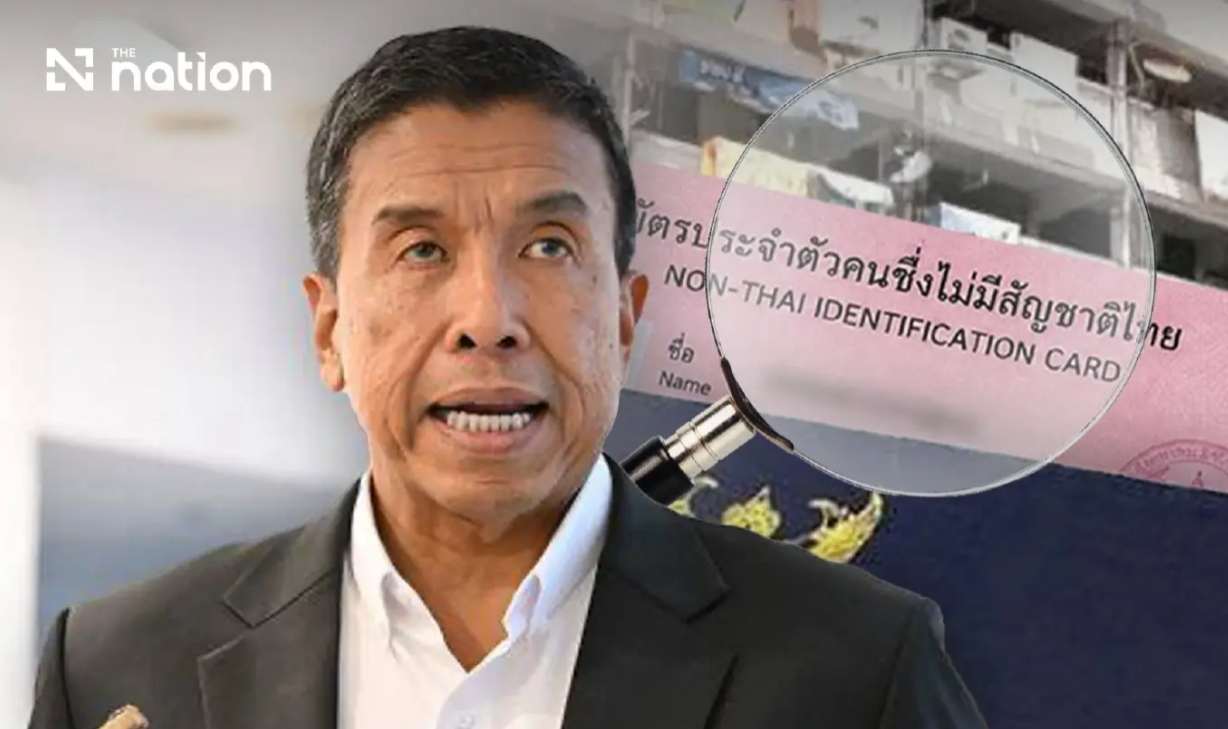
Bangkok Governor Chadchart Sittipunt has initiated a sweeping administrative review spanning ten years of household registration records across all 50 district offices, responding to mounting evidence of coordinated fraud schemes centred on Thailand's temporary pink identification cards issued to non-nationals. The investigation, which will examine documents from 2017 onwards, aims to identify how foreign nationals without Thai citizenship gained fraudulent entry into the kingdom's civil registration system—a critical gateway to obtaining the temporary identification documents that allow non-citizens to access certain services and conduct business in Thailand.
The suspected fraud networks exploited vulnerabilities in Thailand's household registration machinery through several sophisticated methods. According to Governor Chadchart, one prevalent scheme involved birth certificates of children born to foreign nationals in Thailand who later returned to their parents' home countries, leaving the certificates behind. These abandoned documents were then allegedly repurposed to create false identities, with other individuals transferred into household registrations under the names of these non-resident children. This allowed brokers and accomplices to manufacture documentation trails supporting fraudulent pink-card applications, effectively creating phantom residents with paper legitimacy in the Thai system.
Other suspected irregularities revealed far more brazen approaches to circumventing registration controls. Some cases involved wholesale fabrication of family relationships, with individuals falsely registered as parent and child despite having no biological connection—arrangements officials characterised as "phantom father" and "phantom child" schemes. Investigators also discovered instances where names were transferred from the centralised household register into local district registrations, a manoeuvre that obscured the true origins and legitimacy of the registrations involved. These patterns suggest an organised network with sophisticated knowledge of Bangkok's administrative procedures rather than isolated cases of individual malfeasance.
The fraudulent scheme came to light most dramatically in Din Daeng district, where initial investigations uncovered extraordinary anomalies. A single property measuring approximately 40 square metres was found to contain between 40 and 45 registered household members—a physically impossible arrangement that exposed the systematic nature of the operation. Subsequent examination of Din Daeng's 2024 records identified more than 2,000 address transfers that bore hallmarks of irregularity, suggesting the fraud had expanded significantly in recent years and potentially across multiple locations rather than concentrated in a few addresses.
Governor Chadchart has ordered every district office to submit preliminary findings by August 21, signalling the urgency Bangkok authorities are bringing to the matter. However, authorities have cautiously noted that an estimated 3,000 questionable registrations remain unconfirmed, and the actual scope may prove either larger or smaller depending on validation outcomes. To cast the widest initial net, the BMA will first identify all properties listing at least 15 registered residents—an unusually high threshold that investigators plan to lower progressively to enable more granular examination of individual addresses and detect sophisticated fraud spread across multiple small registrations.
The investigation has already ensnared four Bangkok Metropolitan Administration employees from Din Daeng district, who have been temporarily suspended pending disciplinary proceedings while police conduct separate criminal investigations. Officials emphasised that administrative suspension does not constitute a finding of guilt, reflecting both due process concerns and the complexity of determining which employees were knowing participants, unwitting accomplices, or victims of coercion by external brokers. Governor Chadchart has committed that the inquiry will pursue evidence wherever it leads, including toward senior retired officials, though any prosecutions will depend on findings and applicable law.
Crucially, Bangkok authorities recognise they lack independent power to investigate financial flows between suspected brokers and government employees, a shortcoming that necessitates police cooperation. The BMA has requested that police assistance trace money movements and determine whether payments were exchanged between facilitators and officials—a dimension essential to understanding the scheme's architecture and identifying whether corruption extended into the bureaucracy or remained confined to external actors exploiting administrative weaknesses. An investigation committee will be established to examine both the fraudulent registrations themselves and the conduct of individuals implicated in the scheme.
To prevent recurrence, Bangkok officials are implementing structural reforms designed to eliminate the procedural loopholes that enabled the fraud. Future registration approvals will require sign-off from multiple officials, including district directors and section heads, rather than depending on individual officers whose authority might be misused or whose position could be exploited by external actors. The BMA is also considering periodic rotation of staff working in sensitive registration positions, a preventive measure intended to disrupt long-term relationships between officials and brokers while reducing opportunities for corruption to entrench itself within the administration. These procedural changes reflect recognition that the fraud succeeded partly because individual gatekeepers held excessive concentrated power over a critical administrative function.
The scandal carries implications extending beyond Bangkok's borders, as the pink-card system operates nationally and similar vulnerabilities may exist in other provinces. The registration methods exploited in Din Daeng—fabricated family relationships, orphaned birth certificates, and layered transfers between registration systems—could theoretically operate anywhere Thailand's household registration remains insufficiently scrutinised. While Bangkok has initiated comprehensive preventive reforms, other major urban centres and provincial capitals may face pressure to audit their own records, potentially exposing a nationwide problem of varying scope and severity. For Malaysia and other Southeast Asian nations with similar temporary identification schemes for foreign residents, the Bangkok fraud case offers instructive warnings about the necessity of robust verification procedures and institutional safeguards against document manipulation.
The BMA plans to expand existing anti-corruption policies with particular emphasis on civil registration affairs, strengthening oversight frameworks and transparency in a sector previously considered routine administration rather than a corruption risk area. Working procedures will be reviewed to close approval loopholes while ensuring that legitimate applicants navigating the pink-card process face no unfair delays or complications resulting from the investigation. Governor Chadchart's commitment to transparency and systemic reform suggests Bangkok officials view this not merely as a scandal requiring containment, but as an opportunity to harden a previously porous administrative system against future sophisticated fraud.

