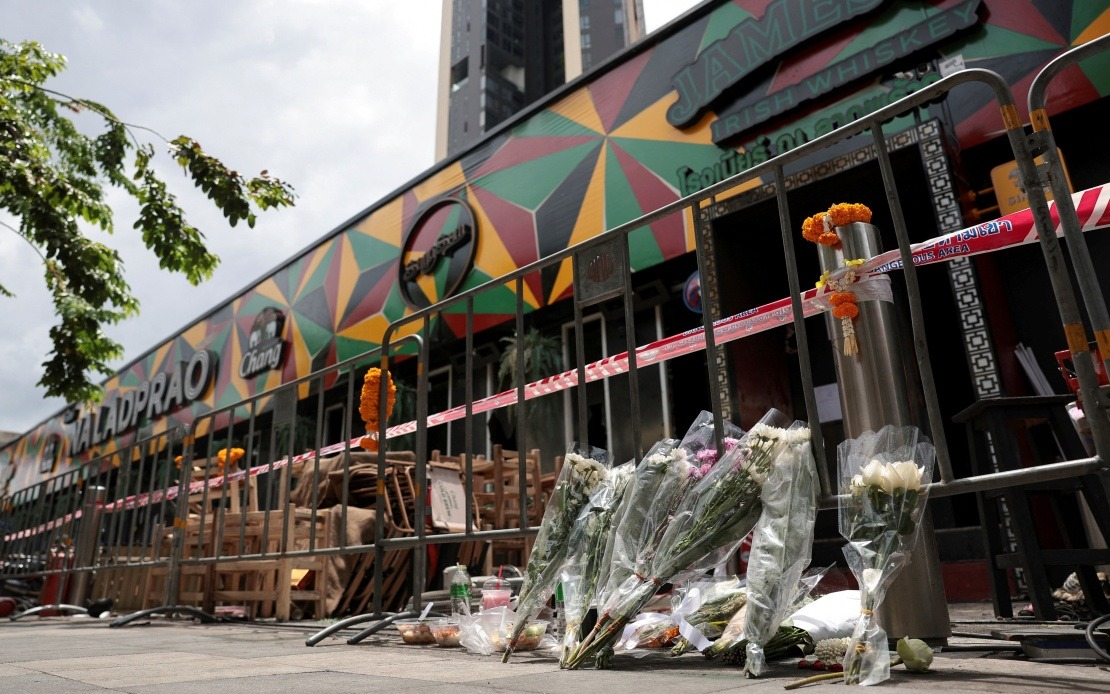
The death toll from a catastrophic fire that engulfed a Bangkok entertainment venue has climbed to 32, authorities confirmed on Wednesday, following the deaths of two critically injured victims admitted to hospital in the aftermath of the Monday night blaze. The latest fatalities occurred across Paolo Kaset Hospital and Nopparat Rajathanee Hospital, extending the grim count of those who perished after receiving initial medical care. Officials from the Bangkok Emergency Medical Centre, commonly referred to as the Erawan Centre, disclosed these developments as medical teams continued treating dozens of severely injured survivors.
The overall casualty picture remains deeply troubling for Thailand's capital. As of Wednesday morning, 79 individuals had sustained injuries from the inferno, though the situation showed some signs of stabilisation in hospital discharge rates. Of the injured, 44 had been released from medical facilities while 30 continued receiving treatment, including 15 patients requiring intensive care unit supervision and a further 15 occupying standard hospital wards. The distribution of the critically wounded across multiple hospitals underscored the strain placed on Bangkok's medical infrastructure by the sudden tragedy.
The fire erupted shortly before midnight on Monday at Rong Beer Na Lat Phrao, an entertainment establishment located in Bangkok's Chatuchak district. Initial reports had cited the Lat Phrao district location, though subsequent clarifications specified the exact district involved. The venue, which operated as a bar, became an inferno within minutes, trapping patrons and staff within its confines. Emergency responders faced extraordinary challenges in evacuating people from the burning building, with many unable to locate exits in the smoke-filled darkness.
Investigations into the catastrophe have now focused on multiple potential causative factors that collectively may have contributed to the unusually high death toll. Authorities are examining whether emergency exits had been blocked or obstructed, a violation of building codes that would have fatally limited escape routes for trapped occupants. Simultaneously, investigators are assessing the interior materials used in the venue's construction and decoration, with particular attention to whether these substances possessed flammable properties that accelerated the fire's spread. Electrical faults represent another significant line of inquiry, as Bangkok experiences frequent fire incidents linked to aging or poorly maintained electrical systems.
The tragedy has triggered an immediate high-level governmental response reflecting the severity of the incident. Thai Prime Minister Anutin Charnvirakul issued directives on Tuesday requiring the Ministry of Interior to conduct sweeping inspections of buildings and entertainment venues nationwide. This comprehensive audit initiative involves coordination across multiple government bodies, including the Bangkok Metropolitan Administration, local administrative organisations, the Department of Public Works and Town & Country Planning, and the Royal Thai Police. The breadth of this response suggests authorities view the incident as symptomatic of potential systemic safety failures across Thailand's entertainment sector.
For Malaysian readers and Southeast Asian observers, this tragedy carries significant implications regarding building safety standards and entertainment venue regulation across the region. Thailand's incident highlights vulnerabilities common to rapidly developing cities throughout Southeast Asia, where economic growth has sometimes outpaced safety infrastructure improvements. The involvement of multiple Thai government agencies in response reflects growing recognition that fire safety requires coordinated enforcement rather than isolated departmental oversight. Many entertainment venues across the region may face similar risks stemming from inadequate exit signage, blocked emergency routes, and substandard interior materials.
The incident raises uncomfortable questions about regulatory compliance in Bangkok's entertainment industry. Blocked emergency exits would constitute a flagrant violation of international fire safety standards, yet such infractions reportedly occurred at this venue. This suggests either inadequate initial inspection protocols or insufficient oversight mechanisms to maintain compliance over time. Entertainment businesses operating in Malaysia's major cities should note that comparable safety lapses could occur locally without rigorous, ongoing inspection regimes. The involvement of the Thai police in the investigation indicates authorities will pursue potential criminal negligence charges, establishing a precedent for accountability in the region.
The fire's timing—occurring late Monday evening when the venue would have been at or near maximum capacity—exacerbated casualties significantly. Peak operating hours mean maximum occupancy coincided with maximum danger, overwhelming response capabilities and preventing systematic evacuation. The Bangkok Emergency Medical Centre's need to coordinate across multiple hospitals demonstrates how major incidents strain regional medical resources. Malaysian healthcare administrators can draw lessons from Thailand's response, particularly regarding triage protocols and surge capacity planning for mass casualty events.
Looking forward, Thailand's nationwide inspection initiative may establish regional best practices for entertainment venue safety audits. The comprehensive approach involving multiple agencies suggests a recognition that single-point inspections prove insufficient. If Thailand implements meaningful consequences for violations—including venue closures for serious infractions—neighbouring Southeast Asian nations may adopt similar enforcement models. However, effectiveness ultimately depends on whether inspections identify genuine violations and authorities possess political will to close profitable businesses found non-compliant.
The human cost remains paramount, with 32 deaths representing a profound tragedy affecting Thai society. Survivors and bereaved families face ongoing physical and psychological recovery. The incident serves as a stark reminder that entertainment industry profits cannot justify compromising basic safety measures. For establishments throughout Southeast Asia, including Malaysia, this tragedy should prompt immediate voluntary safety audits and genuine commitment to maintaining accessible emergency exits, appropriate interior materials, and electrical system maintenance. Regulatory authorities across the region should intensify oversight before more venues become death traps.

