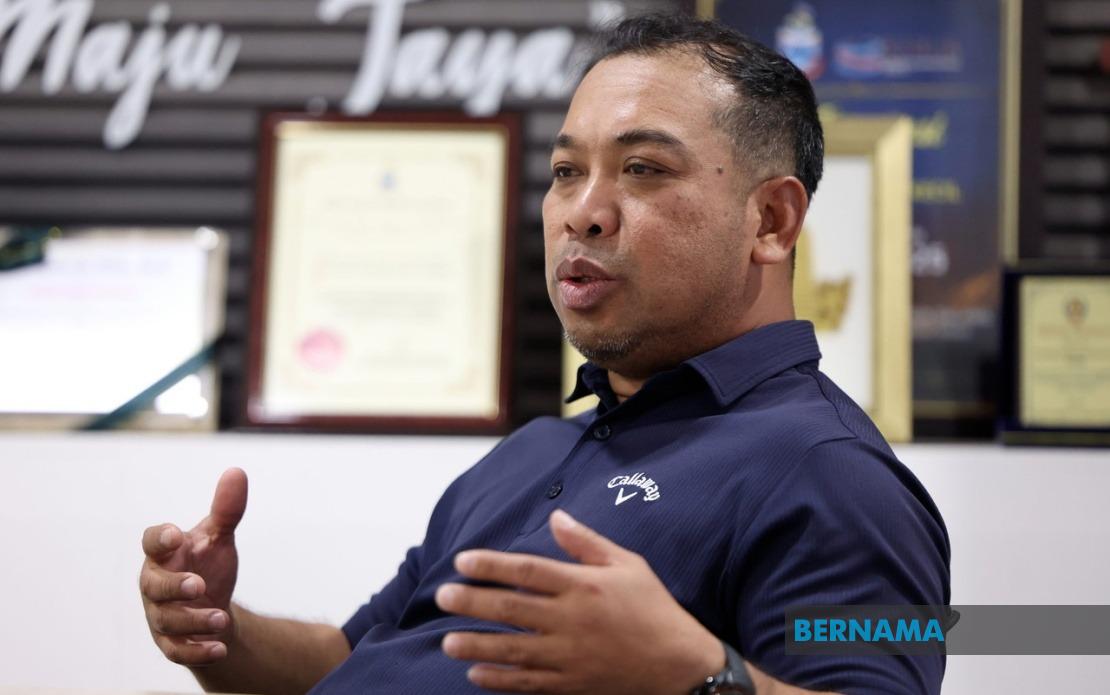
Datuk Mohamad Mohamarin, the Banggi constituency representative from Gabungan Rakyat Sabah, has made a formal appeal to the federal administration for substantial infrastructure funding to transform transport connectivity on Pulau Banggi, the northernmost territory in Sabah's Kudat division. During proceedings at the Sabah State Legislative Assembly as the Supplementary Supply Bill 2026 was debated, the lawmaker outlined an ambitious three-phase development strategy that would construct a modern paved and concrete thoroughfare measuring approximately 37 kilometres, linking Kampung Meliu with Kampung Dogoton at a projected expenditure exceeding RM300 million.
The genesis of this proposal emerged during Prime Minister Datuk Seri Anwar Ibrahim's official visit to the island on May 9, when Mohamad Mohamarin formally submitted the comprehensive infrastructure blueprint. This timing reflects broader efforts by island representatives to leverage high-level government engagement for addressing long-standing development deficits. The proposal carries strategic significance given the island's geographical remoteness and historical neglect in terms of basic connectivity infrastructure, which has compounded economic and social challenges for residents across multiple decades.
Current road conditions on Pulau Banggi underscore the urgency of intervention. Although the island maintains a network totalling 81 kilometres of main roads, merely 14 kilometres comprise properly paved surfaces—a proportion indicating severe under-development. More troublingly, even this limited paved section has deteriorated substantially, with the legislator highlighting widespread pothole damage and a documented pattern of fatal traffic accidents attributable directly to poor road quality. The contrast between total road length and functional paved infrastructure reveals infrastructure neglect on a scale demanding immediate federal attention.
Moving beyond the primary 37-kilometre corridor project, Mohamad Mohamarin raised additional administrative questions regarding maintenance and upgrade timelines for the existing deteriorated 14-kilometre stretch. His direct inquiry to the Sabah Works Ministry concerning whether funds for this restoration work had been allocated within the current fiscal year's budget demonstrates pragmatic awareness that new construction must be accompanied by systematic rehabilitation of existing assets. This dual focus—ambitious new infrastructure alongside proper maintenance of current facilities—reflects a nuanced understanding of sustainable development principles.
The geographic scope of Banggi constituency extends considerably beyond the main island itself. Mohamad Mohamarin specifically noted that the 81-kilometre road inventory excludes transportation networks serving Pulau Balambangan, Tanjung Manawali, Pulau Sibogo, and Pulau Tigabu—all constituent territories within his parliamentary division. This clarification indicates that comprehensive connectivity solutions for the entire constituency would demand investment substantially exceeding the RM300 million figure earmarked for Pulau Banggi alone, suggesting the full infrastructure rehabilitation of northern Sabah's maritime communities would represent a multi-billion ringgit commitment.
Despite prior high-profile visits and announcements by Chief Minister Datuk Seri Hajiji Noor and Prime Minister Anwar Ibrahim, tangible developmental momentum has remained limited. Mohamad Mohamarin's parliamentary comments suggest that periodic government delegations and project announcements have not translated into sustained funding allocations or implementation. This pattern of unfulfilled expectations reflects broader governance challenges in remote Malaysian regions where political visibility and actual resource mobilisation frequently diverge significantly.
Beyond road infrastructure, the legislator advanced a complementary proposal targeting energy security and economic diversification. He advocated for developing wind energy generation capacity ranging between 15 and 50 megawatts, framing this as instrumental for both improving electricity supply reliability and catalysing broader economic activity across the island. This renewable energy dimension acknowledges that infrastructure investment cannot remain narrowly focused on physical transport networks; rather, comprehensive development requires concurrent advancement of utilities and alternative revenue sources.
The electricity supply challenge on remote islands like Banggi typically emerges from dependence on diesel generators, which entails high operational costs, logistical complications, and substantial carbon emissions. Wind energy development would address these systemic constraints while potentially positioning the island as a model for renewable energy deployment in Malaysian maritime regions. The economic stimulus potential derives from reduced utility costs and enhanced industrial competitiveness, though such projects require sophisticated planning, environmental assessment, and technical expertise.
Pulau Banggi's developmental constraints reflect broader patterns affecting remote Malaysian territories where geographic isolation intersects with limited population centres and consequently restricted commercial viability from private sector perspectives. Federal intervention becomes essential precisely because market forces alone cannot justify infrastructure investment in sparsely populated areas, yet citizens in these regions deserve comparable connectivity and service standards to more densely populated peninsular constituencies. This equity principle underpins arguments for substantial public expenditure on island infrastructure.
The three-phase implementation approach proposed by Mohamad Mohamarin suggests strategic sequencing aimed at distributing costs across multiple budgetary cycles while delivering progressive improvements in connectivity. Such phased strategies can improve financial feasibility and allow for adaptive management based on implementation experience. However, the success of phased approaches depends critically on sustained political commitment and consistent budget allocation across successive fiscal years—a requirement that has historically proven challenging for remote region initiatives.
For Malaysian policymakers, the Banggi infrastructure appeal encapsulates broader questions regarding equitable regional development and the appropriate balance between national infrastructure priorities and remote constituency needs. The RM300 million investment represents a substantial commitment but modest within national development expenditure contexts. The constituency's strategic location as Malaysia's northernmost territory and its maritime significance suggest geopolitical dimensions warranting senior government attention beyond purely economic calculations.
Looking forward, the pathway toward implementation likely hinges on whether the federal government incorporates the proposal into medium-term development planning frameworks or continues addressing island infrastructure through ad-hoc allocations. Establishing systematic mechanisms for evaluating remote region infrastructure needs, rather than relying on parliamentary advocacy during legislative sessions, could improve planning efficiency and reduce temporal delays between identification and resource mobilisation. For Banggi residents, sustained parliamentary advocacy combined with strategic framing of connectivity challenges as national development imperatives represents the most viable mechanism for securing necessary federal investment.

