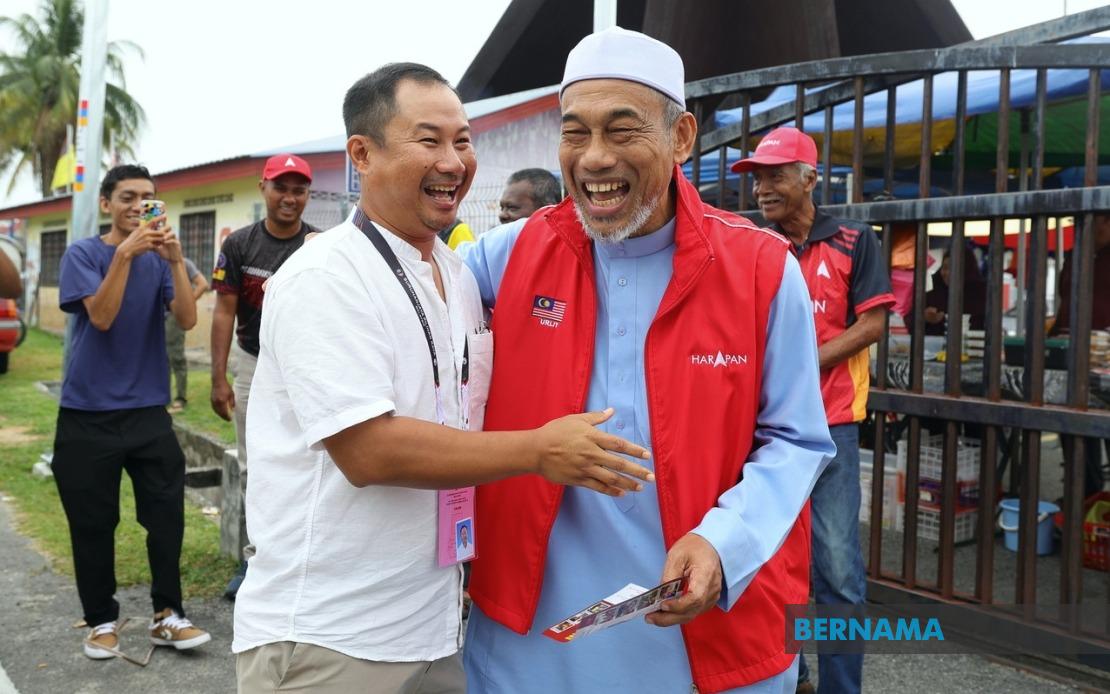
Pakatan Harapan's Datuk Bakri Sawir is mounting his defence of the Klawang state seat by emphasising the constituency work and personal connections he has cultivated during his first two terms as assemblyman, ahead of the 16th Negeri Sembilan State Election scheduled for August 1. The 67-year-old incumbent, who first entered the state assembly in 2018, is presenting himself to voters as a representative defined by accessibility and direct service delivery rather than occasional electoral appearances. His campaign strategy hinges on the intimacy of the Klawang electorate, where fewer than 14,000 registered voters means constituency members are likely to have encountered their representative in person during the past five years.
At the heart of Bakri's pitch lies a deliberate philosophy of proactive constituent engagement that distinguishes his approach from what he characterises as the minimal involvement of alternative candidates. Rather than expecting residents to navigate bureaucratic channels or queue at constituency service centres, Bakri has adopted a consistent practice of visiting homes directly and administering assistance where people live. This door-to-door methodology, he argues, reflects a fundamental commitment to understanding the real challenges facing Klawang's communities. Speaking at a weekly market campaign event in Pekan Kuala Klawang, Bakri framed this approach not as merely electoral strategy but as a philosophical position about what representative politics ought to entail. The distinction he draws is telling: between representatives who surface once every five years seeking votes and those who maintain continuous, tangible presence in their constituencies.
A significant advantage Bakri holds is his decision to reside within the Klawang constituency itself since taking office in 2018. This residency commitment means he remains genuinely accessible to constituents beyond campaign periods, able to respond to local concerns with relative immediacy and to participate in community life as an actual resident rather than a distant politician. For a constituency of modest size, this accessibility carries considerable weight in voter calculations. Bakri acknowledges, however, that his approach will not resonate equally with all voters, and he frames his respect for political pluralism as integral to his understanding of representation. His remarks about wanting to transform politics into an act of worship and a pathway to paradise reflect a particular moral framing that appeals to voters who value ethical governance alongside material delivery.
Looking forward, Bakri has outlined an ambitious development agenda contingent upon securing a third term. Central to this vision is a proposal, initially mooted in his previous campaigns, to establish Universiti Malaysia Negeri Sembilan within the Jelebu district. This institution would address the dearth of locally accessible higher education, strengthening human capital development across the region and potentially reducing outmigration of youth seeking tertiary qualifications. However, Bakri candidly acknowledges that current fiscal constraints within Negeri Sembilan make this ambitious objective difficult to realise in the near term. Rather than abandoning the vision, he has positioned himself as a persistent advocate who will continue pressing the case should he return to the assembly.
In the interim, Bakri is directing attention toward infrastructure projects with shorter implementation timelines and more immediate economic payoff. A Rest and Recreation Area under development in Tembun, Hulu Klawang represents an attempt to position Klawang as a functional stopover destination along regional travel routes. By providing adequate facilities for travellers, Bakri argues that Klawang can capture tourism spending that currently bypasses the constituency. This strategy reflects an economic logic increasingly common in Malaysian state politics: leveraging infrastructure improvements to generate local employment and business opportunities rather than relying on subsidy or direct state transfers.
Complementing the R&R initiative is Bakri's plan to transform Bukit Tajali into a recreational park featuring both leisure and outdoor adventure activities. Such facilities have proven popular in Malaysian destinations seeking to diversify their economic base beyond agriculture or resource extraction. The Bukit Tajali development would cater to domestic and regional tourism patterns, creating potential employment in hospitality, guiding, and ancillary services. Bakri's emphasis on tourism infrastructure reflects a broader trend whereby Malaysian state assemblymembers increasingly position themselves as economic development facilitators rather than purely welfare administrators.
A further dimension to Bakri's economic vision involves expanding the agrotourism sector in Jelebu by capitalising on the historical British Memorial Stone located within the district. This initiative attempts to merge heritage conservation with rural economic development, a strategy gaining traction across Southeast Asia as communities seek to monetise historical assets. The memorial, which carries significance related to colonial-era conflicts, could anchor heritage tourism offerings that educate visitors while generating revenue for local stakeholders. By connecting agrotourism development to historical preservation, Bakri positions himself as someone capable of integrating economic growth with cultural stewardship.
The Klawang contest itself has evolved into a three-cornered fight involving Bakri, Danni Rais of Perikatan Nasional, and Muhammad Adib Musa representing Parti Pribumi Bersatu Malaysia. Rais, at 38 years old, brings a generational contrast to the contest, while Musa, at 25, represents an even younger political generation. The emergence of these challengers reflects broader factional dynamics within Negeri Sembilan politics, where Bersatu's positioning relative to other Pakatan Harapan components and Perikatan Nasional's attempt to recapture state seats creates competitive pressure. For Bakri, the presence of multiple challengers means he cannot rely on split opposition votes but must affirmatively demonstrate superior constituency credentials.
The Negeri Sembilan State Legislative Assembly was dissolved on June 5, following standard protocols for state-level elections. The Election Commission has established August 1 as polling day, with early voting scheduled for July 28 to accommodate military and police personnel stationed outside their home constituencies. Across the state, 889,490 registered voters are eligible to participate, comprising 867,151 ordinary voters alongside 16,884 military personnel and their spouses and 5,455 police officers voting early. This electorate size, while substantial at the state level, translates into relatively intimate constituency contests, particularly in constituencies like Klawang where registered voter populations remain under 20,000.
For Malaysian political observers, Bakri's campaign offers insight into how incumbent assemblymembers in competitive constituencies attempt to secure re-election in an environment of heightened electoral volatility. His emphasis on service delivery and grassroots accessibility represents a defensive posture rooted in the belief that sustained presence and tangible assistance create electoral resilience. Whether this approach proves sufficient against opposition candidates remains uncertain, but Bakri's strategy exemplifies how Malaysian state-level politicians, facing greater electoral unpredictability than their federal counterparts, increasingly rely on personal credentials and local development narratives to justify continued support.

