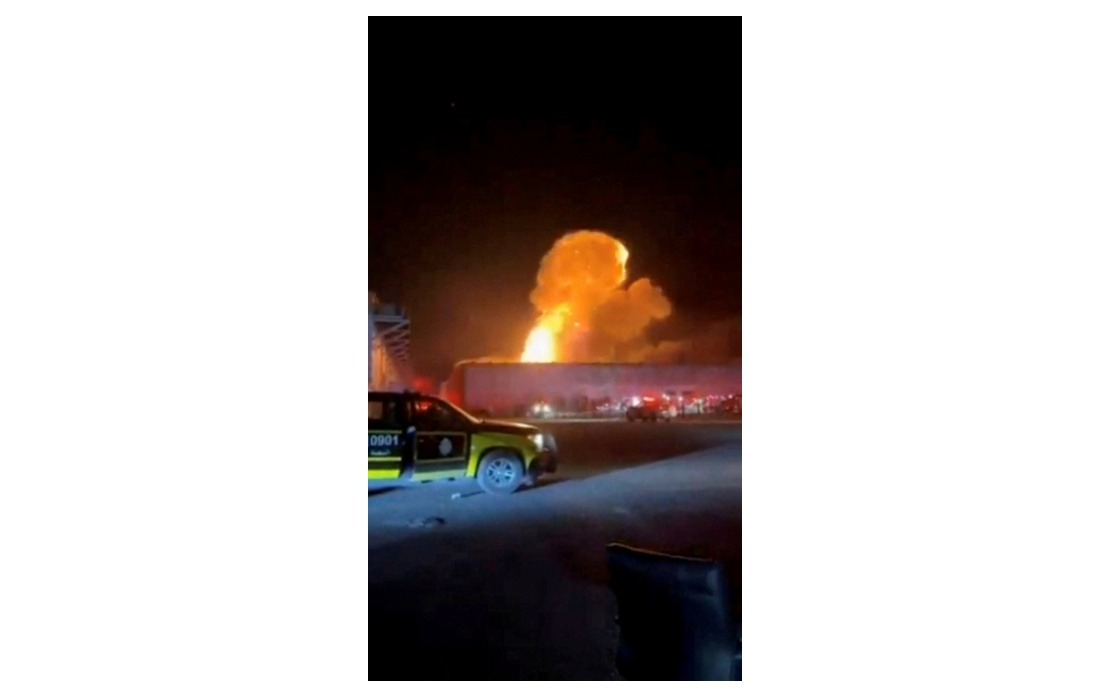
Security emergencies unfolded across the Persian Gulf on Friday as three major regional powers simultaneously activated air raid warnings and instructed their populations to seek shelter, signalling a dramatic escalation in military tensions that have destabilized one of the world's most crucial energy corridors. Bahrain's Interior Ministry sounded warning sirens and directed citizens to move immediately to the nearest designated safe zones, while Qatar's authorities issued a parallel directive ordering residents and expatriates to remain indoors in secure locations pending further official guidance. Kuwait, facing the most immediate threat, activated comprehensive air defence networks and broadcast emergency instructions across all channels, with the nation's military confirming that hostile missile and drone systems were actively targeting Kuwaiti territory.
The coordinated emergency response stemmed from reported Iranian military operations, with Tehran's armed forces claiming responsibility for launching drone strikes against a United States military installation based in Bahrain. This assertion, coupled with simultaneous attacks detected over Kuwait, represents a significant tactical escalation in a conflict that has periodically flared across the Gulf since late February, when American and Israeli forces initiated a joint military operation against Iranian positions and infrastructure. The pattern of attack mirrors earlier Iranian responses: when Washington and Tel Aviv launched their offensive months ago, Tehran retaliated with barrages of missiles and unmanned aerial systems directed toward Gulf nations hosting American military personnel and facilities, demonstrating a willingness to impose regional costs on US strategic presence.
The current crisis unfolds against a backdrop of fragile diplomatic efforts that had briefly suggested de-escalation might be possible. Within the past month, Iran and the United States had reportedly achieved a Pakistani-mediated framework agreement designed to halt their escalating military exchanges and establish conditions for a comprehensive peace settlement. Yet those hopeful developments proved illusory, as tensions have reignited with particular intensity around the Strait of Hormuz, the waterway through which approximately one-third of globally traded oil passes annually. Recent weeks witnessed renewed hostile actions from both sides targeting shipping lanes and military assets, each incident generating reciprocal strikes that incrementally widen the conflict's scope.
For Malaysia and Southeast Asia, the implications extend far beyond the immediate theatre of conflict. The region's economic vitality depends substantially on uninterrupted hydrocarbon flows through these Gulf corridors, and any prolonged military escalation threatens to disrupt energy supplies upon which the broader Asian economy depends. Petronas and Malaysian petrochemical manufacturers rely on consistent crude oil and natural gas availability; supply interruptions would ripple through energy-intensive sectors including manufacturing, transportation, and electricity generation. Malaysian firms with operations or investments in the Gulf region, particularly in oil and gas infrastructure, face heightened operational and security risks as the regional environment deteriorates.
The recurring pattern of Iran-US military engagement reflects deeper structural tensions unresolved by diplomatic frameworks. Washington maintains substantial military installations across the Gulf, including major bases in Bahrain hosting the Fifth Fleet headquarters, Qatar, and Kuwait, positioning the United States as a permanent regional security actor. Iran views this American military infrastructure as inherently threatening to its sovereignty and regional influence, particularly given historical tensions stemming from the 1953 coup and subsequent decades of confrontation. The drone and missile attacks serve both as tactical responses to perceived American aggression and as signals to regional and international audiences of Tehran's ability to impose costs on American interests despite military disadvantages.
The three-nation emergency response also underscores the vulnerability of Gulf states hosting American forces. Bahrain and Qatar, despite their small populations and limited military capabilities, function as critical nodes in American Middle Eastern strategy; their hosting of US installations makes them direct targets in any Iran-America conflict. Kuwait, positioned between Iraq and Saudi Arabia and hosting significant American military assets, occupies an equally precarious position. These nations find themselves geographically trapped between competing regional powers, forced to balance their security dependence on Washington against the physical proximity and strategic reach of Iran. The emergency alerts Friday reflected the stark reality that missile and drone attacks create genuine civilian danger regardless of intended military targets.
The escalation trajectory raises troubling questions about the sustainability of current diplomatic efforts. Pakistan's mediation role, while potentially significant, has proven insufficient to create durable constraints on either side's willingness to employ military force. Both Iran and the United States appear to interpret frameworks and agreements as procedural rather than substantive, maintaining parallel military escalation tracks alongside diplomatic channels. This pattern suggests that the underlying conflicts driving the confrontation remain unresolved: American insistence on constraining Iranian regional influence, Iranian determination to challenge American military preponderance, Israeli security concerns regarding Iranian capabilities, and competing visions of regional order among Gulf states themselves.
The Strait of Hormuz has emerged as a particular flashpoint, with both sides conducting increasingly aggressive operations around shipping lanes and territorial waters. Iran's focus on this strategic chokepoint reflects its recognition that energy security represents a primary vulnerability for American allies and the global economy. Conversely, American military operations in the region are designed to maintain freedom of navigation and contain Iranian expansion. Neither side appears willing to unilaterally de-escalate or establish clear red lines, instead allowing incidents to accumulate and trigger tit-for-tat responses that progressively raise the conflict's intensity.
Regional states beyond the immediate conflict zone face difficult choices. Saudi Arabia, the Gulf Cooperation Council, and neighbouring states must navigate between their historical American security partnerships and the risks posed by proximity to an escalating Iran-America confrontation. Several have attempted to maintain independent relationships with both Washington and Tehran, a balancing act that becomes increasingly untenable as military tensions peak. For Malaysia and other Southeast Asian nations, the primary concern centres on ensuring that regional instability does not permanently disrupt energy markets or create a broader security environment that constrains economic development and regional cooperation initiatives.
Friday's emergency alerts represent the human and civilian dimension of great power competition unfolding in the Gulf. Ordinary residents of Bahrain, Qatar, and Kuwait faced immediate decisions about seeking shelter and modifying daily activities based on military developments occurring far beyond civilian control or comprehension. The frequency of such alerts, if escalation continues unchecked, may create lasting psychological and economic costs even absent direct civilian casualties. Sustained uncertainty regarding air safety and basic security creates business disruption, investment hesitation, and population anxiety that accumulate into broader economic damage.

