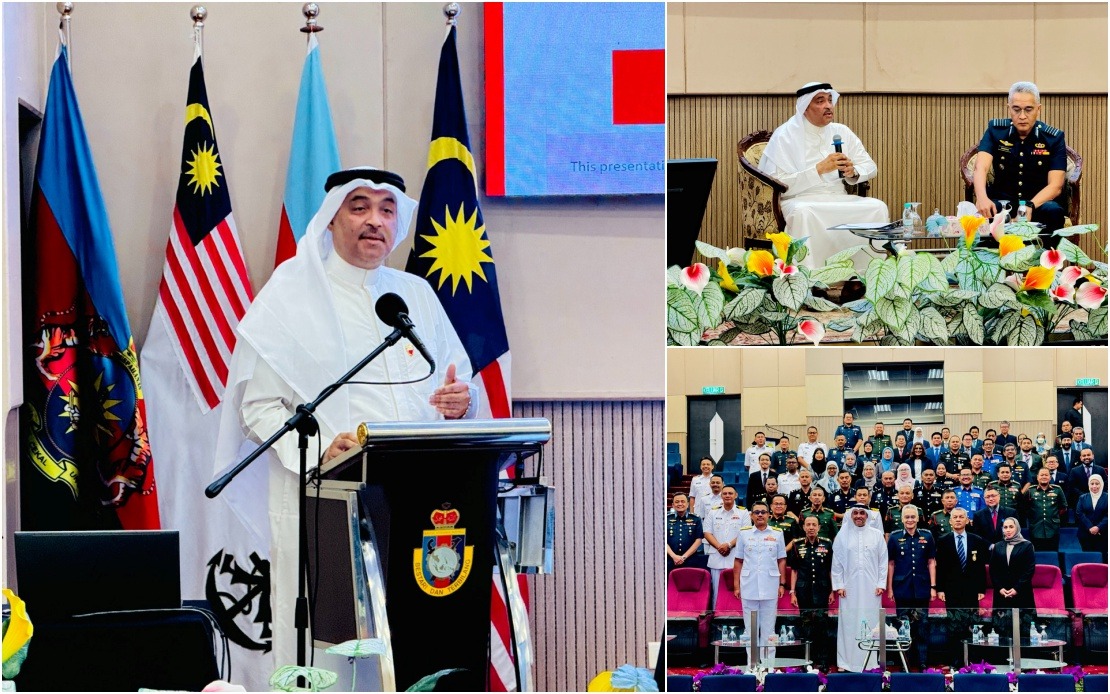
The relationship between Bahrain and Malaysia is entering a new phase of strategic cooperation, with both nations working to expand coordination across defence, security and diplomatic channels. During a significant address at Malaysia's National Resilience College in Putrajaya, Bahrain's Ambassador to Malaysia Dr Waleed Khalifa Al Manea characterised the partnership as increasingly robust, built on the foundation of close personal ties between the two nations' leadership and reinforced by concrete commitments from both governments to deepen mutual engagement.
The ambassador attributed much of this momentum to the warm relations between His Majesty King Hamad bin Isa Al Khalifa, King of Bahrain, and His Majesty Sultan Ibrahim, King of Malaysia. He also highlighted the parallel efforts of Bahrain's Crown Prince and Prime Minister, His Royal Highness Prince Salman bin Hamad Al Khalifa, and Malaysia's Prime Minister Datuk Seri Anwar Ibrahim, who have been instrumental in advancing bilateral cooperation across numerous sectors. This personal dimension to statecraft, where leaders actively champion collaboration, has proven essential in translating formal agreements into tangible outcomes that benefit both populations.
One particularly symbolic manifestation of this deepening partnership emerges through Malaysia's hosting of the 2026 Formula 1 Gulf Air Bahrain Grand Prix. While sporting events might appear superficial, Al Manea characterised this arrangement as an expression of broader strategic alignment. For Bahrain, the Grand Prix represents a platform to project soft power and showcase the kingdom's sporting infrastructure on a global stage. For Malaysia, it signals openness to strengthening Gulf connections and diversifying partnerships beyond traditional regional frameworks, positioning Kuala Lumpur as an important interlocutor in Middle Eastern affairs.
The ambassador's lecture, delivered to an audience comprising military leaders, senior government officials, parliamentarians and defence experts, reflected the security-centric dimension of contemporary Bahrain-Malaysia relations. The choice of venue—the National Resilience College, part of the Malaysian National Defence Studies Centre—underscored the military and strategic components of bilateral engagement. This institutional approach to deepening ties demonstrates both nations' commitment to building lasting partnerships through structured dialogue and knowledge exchange among defence and security establishments.
Central to Al Manea's remarks was Bahrain's perspective on an increasingly volatile regional environment, particularly the threat posed by Iranian actions targeting Gulf Cooperation Council member states. The ambassador outlined instances of attacks on civilian populations, critical infrastructure and maritime navigation routes, emphasising that these developments carry implications beyond the Gulf's borders. For Malaysia and the broader Association of Southeast Asian Nations, such regional instability reverberates through disruptions to international shipping lanes, energy security concerns and potential spillover effects on regional peace and stability.
Bahrain's approach to managing these security challenges combines multiple elements: defending state sovereignty, protecting civilian populations, documenting incidents factually and advancing diplomatic solutions through collective coordination mechanisms. This multifaceted strategy reflects sophisticated understanding that military responses alone cannot address complex security threats. The emphasis on diplomacy and collective action suggests Bahrain views regional problems as requiring multilateral solutions involving established international structures and norms.
During Bahrain's tenure as president of the United Nations Security Council in April, the kingdom actively promoted international initiatives safeguarding maritime navigation and protecting critical infrastructure. These efforts, though focused on Gulf affairs, carry direct relevance to Malaysia given the critical importance of international waterways to Southeast Asian commerce and energy supplies. Disruptions to shipping routes and freedom of navigation affect economies throughout the region, making Bahrain's diplomatic efforts consequential for Malaysian interests.
Malaysia's co-sponsorship of UN Security Council Resolution 2817 represents substantive support for Bahrain's diplomatic agenda. This resolution reaffirmed the sovereignty of affected states, prioritised civilian protection and called for cessation of attacks. Malaysia's willingness to champion this measure at the Security Council level demonstrates a willingness to engage constructively on Middle Eastern security issues despite being geographically distant from the region. For Kuala Lumpur, such positions reflect broader foreign policy principles emphasising international law, humanitarian concerns and rules-based international order.
The expanding Bahrain-Malaysia partnership also reflects broader geopolitical realignment in which traditional power blocs are complemented by issue-based coalitions. Countries increasingly cooperate on specific challenges—maritime security, counter-terrorism, diplomatic coordination—rather than adhering rigidly to Cold War-style alignments. This flexibility permits Malaysia and Bahrain to work together on matters of mutual concern while maintaining independent foreign policies suited to their respective regions and national interests.
For Malaysia, deeper engagement with Bahrain offers several advantages. The kingdom provides valuable insights into Gulf affairs and can serve as an interlocutor for Malaysian interests in a strategically important region. Additionally, strengthening ties with moderate Gulf states aligns with Malaysia's broader strategy of maintaining balanced relationships across the Muslim world. Bahrain's emphasis on diplomacy, regional coordination and international law-based solutions resonates with Malaysian preferences for managed multilateralism rather than confrontational zero-sum competition.
The participation of senior Malaysian military and defence officials at Al Manea's lecture signals institutional commitment to this partnership. Regular high-level dialogue between defence establishments creates channels for sharing intelligence, coordinating maritime security operations and conducting joint exercises. Such defence cooperation, while less visible than diplomatic exchanges, often proves more durable and substantive in cementing strategic partnerships over extended periods.
Looking forward, the Bahrain-Malaysia relationship appears positioned for continued deepening. The convergence of leadership visions, complementary strategic interests and concrete initiatives like the Formula 1 Grand Prix create momentum. However, success will depend on both nations following through on commitments and finding additional areas for practical cooperation. Whether through expanded trade partnerships, educational exchanges or enhanced security coordination, opportunities exist for transforming rhetorical commitment into institutional reality.
Ultimately, the emerging Bahrain-Malaysia partnership reflects contemporary international relations' complexity. Two geographically distant nations find common cause in addressing shared security concerns while advancing diplomatic solutions to regional challenges. For Malaysia, such partnerships underscore the country's growing importance in global affairs and its capacity to engage meaningfully with strategically significant regions beyond Southeast Asia. As Middle Eastern tensions persist, Malaysia's voice at international forums and its willingness to support rules-based solutions will likely prove increasingly valuable to partners like Bahrain seeking to build coalitions for regional stability.

