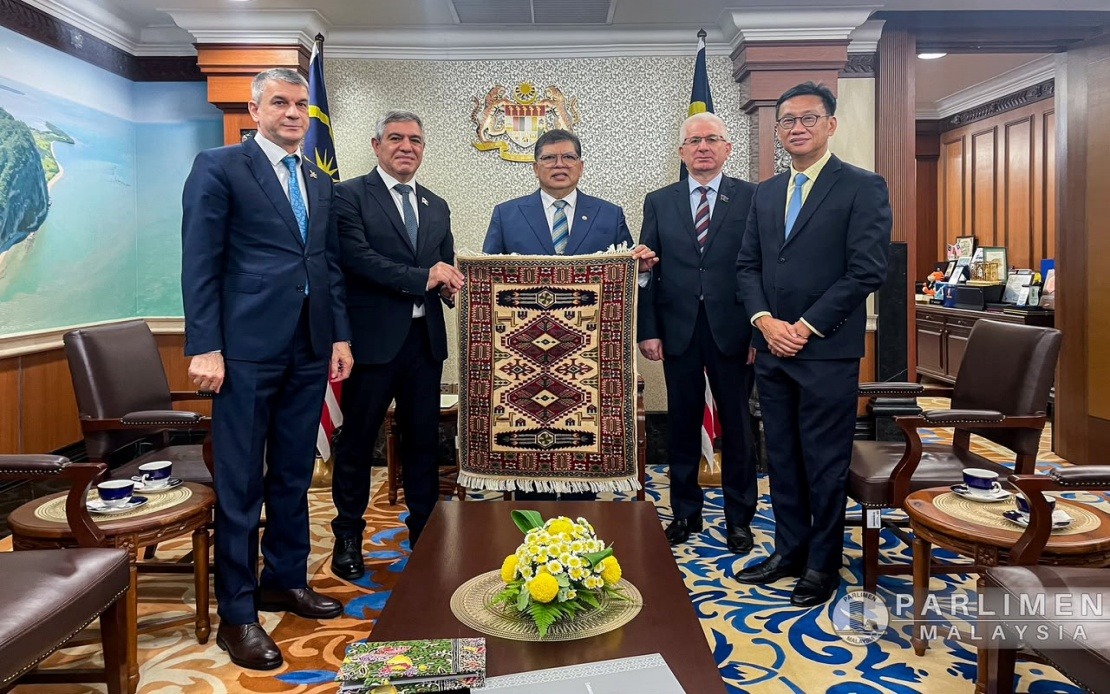
An Azerbaijani parliamentary delegation has made a significant push to strengthen institutional relationships with Malaysia, underscoring a broader strategic intent to deepen ties between Baku and Kuala Lumpur across multiple sectors. The visit, led by Vugar Bayramov, who heads the Working Group for Azerbaijani-Malaysian Interparliamentary Relations in the Azerbaijani Parliament, came as both nations explore avenues for enhanced cooperation in trade, investment, and diplomatic engagement.
Bayramov's trip, which included fellow parliamentarian Bakhtiyar Aliyev, centred on formal exchanges with Malaysia's legislative bodies and business community. The delegation secured an audience with Dewan Rakyat Speaker Tan Sri Johari Abdul, establishing direct communication channels at the highest levels of the lower house. This type of engagement signals the importance both countries place on maintaining consistent parliamentary dialogue, a critical foundation for bilateral relations in an increasingly complex geopolitical environment.
The visitors also met with Wong Chen, who chairs the Malaysian Parliament's Special Select Committee on International Relations and International Trade, providing an opportunity to discuss issues affecting commerce and diplomatic protocols. Additionally, discussions were held with Zahir Hassan, chairman of the West Asia Friendship Group, reflecting Azerbaijan's geographic positioning and the interest of Malaysian lawmakers in strengthening connections with nations in that region. These encounters demonstrate how parliamentary delegations serve not merely ceremonial functions but facilitate substantive policy conversations among legislators who shape national priorities.
Further discussions took place with Dewan Negara President Datuk Awang Bemee Awang Ali Basah, where both sides exchanged perspectives on advancing parliamentary cooperation. The upper house engagement underscores the comprehensive nature of the visit, ensuring that engagement occurred across both chambers of Malaysia's bicameral legislature. Such thoroughness in institutional visits reflects diplomatic protocol and a genuine commitment to embedding cooperation mechanisms at multiple governmental levels.
Beyond Parliament, the delegation engaged with Malaysia's private sector, meeting representatives from more than 20 business entities through the Malaysian National Chamber of Commerce and Industry. This inclusion of commercial stakeholders indicates that the visit extended beyond symbolic political gestures to address practical economic opportunities. The presence of S. Gnanasambanthan, the chamber's secretary-general, alongside numerous company representatives, suggests serious intent to catalyse business-to-business partnerships and identify concrete projects that might benefit entrepreneurs in both nations.
Discussions centred on several key economic priorities, including strategies to strengthen bilateral trade frameworks, expand direct business connections, and identify collaborative opportunities in sectors where comparative advantages exist. Participants explored mechanisms for encouraging investment flows between the two countries and explored how business communities might coordinate efforts to mutual benefit. For Malaysian companies, Azerbaijan presents opportunities in energy sectors, strategic commodities, and manufacturing, while Azerbaijani firms might access Southeast Asian markets through Malaysia as a regional hub.
Speaker Johari, reflecting on the delegation's visit, offered a thoughtful perspective on the deeper purpose underlying parliamentary diplomacy. He highlighted the importance of diplomatic engagement that transcends formal institutional exchanges, emphasizing that genuine statecraft involves cultivating human relationships that bridge cultural and political differences. His comments underscore how parliamentary visits, when conducted thoughtfully, contribute to broader public diplomacy objectives and foster mutual understanding between populations, not merely governments.
The timing of the visit occurs amid regional geopolitical flux, where nations seek to strengthen partnerships with multiple countries to diversify relationships and reduce dependency on any single actor. Malaysia's careful cultivation of relationships with West Asian nations, including Azerbaijan, reflects a balancing approach to foreign policy that acknowledges the region's evolving dynamics. Similarly, Azerbaijan's outreach to Southeast Asian partners signals ambitions to expand its international footprint beyond traditional Caucasian and West Asian spheres.
For Malaysian policymakers, engagement with Azerbaijan offers several strategic considerations. The nation possesses significant energy resources and occupies a strategically significant position between Europe and Asia, making it a relevant economic and geopolitical actor. Expanding parliamentary exchanges with Baku could facilitate information-sharing on matters affecting regional stability and provide insights into West Asian developments that impact broader Indo-Pacific security architecture.
The parliamentary working group mechanism established between the two nations provides institutional infrastructure for sustained engagement beyond singular diplomatic visits. Regular interactions through such mechanisms help institutionalise cooperation, create predictability in bilateral relations, and enable incremental progress on shared objectives. For both legislatures, such mechanisms also provide frameworks for discussing issues that may be politically sensitive, as parliamentary channels often permit candid conversations that formal executive negotiations might not accommodate.
Looking forward, the visit signals mutual interest in expanding cooperative frameworks. The breadth of engagement—spanning legislative bodies, commerce chambers, and individual enterprises—suggests that both nations recognise that durable partnerships require multi-layered engagement strategies. Malaysian and Azerbaijani policymakers appear committed to transforming this visit from a diplomatic courtesy into a foundation for substantive, mutually beneficial cooperation across trade, investment, and geopolitical coordination.
The delegation's visit exemplifies contemporary diplomacy's evolution, where parliamentary exchanges serve not merely ceremonial purposes but function as platforms for policy dialogue, commercial networking, and relationship-building. By engaging simultaneously with legislators, business leaders, and chamber officials, the Azerbaijani representatives maximised the visit's utility and demonstrated sophisticated understanding of how institutional cooperation translates into tangible economic and political benefits. For Malaysia, such engagements expand the nation's international partnership portfolio while offering opportunities for Malaysian businesses to explore untapped markets and commercial relationships in regions where diplomatic channels remain underdeveloped.

