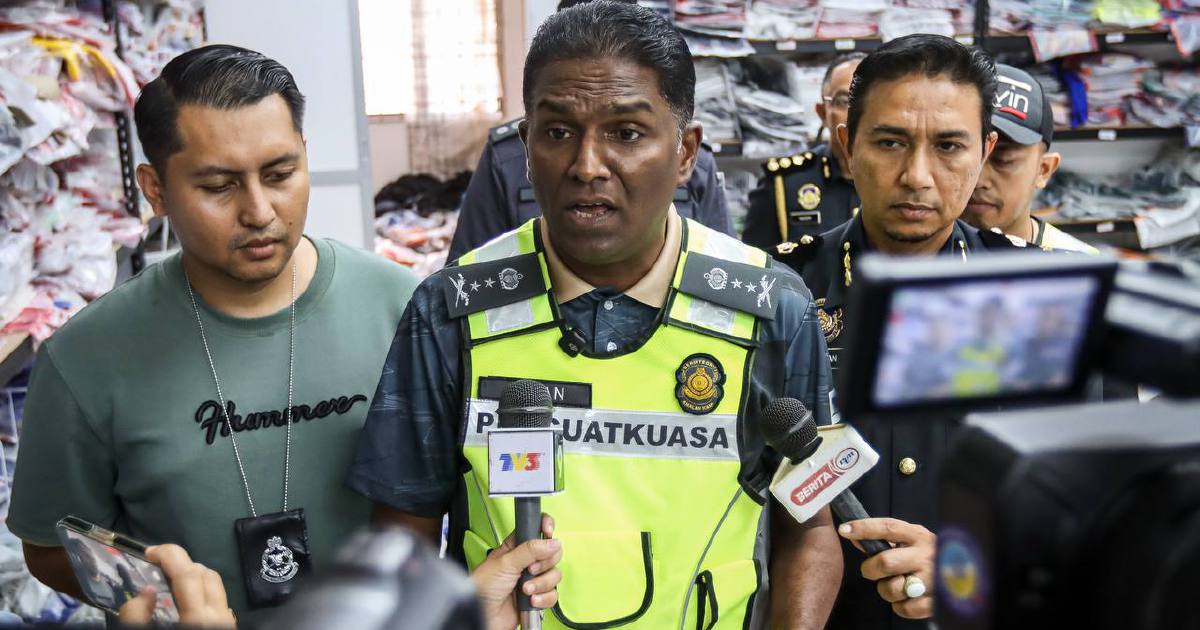
The Domestic Trade and Cost of Living Ministry's enforcement teams conducted coordinated raids in Nibong Tebal today, uncovering a significant cache of fraudulent FIFA World Cup 2026 jerseys. A total of 10,190 counterfeit shirts, collectively valued at RM509,500, were seized in the operation, underscoring the scale of illegal merchandise trafficking in Malaysia's supply chain.
The seizure represents one of the more substantial enforcement actions against sports merchandise counterfeiting in recent months. With the FIFA World Cup 2026 approximately two years away, demand for official and unofficial merchandise has begun accelerating across Southeast Asia. The scale of this operation—involving tens of thousands of items rather than dozens—suggests that sophisticated distribution networks are already positioning themselves to capitalise on the global excitement surrounding the tournament.
Counterfeit football jerseys have become a particular focus for Malaysian authorities because of their widespread appeal and the comparative ease with which fraudsters can replicate official designs and branding. Consumers purchasing knockoff jerseys not only support illegal enterprises but expose themselves to poor quality control, potential health risks from unregulated materials, and the loss of revenue that should rightfully accrue to FIFA and the participating national football associations. The ministries responsible for consumer protection have made clear their intention to intensify raids ahead of major sporting events.
Nibong Tebal, located in Penang's Kuala Muda district, has historically served as a logistics and manufacturing hub for both legitimate and illicit goods destined for Malaysian and regional markets. The choice of location for today's enforcement action reflects authorities' intelligence regarding supply chain vulnerabilities in that area. The industrial and commercial nature of the district, combined with proximity to major transportation corridors, has made it attractive to smugglers and counterfeiters seeking to distribute their products efficiently across the country.
The valuation of RM509,500 for the seized merchandise indicates that these were not low-grade imitations but reasonably sophisticated reproductions likely intended for retail distribution through both formal and informal channels. Counterfeit jerseys at this quality level typically sell for 30 to 50 percent of official prices, creating substantial profit margins for distributors while appearing sufficiently authentic to deceive casual consumers. The economic incentive structure surrounding sports merchandise counterfeiting has grown increasingly robust in Southeast Asia, attracting organised crime syndicates alongside opportunistic traders.
Efforts to combat counterfeit merchandise require coordination across multiple government agencies. The Domestic Trade and Cost of Living Ministry works alongside customs authorities, the police, and local authorities to identify distribution networks, storage facilities, and retail outlets involved in trafficking fake goods. Today's operation exemplifies this multi-agency approach, though details regarding the involvement of other departments have not yet been disclosed. Such coordination remains crucial because counterfeiting networks often compartmentalise their operations, making it difficult for single agencies to trace full supply chains independently.
The World Cup 2026 tournament itself will be hosted across three nations—the United States, Canada, and Mexico—a first in the competition's history. This expanded geographic footprint has created additional complexity in global merchandise distribution and protection. Malaysian consumers represent a significant demographic of football enthusiasts with particular affinity for European clubs and international tournaments, making them valuable targets for counterfeiters seeking to move large volumes of fake merchandise. The retail market for official World Cup merchandise in Malaysia alone generates substantial revenues, portions of which are being diverted to criminal enterprises through counterfeiting operations.
Consumer education remains an underutilised component of anti-counterfeiting strategies in Malaysia. While enforcement operations target the supply side, relatively limited public information campaigns educate buyers about how to identify authentic merchandise, the risks associated with purchasing fakes, and the broader economic and social harms caused by counterfeiting. The Ministry has opportunity to use high-profile seizures like today's operation as a springboard for consumer awareness initiatives that could reduce demand for counterfeit goods and encourage buyers to seek official distributors and authorised retailers.
The relationship between counterfeiting and transnational organised crime extends beyond sports merchandise into a broader ecosystem involving smuggling networks, money laundering, and connections to other illicit industries. Authorities investigating the distribution network behind the seized jerseys may uncover links to other counterfeiting operations or illicit trade routes. Intelligence gathered from today's raids could prove valuable in understanding how criminal organisations are adapting their operations to exploit market opportunities created by major sporting events.
For Malaysian retailers and manufacturers operating legitimately in the sports merchandise space, continued enforcement action against counterfeiters provides a measure of market protection. However, the persistence and scale of counterfeiting operations suggests that enforcement alone cannot resolve the underlying problem. Demand remains strong, prices for legitimate merchandise remain relatively high for many Malaysian consumers, and distribution networks have become increasingly sophisticated at evading detection. Long-term solutions require complementary approaches including simplified access to official merchandise, pricing strategies that narrow the cost differential between genuine and fake products, and genuine consumer education about quality and authenticity.
The Ministry indicated that investigation into the circumstances surrounding the seizure and the individuals or organisations involved in the counterfeiting operation is ongoing. Depending on findings, criminal charges may be pursued under relevant legislation governing counterfeiting and intellectual property infringement. Previous cases involving counterfeit merchandise have resulted in substantial fines and imprisonment terms, though enforcement outcomes remain inconsistent and sentencing disparities persist across different jurisdictions within Malaysia.

