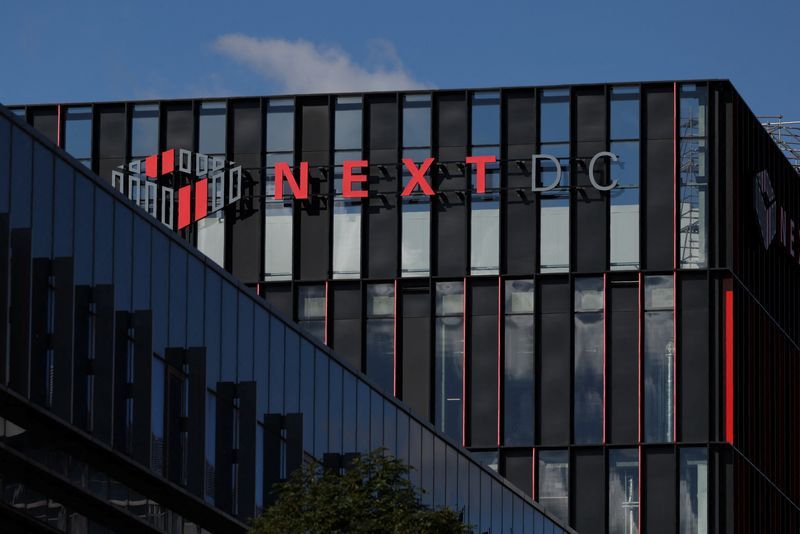
NextDC, one of Australia's largest data centre operators, has reported a return to profitability alongside concerning increases in resource consumption that underscore growing tensions between the technology sector's expansion and environmental sustainability. The company swung to a profit of A$82.1 million for the financial year to June 2024, compared to a A$60.5 million loss in the previous period, with underlying earnings before interest, tax, depreciation and amortisation climbing 15 per cent to A$248.8 million—figures that exceeded analyst expectations and sent share prices up 3.3 per cent on announcement day. Yet beneath these positive financial metrics lies an uncomfortable reality that has begun preoccupying lawmakers, regulators and communities across the Asia-Pacific region: the infrastructure supporting artificial intelligence and cloud computing is consuming water and electricity at accelerating rates.
The sustainability data reveals the core tension. NextDC's water usage effectiveness ratio—a measure of litres consumed per kilowatt-hour of computing power generated—deteriorated to 2.40 from 2.25 in the previous year. The power usage effectiveness ratio, which tracks electricity overhead for cooling systems and other facility operations, similarly worsened to 1.49 from 1.44. What makes these figures particularly significant is that this represents the third consecutive year of declining efficiency across both metrics, suggesting the trend is entrenched rather than temporary. As data centre operators race to meet surging demand for computing capacity driven by artificial intelligence development and deployment, the environmental cost of that expansion appears to be climbing rather than stabilising through technological improvements.
NextDC attributed the rising consumption partly to newly installed infrastructure. Data centre capacity commissioned during the financial year was operating cooling systems at higher-than-optimal levels before information technology equipment was fully deployed across newly built facilities. Additionally, the company undertook comprehensive reconciliation of water measurement data that exposed previously undetected inefficiencies. NextDC noted that investigation work uncovered isolated leaks, utility meter anomalies, and discrepancies between water consumption recorded at individual sites and figures provided by utility companies. This reconciliation exercise raises broader questions about whether other regional data centre operators have similarly undetected consumption issues, and whether current reporting standards adequately capture actual resource use across the industry.
The environmental footprint of data centre development has emerged as a critical policy challenge across multiple jurisdictions. Policymakers in Australia, Southeast Asia, and beyond are increasingly confronted with competing pressures: the economic benefits and technological advancement associated with data centre investment versus the strain these facilities place on electricity grids and water supplies, particularly during periods of drought or peak demand. Several governments and municipalities worldwide have moved to impose restrictions on new data centre construction, with some implementing temporary freezes pending the establishment of stronger regulatory frameworks. These regulatory responses reflect genuine community concerns about land use, elevated electricity costs for residential consumers, and water scarcity in regions already facing climate-related resource pressures.
Canberra is currently developing a regulatory response that would address these concerns through nationally consistent standards. The Australian government has indicated it is considering mandatory requirements governing how data centres consume energy, source and utilise water, and select their geographic locations. Most significantly, regulators have proposed that new data centre facilities should be compelled to develop renewable energy generation capacity rather than drawing additional power from existing grids that may already be stressed by peak demand periods. This approach attempts to decouple the expansion of data infrastructure from increased burden on national electricity networks, while simultaneously advancing renewable energy objectives. For Malaysian policymakers observing Australian regulatory evolution, such frameworks provide instructive models as domestic data centre investment accelerates.
NextDC operates within a competitive regional market. Its primary rivals include AirTrunk, which is owned by investment giant Blackstone, and CDC Data Centres, controlled by New Zealand infrastructure investor Infratil. This competitive landscape ensures that efficiency improvements or failures at one operator receive close attention from investors and regulators assessing the sector's overall trajectory. The financial markets have generally rewarded NextDC's profit recovery despite the efficiency deterioration, suggesting investors view short-term profitability and growth more favourably than environmental metrics. However, this investor sentiment may shift if regulatory restrictions tighten or if stakeholder pressure on environmental performance intensifies.
The revenue growth trajectory underpinning NextDC's profitability tells a clear story about data centre demand dynamics. The company's revenue increased 16 per cent during the period, demonstrating robust market demand. However, it is crucial to note that reported profit benefited substantially from an accounting gain recognised on the valuation of property holdings, which represented a non-operational contribution to the bottom line. This accounting treatment reflects the significant real estate and infrastructure value embedded in data centre portfolios, but obscures whether core operational performance has genuinely improved or whether the profitability story rests partly on asset revaluation rather than operational excellence.
For Southeast Asian readers and policymakers, NextDC's experience offers timely insights. The region is positioned as a critical growth market for data centre expansion, driven by artificial intelligence adoption, digital economy development, and the relocation of computing infrastructure from saturated markets. However, water scarcity, electricity grid limitations, and environmental considerations present genuine constraints across much of Southeast Asia. Malaysia, Indonesia, Thailand, and Vietnam all face seasonal water stress and electricity supply challenges that will complicate rapid data centre development. NextDC's deteriorating efficiency metrics suggest that simply expanding capacity without simultaneously improving environmental performance per unit of computing output may prove unsustainable at scale.
The broader regulatory trajectory evident from Australia's policy discussions indicates that governments are moving toward treating data centre environmental impact as a legitimate public policy concern rather than purely a private operational matter. The proposed requirements that new facilities generate rather than merely consume renewable energy represents a fundamental reorientation of developer responsibilities. Such approaches could eventually influence investment decisions and facility siting across the region, potentially favouring jurisdictions with abundant renewable energy resources or stricter environmental standards less rigorously.
NextDC's sustainability reporting also reflects evolving expectations around corporate transparency on environmental metrics. The detailed disclosure of worsening efficiency ratios, combined with explanations of contributing factors, suggests data centre operators recognise that environmental performance has become material to stakeholder perceptions and potentially to future regulatory treatment. This transparency may ultimately accelerate industry-wide efficiency improvements as competitive pressures and reputational considerations incentivise better performance. However, it also highlights the gap between reporting environmental challenges and implementing solutions capable of reversing negative trends, a gap that will likely preoccupy investors, policymakers and communities as artificial intelligence infrastructure continues expanding across the Asia-Pacific region.

