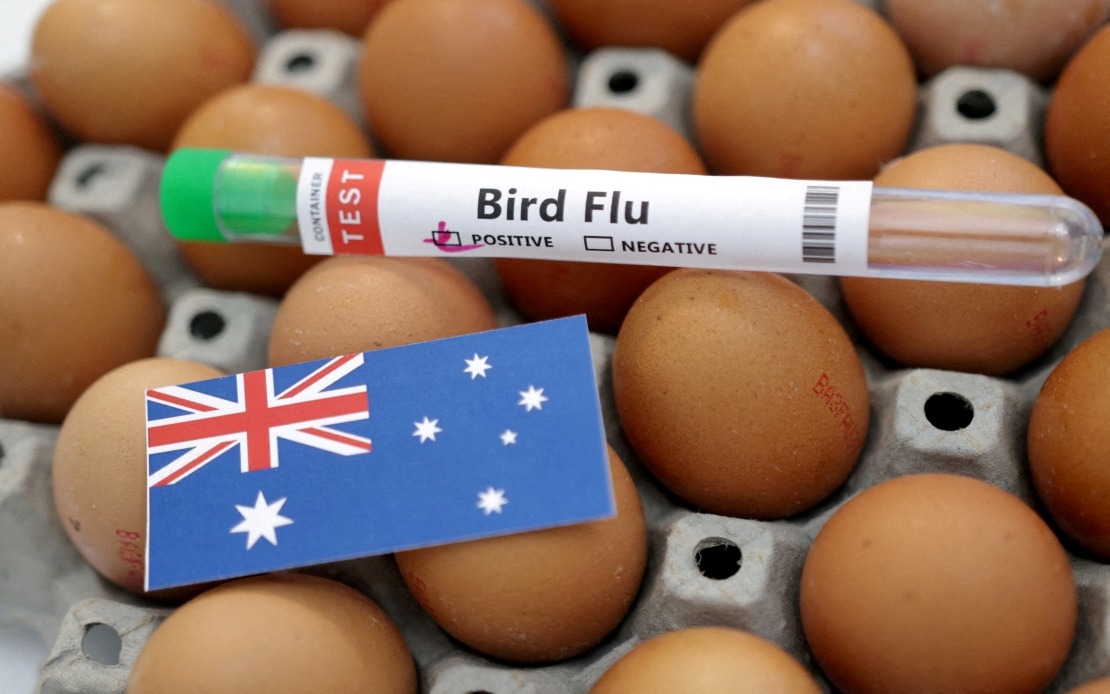
Australia is grappling with an escalating H5N1 bird flu crisis, with confirmed and presumed positive cases reaching 203 as of Saturday, according to the federal Department of Agriculture, Fisheries and Forestry (DAFF). The outbreak has intensified dramatically throughout August, representing a 290 per cent surge from the 52 cases recorded at the end of July—a trajectory that underscores the speed at which the highly pathogenic avian influenza is spreading across the country's wildlife populations.
The geographic epicentre of the outbreak remains South Australia, which accounts for nearly three-quarters of all detected cases with 147 infections. The state confirmed 28 additional cases on Saturday alone, all occurring in wild seabirds along the coast. This concentration in waterbird populations reflects the typical transmission patterns of H5N1, which spreads rapidly through migratory and congregating bird species before potentially spilling over into domesticated flocks—a scenario that authorities are increasingly determined to prevent.
Victoria has emerged as the secondary hotspot, with 43 cases identified across the southeastern state. The recent discovery of 36 birds testing positive for H5N1 on Thursday and Friday in Victoria's western regions, near the South Australian border, has prompted urgent government intervention. These detections represent the state's largest daily increase and signal the virus's capacity to move across state boundaries through natural bird migration patterns and, potentially, through human activity along interstate transport corridors.
Responding to this accelerating threat, the Victorian government announced precautionary measures on Friday designed to insulate the state's poultry industry from potential infection. Beginning immediately, commercial poultry producers along Victoria's south coast—encompassing the greater Melbourne area—operating flocks of 50 birds or larger must house their birds indoors for an initial 14-day period. This mandatory confinement strategy aims to eliminate direct contact between domesticated poultry and wild birds, which remains the primary transmission route for H5N1 jumping from wildlife into commercial operations.
Victorian Agriculture Minister Michaela Settle framed the indoor housing requirement as a precautionary measure, deliberately chosen to prevent the strain from penetrating Victoria's poultry sector before widespread contamination becomes unavoidable. The rationale reflects lessons learned from previous avian influenza episodes globally, where early intervention in farming practices proved dramatically more effective than responding after commercial outbreaks had already begun. The 14-day initial period provides authorities with time to monitor case trends and determine whether further restrictions or extensions are warranted.
For Malaysian and Southeast Asian observers, Australia's outbreak carries significant implications for regional biosecurity frameworks and trade protocols. Australia ranks among the world's largest poultry exporters, and any large-scale commercial outbreak would reverberate through regional supply chains. The speed and scale of Australia's current outbreak—jumping from dozens to hundreds of cases within weeks—demonstrates how rapidly H5N1 can establish itself in new territories, a concern directly relevant to Southeast Asia's densely populated poultry industries and live bird markets.
The outbreak also highlights vulnerabilities in early detection systems when cases are concentrated in wild bird populations rather than immediately affecting commercial farming. While South Australia's 147 cases provide early warning of the virus's presence, the apparent transition toward detection in Victoria's western regions suggests the outbreak's geographic spread may be accelerating faster than containment measures can respond. This lag between detection and intervention remains one of the most challenging aspects of managing avian influenza in countries with extensive coastlines and significant migratory bird populations.
The H5N1 strain itself represents the most concerning variant of avian influenza, demonstrating high mortality rates in infected birds and occasional transmission to humans under close contact conditions. While human-to-human transmission remains rare, the sheer number of infected birds increases the statistical probability of zoonotic spillover events. Australia's relatively low human population density and strong biosecurity practices in the poultry sector provide some protection, but the outbreak's scale demands sustained vigilance across both wildlife monitoring and farm-level disease prevention.
Beyond immediate outbreak control, the Australian crisis raises broader questions about the adequacy of existing regional early warning systems for transboundary animal diseases. Southeast Asian countries, which share migratory bird flyways with Australia and maintain significantly higher poultry densities and less rigorous biosecurity standards in some areas, should view this outbreak as a dress rehearsal for potential regional spread. The effectiveness of Victoria's indoor housing protocols and South Australia's containment strategies will provide valuable data for refining responses elsewhere in the Indo-Pacific region.
The coming weeks will be critical in determining whether Australia's interventions successfully prevent H5N1 from establishing itself in commercial poultry operations. Should the indoor housing measures prove effective, they may become a template for other countries facing similar threats. Conversely, if cases continue rising despite these precautions, the outbreak would signal that the virus has already achieved a level of entrenchment requiring more aggressive industry-wide responses, including potential culling of exposed flocks—an economically devastating scenario that authorities across the region are working urgently to avoid.

