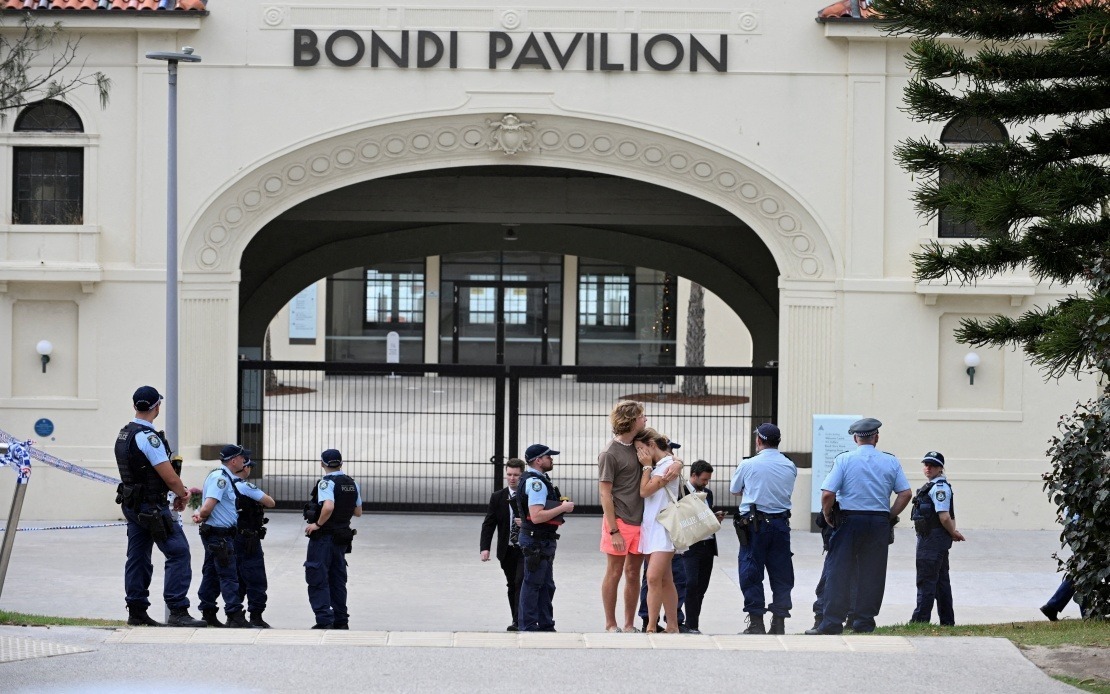
Australia's Australian Capital Territory, home to the nation's capital Canberra, has formally committed to joining a comprehensive national gun buyback scheme, Prime Minister Anthony Albanese announced on Saturday. The decision represents a significant step in the federal government's push to tighten firearm regulations across the country in the aftermath of a devastating terrorist attack that claimed 15 lives at a Jewish festival on Bondi Beach on December 14, 2025—Australia's deadliest mass shooting in nearly three decades.
The massacred prompted the Albanese government to introduce legislative measures for the buyback programme in January, creating a coordinated national response to the tragedy. The ACT government had signalled its willingness to participate from the outset but spent months in detailed negotiations with federal authorities to resolve funding mechanisms and administrative arrangements. After reaching consensus, the two levels of government have now finalised terms that will enable the scheme to proceed within the territory.
Under the negotiated agreement, federal funding will cover three-quarters of all buyback expenditure and administrative overhead, while the federal government will fully subsidise the cost of firearm destruction. This funding structure resolves the earlier impasse that had stalled the ACT's formal entry into the programme, ensuring the territorial government would not bear a disproportionate financial burden. The arrangement demonstrates the federal government's commitment to making firearm reform achievable across all jurisdictions regardless of their capacity to fund the initiative independently.
Aalbanese emphasised that the gun buyback framework serves as a crucial safeguard against future incidents of mass violence. The Prime Minister stated in his announcement that strengthening firearm laws nationally is fundamental to preventing a recurrence of antisemitic terrorism like the Bondi attack. His comments underscore the political will driving the scheme—a response to both the immediate tragedy and broader public concern about easy access to firearms in urban environments.
The ACT's entry into the buyback programme makes it the second Australian jurisdiction to formally participate, following New South Wales, which committed to the scheme in early August. The east coast state has structured its participation in two phases, offering financial incentives that increase substantially for higher-value firearms. During the initial phase beginning November 2, NSW will provide compensation of up to AUD$1,000 for firearms handed in to authorities. The second phase, commencing in early 2027, will extend this to AUD$10,000 for firearms of greater value, providing stronger incentives for owners of more sophisticated weapons.
Currently, approximately 23,000 firearms remain in circulation throughout the ACT, held by more than 7,000 licensed firearm owners. These figures suggest a relatively contained gun ownership profile compared to some other Australian jurisdictions, yet the volume remains substantial enough to warrant intervention. The buyback scheme aims to systematically reduce this stock, removing weapons from civilian hands through a voluntary surrender and compensation model rather than through compulsory seizures.
For Malaysia and other Southeast Asian nations observing Australia's response to mass shootings, the buyback scheme offers a noteworthy policy model. Unlike the United States, where gun rights remain constitutionally protected, Australia has demonstrated a capacity to implement strict firearms regulation through democratic consensus. The coordination between federal and territorial authorities reveals how federalised systems can achieve uniform safety standards across multiple levels of government, a consideration relevant to Malaysia's own multi-tiered governance structure.
The programme's two-phase approach also merits regional attention. By offering differentiated compensation rates, authorities can prioritise the removal of weapons most likely to be misused in mass casualty events—higher-powered firearms and military-style weapons—while still providing attractive buyback terms across the entire spectrum. This graduated incentive structure balances fiscal responsibility with public safety objectives.
Six of Australia's eight states and territories have yet to formally commit to the buyback scheme, suggesting ongoing negotiations with other regional governments. The pace of expansion will likely depend on how successfully the programmes operate in NSW and the ACT, particularly regarding public participation rates and community attitudes toward voluntary firearm surrender. If early phases demonstrate high take-up rates and measurable reductions in firearm-related incidents, other jurisdictions may accelerate their participation.
The Bondi Beach attack, which shocked Australian society and triggered international headlines, served as a catalyst for decisive action on firearm policy. The fact that it occurred at a public gathering of community members celebrating religious observance added another dimension to public concern about security in shared civic spaces. The government's framing of the buyback as an antisemitic terrorism prevention measure connects the policy directly to the attack's nature and victims, grounding the reform in moral urgency rather than abstract principle.
Looking forward, the success of these buyback initiatives will shape Australian firearm policy for years to come. The programmes' effectiveness will be measured not only by the number of weapons surrendered but by whether they correlate with reductions in firearm violence, accidental deaths, and suicide rates. For a nation that experienced a major mass shooting in Port Arthur, Tasmania in 1996 and subsequently implemented strict gun controls, the current buyback represents an intensification of that earlier commitment.
The ACT's formal entry into the national scheme represents bureaucratic consensus hardening into operational reality. What began as post-tragedy legislative impulse has transformed into funded, coordinated programmes spanning multiple jurisdictions. As these schemes progress, their outcomes will inform debates about firearm regulation not only throughout the Asia-Pacific region but globally, offering comparative evidence about whether voluntary buyback programmes can meaningfully reduce civilian firearm ownership in developed democracies.

