Scientists at Edith Cowan University in Western Australia have made a significant breakthrough in identifying a previously underutilised source of naturally occurring hydrogen locked within the state's extensive iron ore formations, marking a potential turning point in the search for sustainable energy alternatives in the Asia-Pacific region. The discovery, which hinges on understanding how the mineral magnetite interacts with subterranean water at extreme temperatures and pressures, could reshape Australia's role as an energy supplier while opening fresh avenues for exploration across Southeast Asia, where similar geological formations exist.
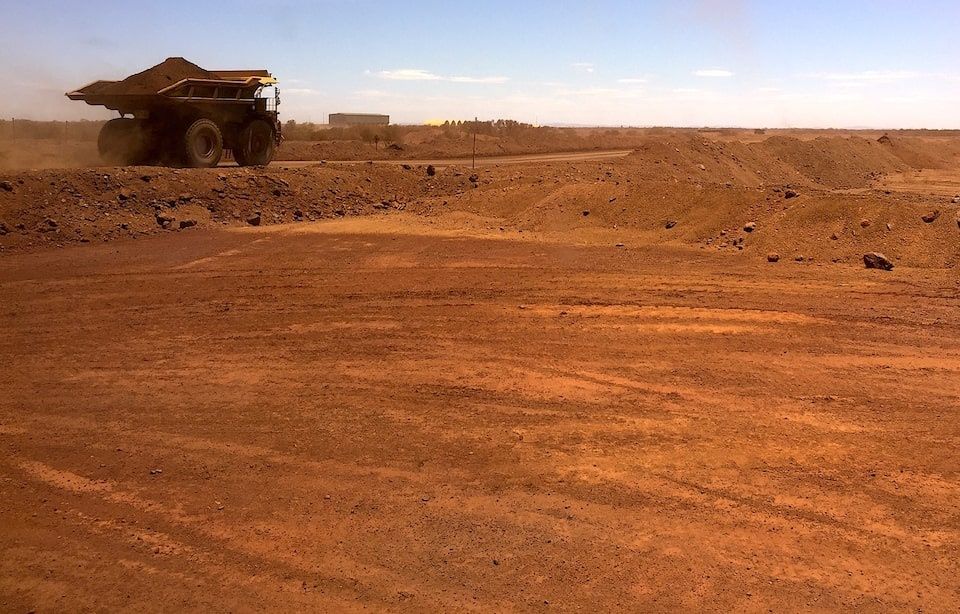
The research team from ECU's School of Engineering demonstrated that magnetite—an iron oxide mineral deposited beneath Western Australia's characteristic red soil—undergoes chemical reactions with heated water in deep underground conditions to produce hydrogen gas. This natural process, which occurs spontaneously in the Earth's depths, represents an entirely novel angle on hydrogen energy generation, distinct from the industrial processes currently dominating global hydrogen production. The findings were formally published in the International Journal of Hydrogen Energy, lending scientific credibility to what could become a transformative discovery for clean energy initiatives.
To validate their theoretical models and establish the viability of scaling up production, the research team conducted extensive laboratory experiments spanning 60 days. They exposed magnetite samples to water heated to 200 degrees Celsius while subjecting them to the immense pressures found kilometres beneath the Earth's surface. These controlled conditions successfully replicated the natural environment where hydrogen generation occurs, providing concrete evidence that the process is replicable and measurable under scientific observation. The prolonged exposure period allowed researchers to observe cumulative hydrogen yields and establish baseline production rates.
What makes this discovery particularly significant for resource-rich nations like Malaysia and other Southeast Asian economies is the sheer abundance of potential hydrogen reservoirs. Western Australia hosts some of the world's largest banded iron formations—geological structures where alternating layers of iron oxides and silicate rocks create ideal conditions for hydrogen generation. These formations span vast geographical areas, suggesting that extraction potential could be measured not in limited deposits but in continental-scale reserves. For a region increasingly concerned with energy security and climate commitments, this transforms the economics of hydrogen as a primary energy carrier.
The research revealed that hydrogen production is not solely determined by the presence of magnetite. Rather, the efficiency of generation depends critically on how easily water can penetrate and access fresh mineral surfaces through networks of fractures, pores, and permeable pathways within the rock formations. This finding introduces a layer of complexity that researchers must now address through additional investigation. It suggests that not all iron ore deposits will yield equivalent hydrogen quantities, and that understanding the geological architecture of specific formations becomes essential for identifying the most productive locations.
The implications for Malaysia and the broader Southeast Asian region warrant careful consideration. Nations throughout the region face mounting pressure to decarbonise their economies while maintaining competitive advantages in manufacturing and resource processing. Natural hydrogen from deep geological sources could serve as a bridge technology—providing zero-emission fuel for industrial applications, electricity generation, and eventually transportation—without requiring the energy-intensive extraction methods currently necessary for industrial hydrogen production. This could fundamentally alter regional competitiveness in emerging hydrogen economies.
Australia's discovery also carries geopolitical significance as global competition intensifies for clean energy leadership. With Japan, South Korea, and European nations aggressively pursuing hydrogen strategies, Australia's identification of a natural hydrogen source strengthens its position as a potential long-term hydrogen exporter to energy-hungry neighbours. Malaysia, Thailand, and Vietnam, which increasingly depend on energy imports, could potentially benefit from accessing Australian natural hydrogen through pipeline infrastructure or as a component of future energy trade agreements.
The technical challenge moving forward involves determining whether engineered extraction methods can economically harvest this naturally produced hydrogen at commercial scale. Researchers suggested that deliberately injecting solutions into banded iron formations could amplify hydrogen generation rates beyond natural production levels, effectively converting these geological formations into productive hydrogen fields. However, questions remain about the environmental implications of such interventions, the capital requirements for drilling and infrastructure, and the regulatory frameworks necessary to govern such operations responsibly.
Further research will likely focus on mapping natural hydrogen accumulation zones, understanding the optimal conditions for maximum production, and developing extraction technologies tailored to these unique geological circumstances. International collaboration between Australian, Southeast Asian, and global researchers could accelerate commercialisation timelines. For Malaysia, maintaining awareness of these developments and building expertise in natural hydrogen geology could position the nation advantageously as this technology matures from laboratory discovery to industrial application, particularly given the country's own mineral wealth and energy security priorities.

